Tracking 2 Rain Events; Cold Open to 2019…
 Highlights:
- Wet with a few t-storms
- Dry weekend
- Wet then cold to open 2019
Rain Gear Needed…The pattern is transitioning from the predominantly mild stretch of the past couple weeks to one that will turn much colder as we move into January. In between? Active times, as we’re tracking two big storm systems between now and NYE.
The initial push of moisture has reached the I-65 corridor as of this forecast issuance early Thursday morning. Periods of rain will continue through a good chunk of the day and we may even throw in some thunder into the mix later this evening- especially across southern portions of the state. The other big story today? Strong and gusty southerly winds.
Rain will end later tonight with dry, blustery, and colder times returning as we close the week. Highs tomorrow will come predawn before falling through the day. Dry and seasonable times will continue as we move through the last weekend of 2018.
A new storm system promises a return of wet times as we get set to ring in the new year. Definitely plan on having the rain gear handy as you head out to those New Year’s Eve parties Monday. Heavy rain is possible at times. As the area of low pressure tracks northeast, it’ll swing a cold front through here Monday night and we’ll turn sharply colder with snow showers on New Year’s Day, itself.
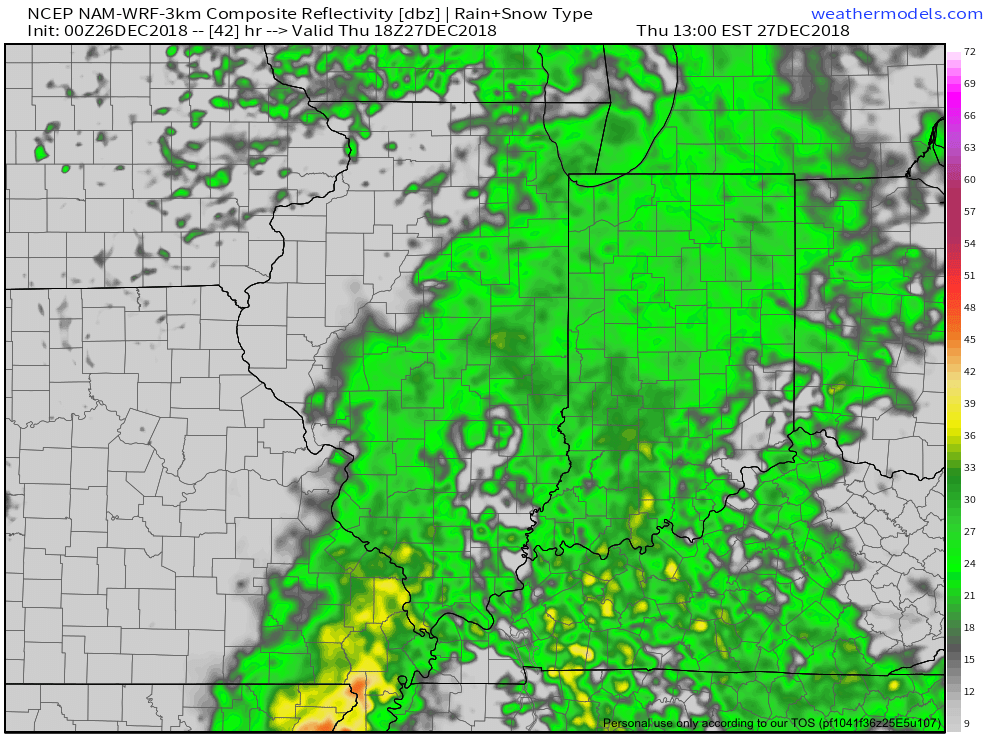

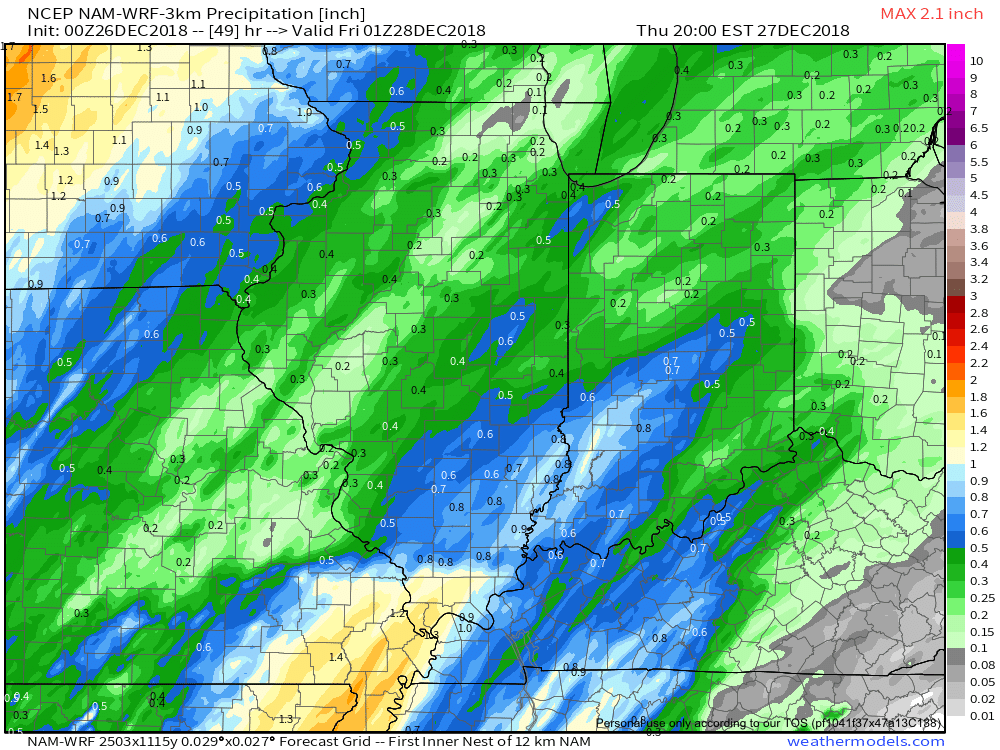 Most of the concentrated rain should come to an end around dark Thursday. By that time we forecast a general 1/2″ to 1″ to fall in area rain gauges.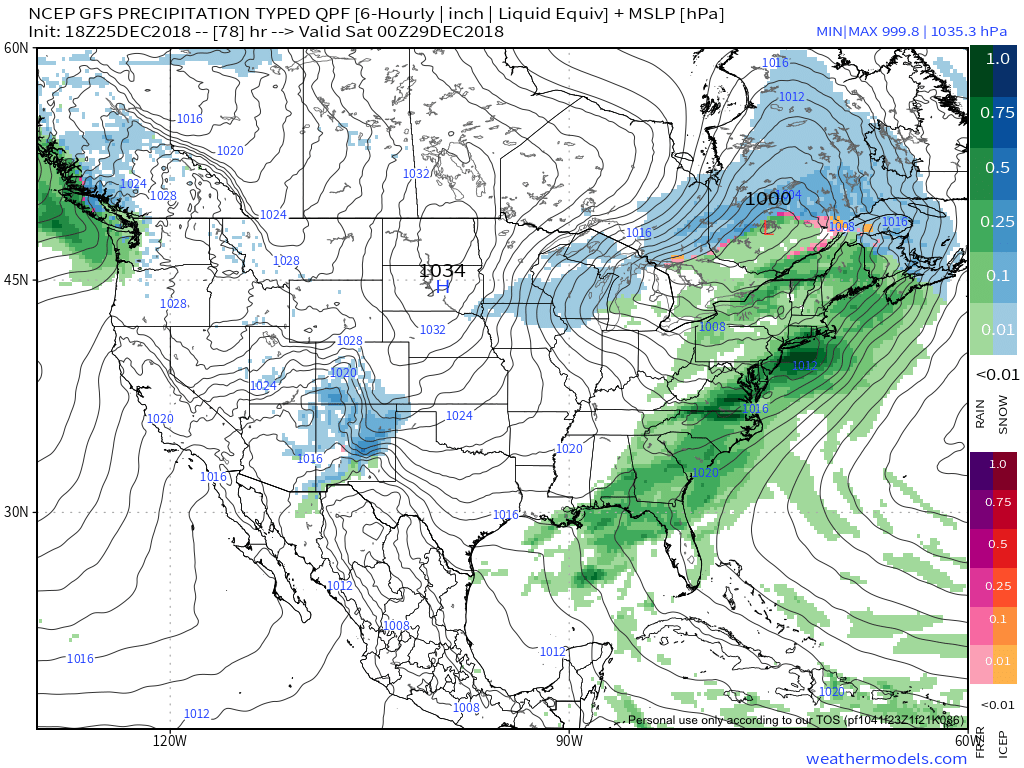

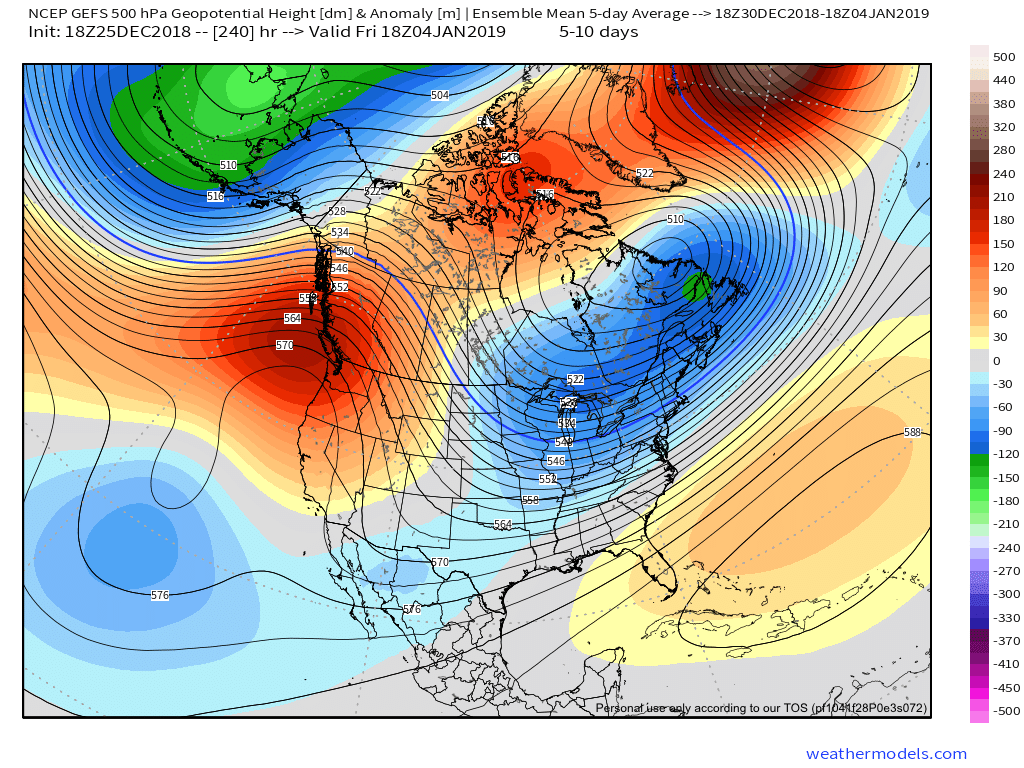
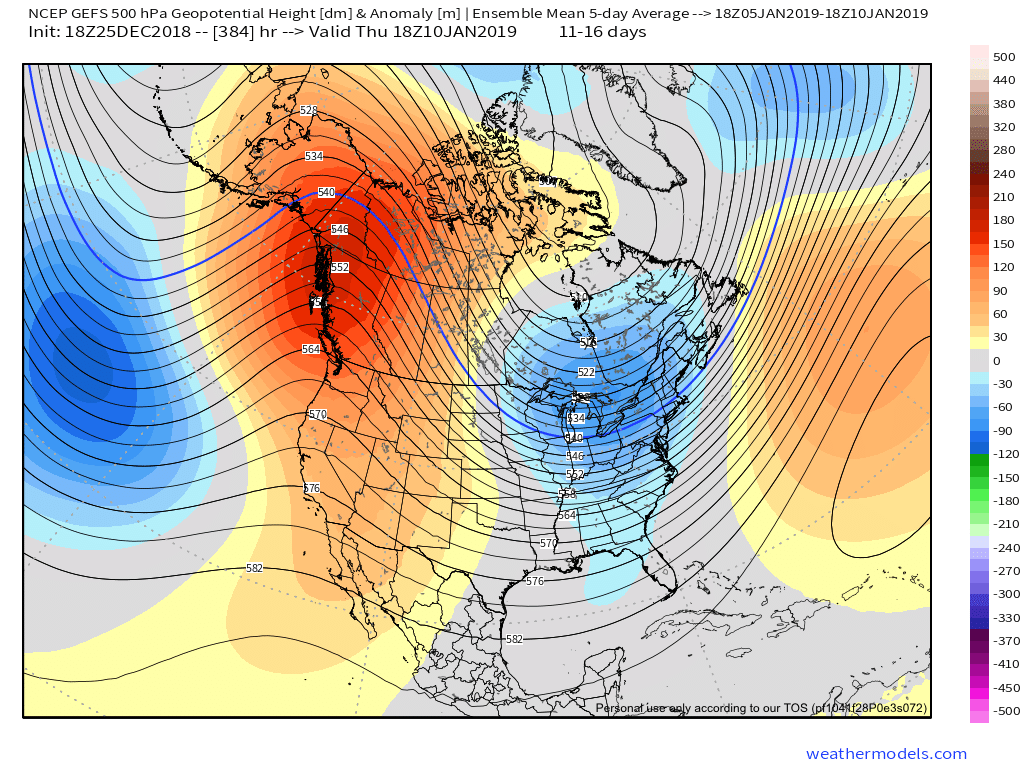
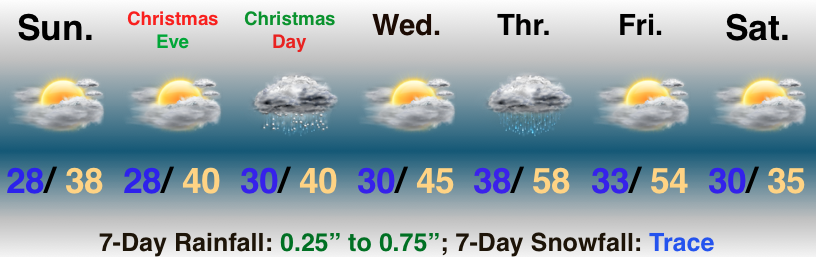 Highlights:
 II. A much stronger storm system will wrap up to our northwest Wednesday night and Thursday. We’ll notice an increasingly strong southerly breeze during this time period and rain will be on the increase as we progress through the day Thursday. The trade-off? Highs between 55° and 60° to close the week- though those temperatures may actually come Thursday evening before cooler air begins to slip in here during the day Friday.
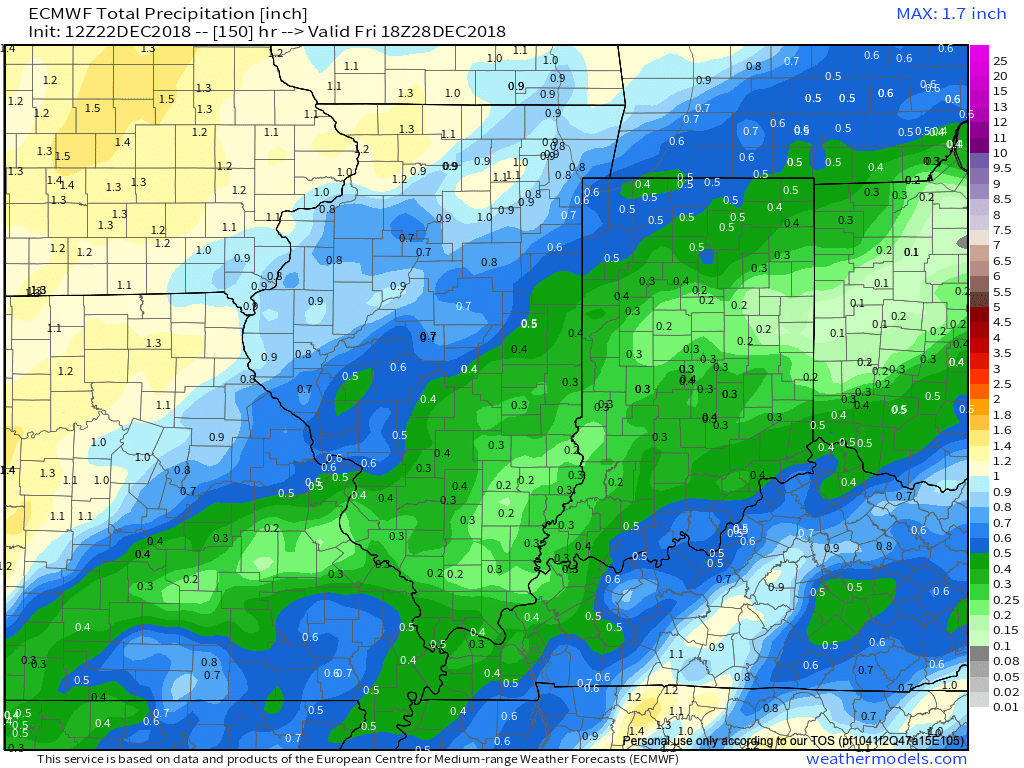
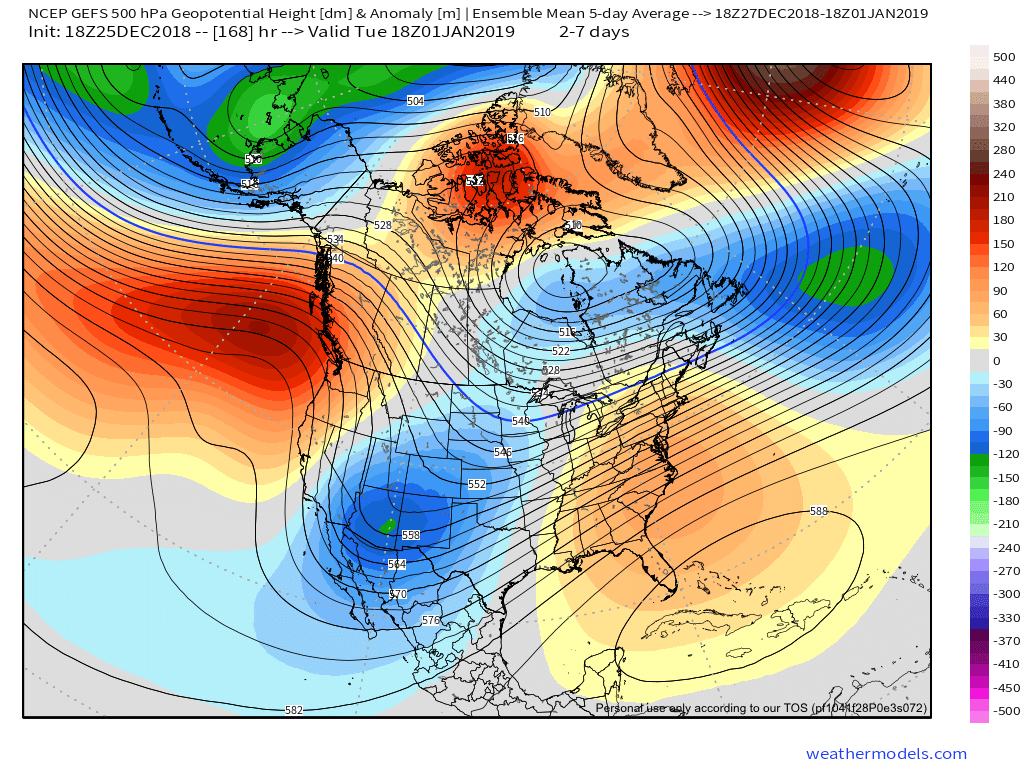
 III. All attention is squarely focused on a significant pattern change that takes shape as we head into the new year. As mentioned in previous posts and discussions, the transition is likely to be a stormy one, but it’s far too early to talk precipitation types. A combination of ingredients appears to be aligning to create a colder than normal (and potentially significantly so) pattern at the traditionally coldest time of year (mid-Jan).