2019 IndyWx.com Summer Outlook
2019 is absolutely flying by! Before you know it, we’ll be releasing our 2019-2020 Winter Outlook. Kidding- sort of. 😉
Is a blazing hot summer in store for central Indiana, or perhaps wet and cool? Let’s dig in to the details…
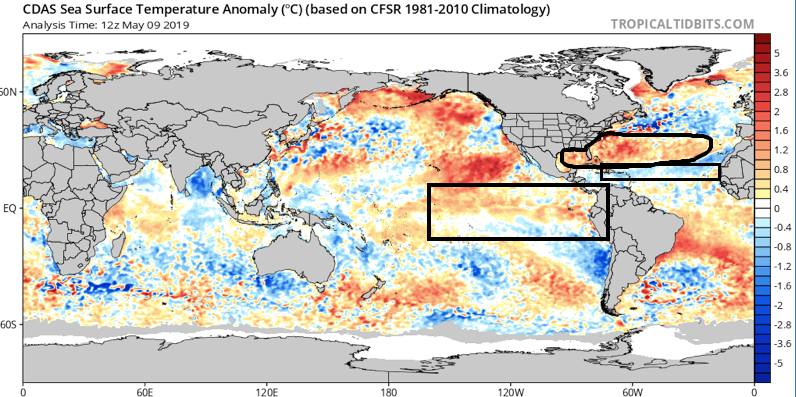
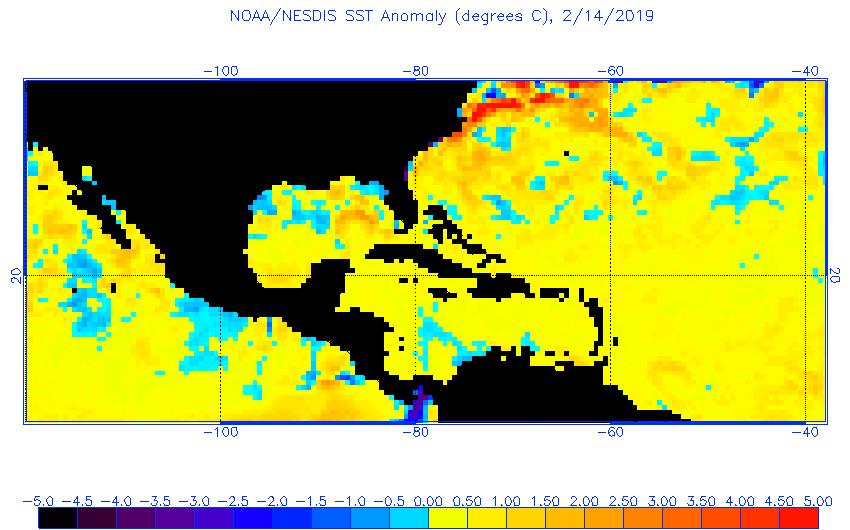
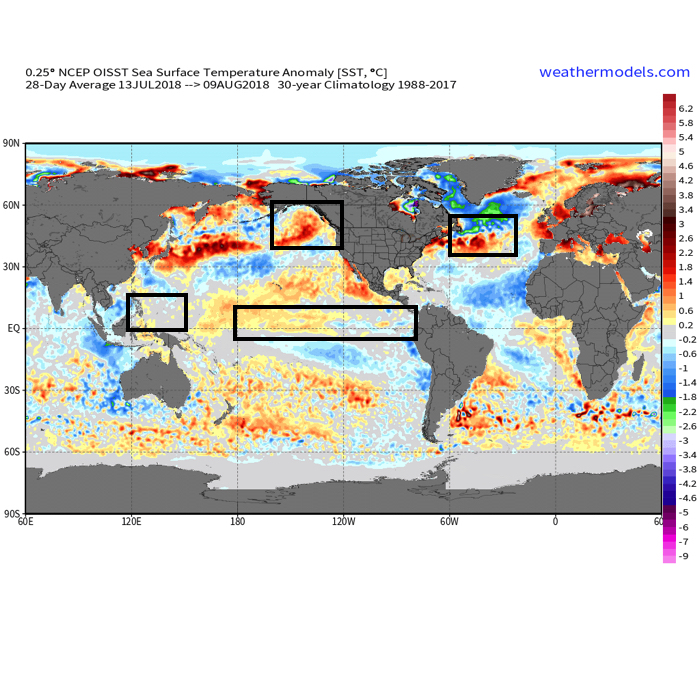
As we look at current sea surface temperature anomalies, a few items stand out:
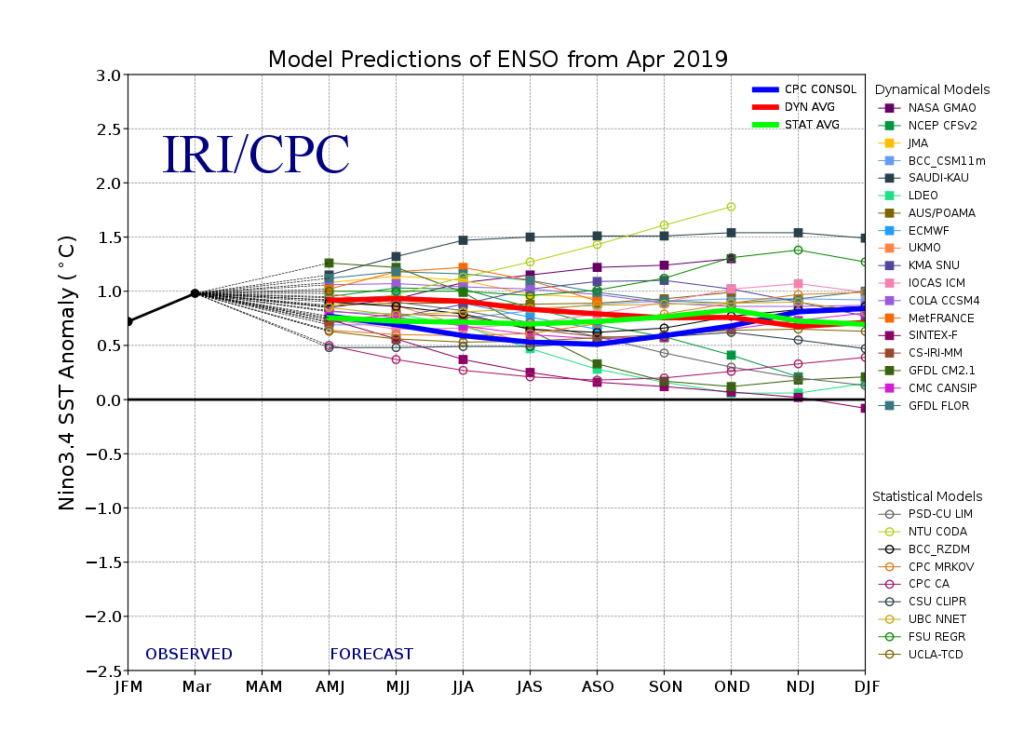
I. We expect a weak El Nino to continue through meteorological summer (June through August), and perhaps even into next winter.
II. MDR (Main Development Region for tropical entities) is running cooler than normal and would suggest an overall “less busy” hurricane season from a long-track perspective
III. SSTs are running much warmer than normal in the Gulf of Mexico and off the East Coast. This is important as while the long-track tropical systems may not be as frequent, we’ll have to remain on guard for the potential of active times closer to home this season. Additionally, these warmer anomalies tend to lead us to believe precipitation will run above normal across coastal areas into the Deep South this summer.
Let’s look at some of the climate computer model data for the summer season:
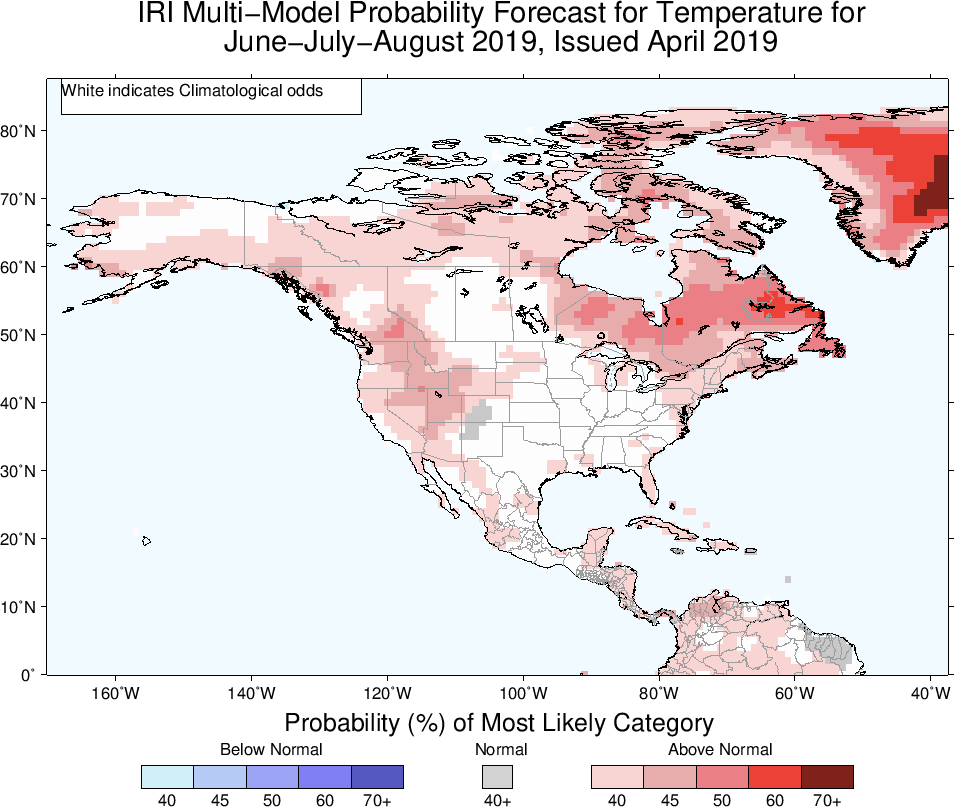
The latest IRI model (International Research Institute) shows relative warmth along the coastal areas and the west with greatest wet anomalies across the Northwest.

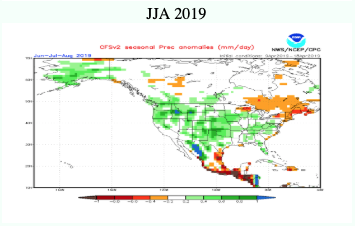
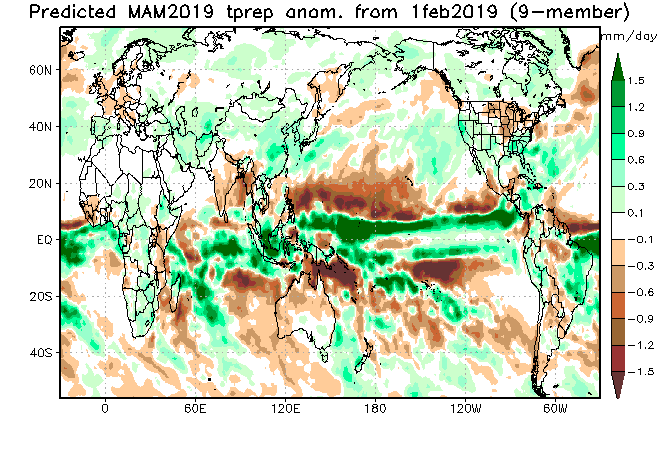
The CFSv2 is leaning towards an anomalously wet summer across a widespread portion of the country (exception being New England).

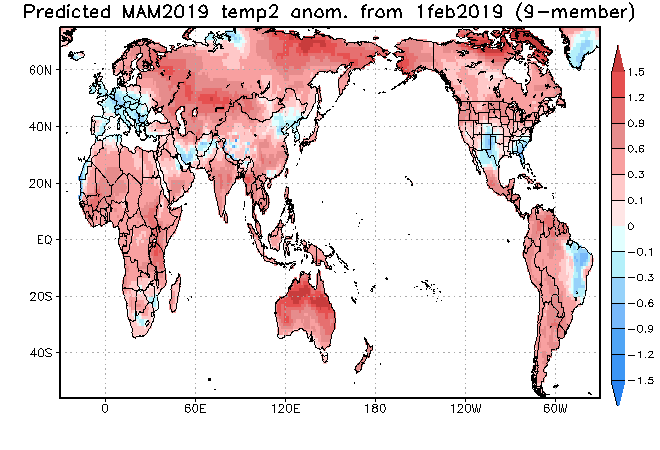
As we review the CanSIPS, it likes the idea of a cool, wet summer across the Heartland with warmth along the coasts.
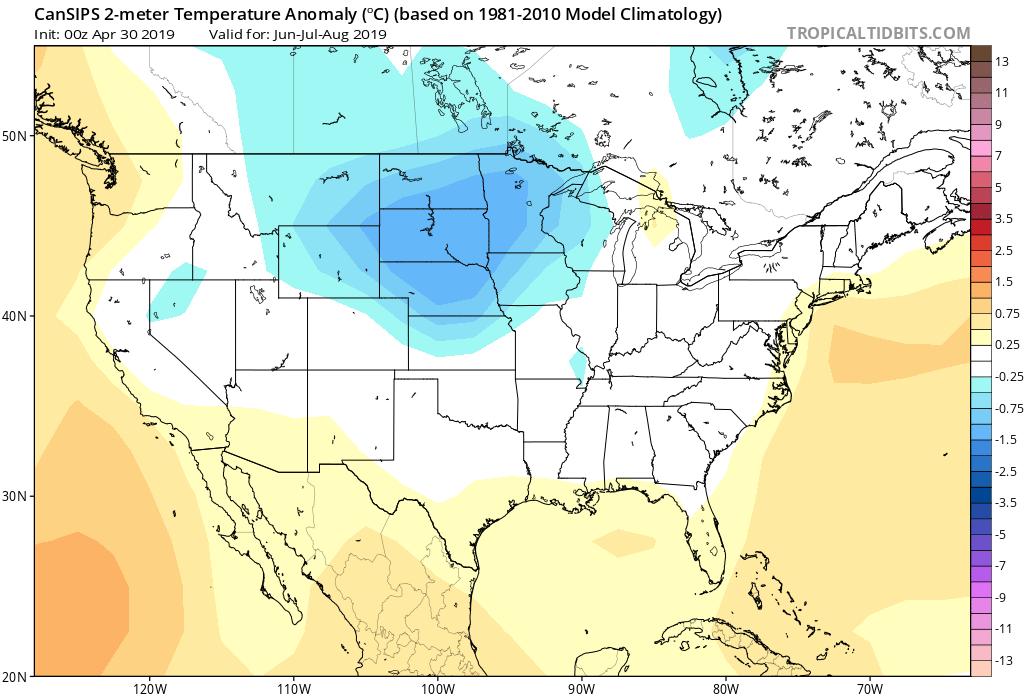
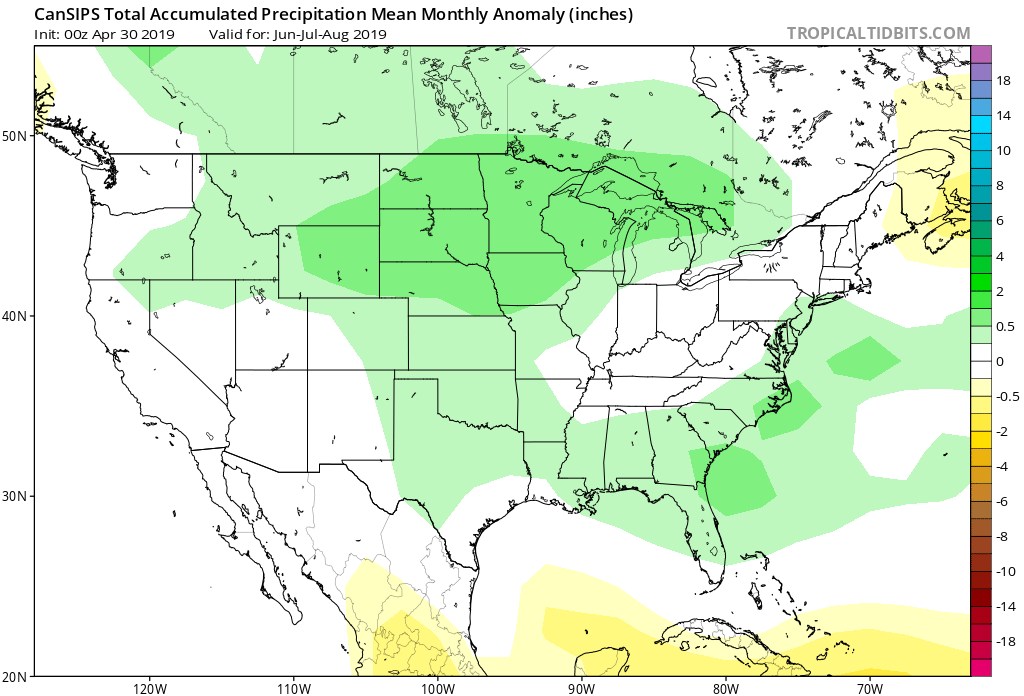
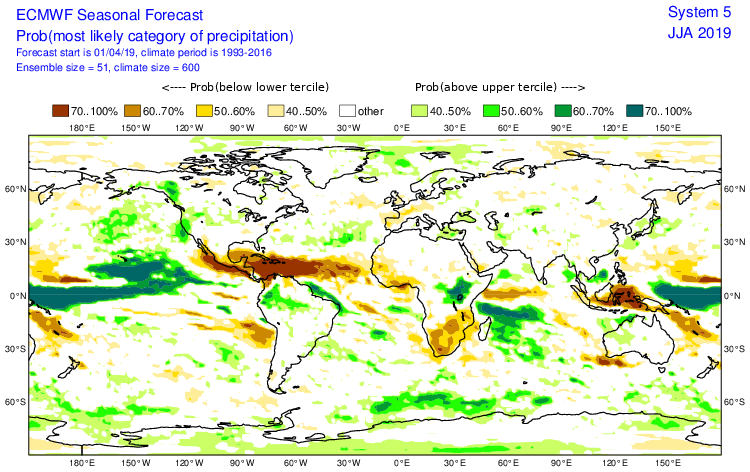
The European Seasonal Forecast has a seasonal summer for most of the country with warmth along the coasts, and a reflection of wetter anomalies across the northern Plain into the Northwest.

(The JMA Seasonal hadn’t updated as of this post).
After taking into account the various seasonal model data above (which is in remarkable overall agreement for a LR forecast idea), along with the current SST configuration, and analog data, this is how we see the Summer of 2019 playing out.

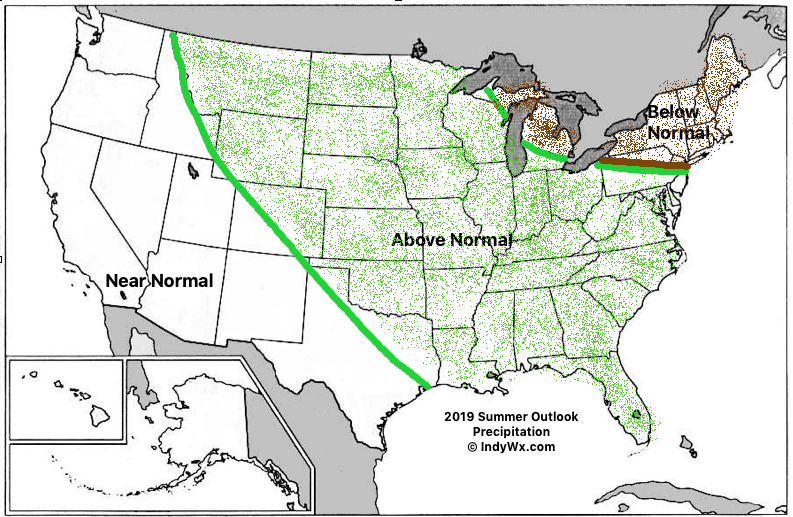
Specific to central Indiana, we’re forecasting a rather wet and cooler than average summer. Frequent storm systems should keep things active around these parts for the balance of the summer season, with the temperature scale tipping a touch cooler than normal.
While the number of named storms should be down compared to normal (highlighted by the Euro seasonal precipitation idea), we’ll have to keep close tabs on the Gulf of Mexico and off the Southeast coast for the potential of “last minute” development. Those warmer than normal sea surface temperatures lurking off the coast does warrant concern for at least the threat of another active year from a landfall perspective.
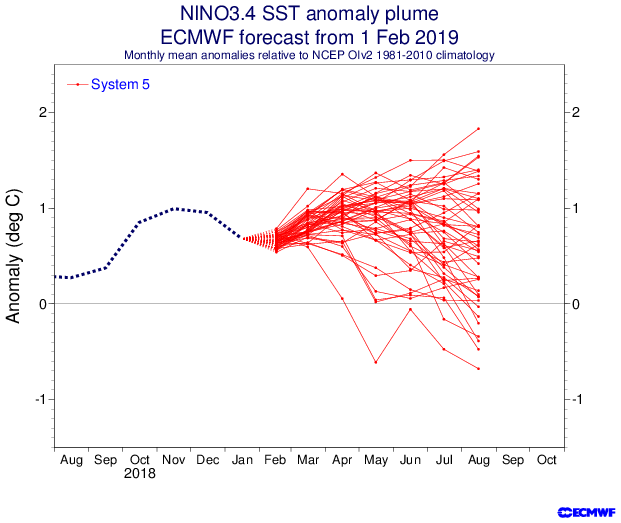
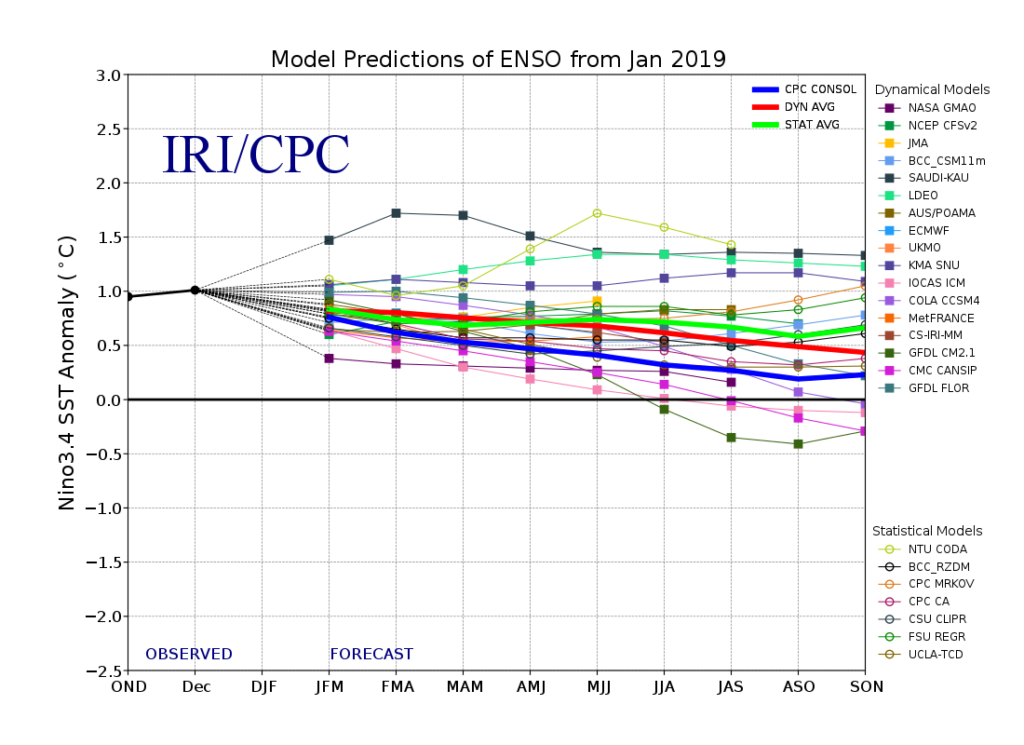




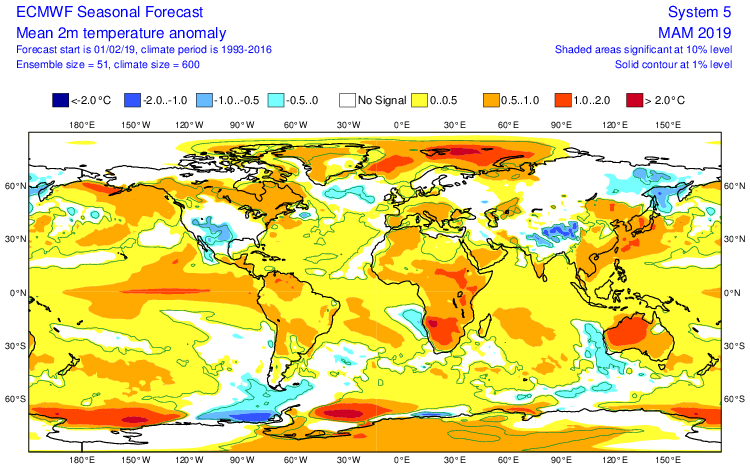
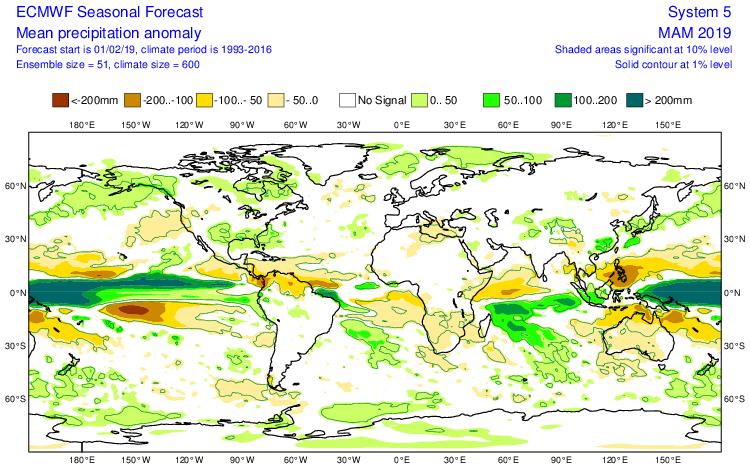
 The early “baseline” of our ideas focuses on the likelihood of El Nino returning for the upcoming winter season. As we’ve stated many times in the past, each Nino event is different from one another and other ingredients (highlighted above) can play a significant role in ultimately determining the eventual outcome.
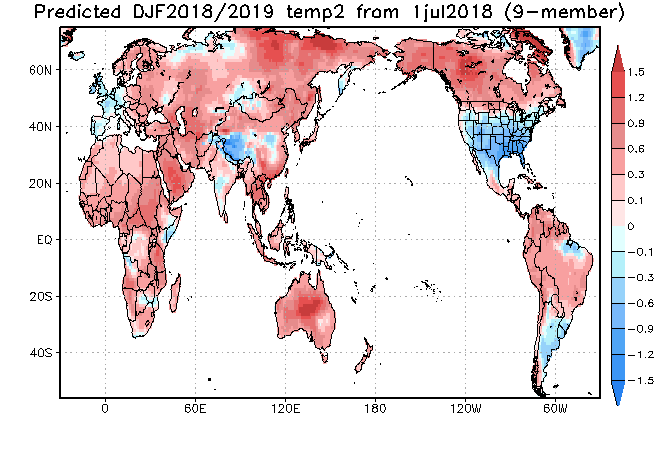
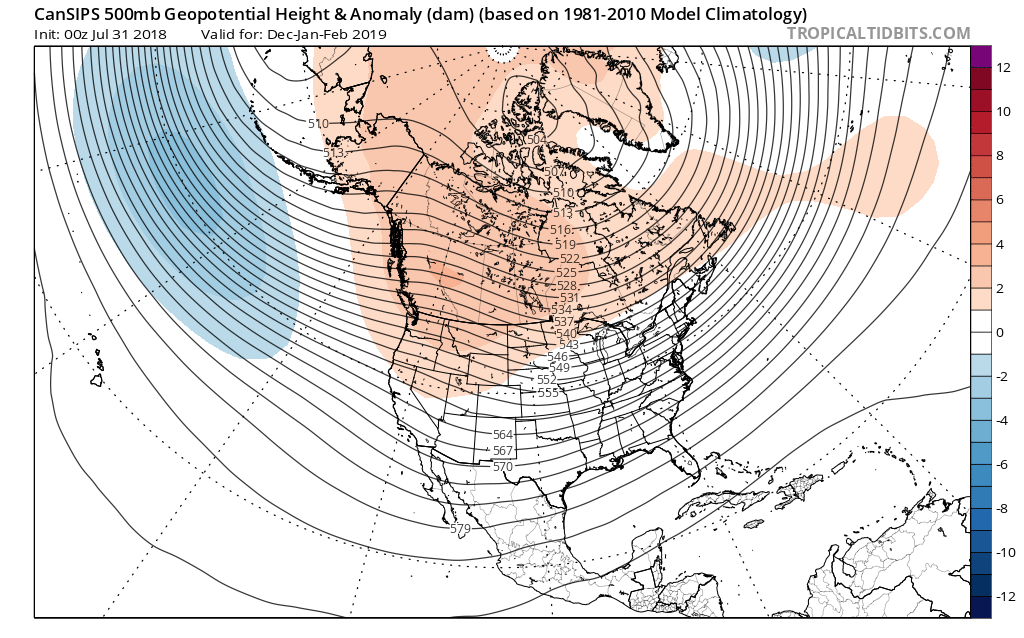

 That sea surface temperature configuration in the northern Pacific argues for western Canada ridging and downstream troughiness such as the JAMSTEC, European, and CanSIPS would imply.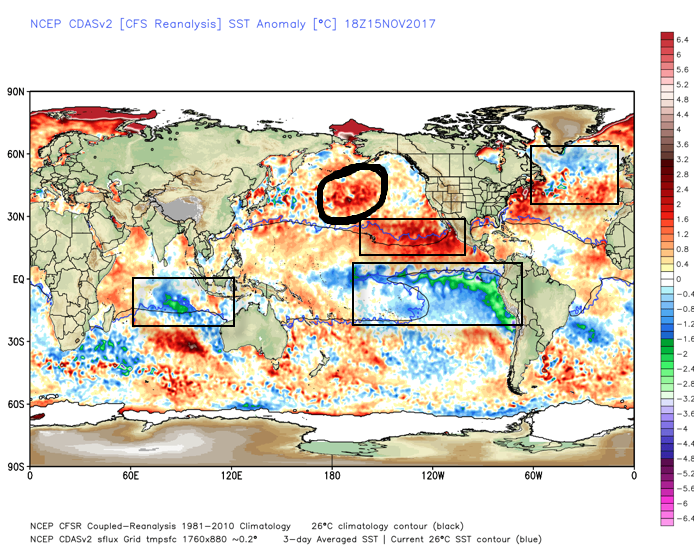
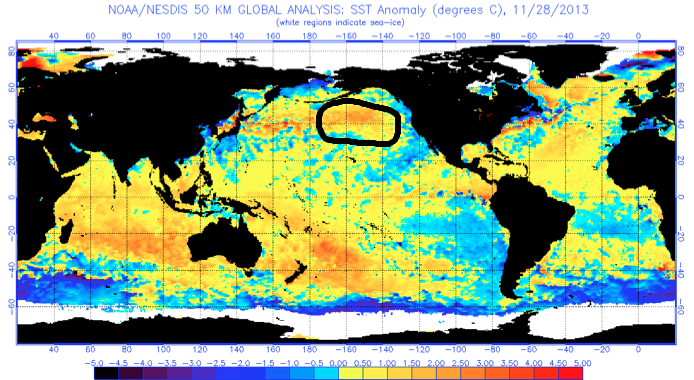
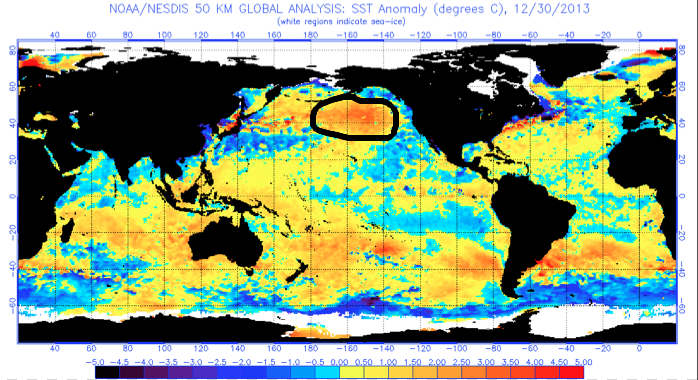
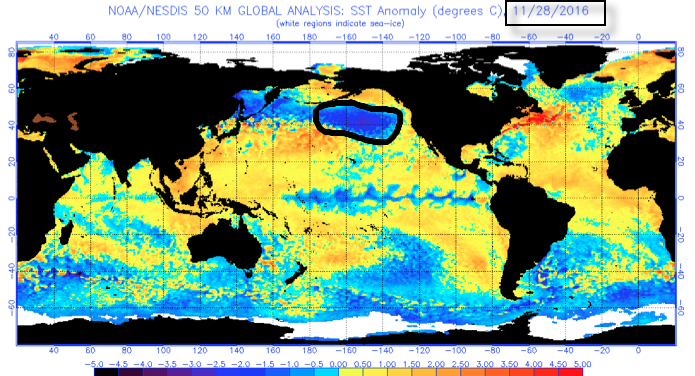 What makes seasonal forecasting so challenging (and fun :-)) are the multiple features that can impact a forecast. We’ve talked about the importance of ENSO (various types of Nino and Nina events) in past updates, as well as low solar and QBO. All of these moving parts and pieces are coming together in a manner that seems to be favoring more of a cold, wintry regime, locally, this year. Is that us saying another blockbuster 2013-2014 winter awaits? Absolutely not (there are other differences noted above with the SST configuration). However, it is suggesting that this winter will be absolutely nothing like the past couple…