Evening Video: A Tale Of Extended Summer That Gives Way To Sudden Winter…
You must be logged in to view this content. Click Here to become a member of IndyWX.com for full access. Already a member of IndyWx.com All-Access? Log-in here.
You must be logged in to view this content. Click Here to become a member of IndyWX.com for full access. Already a member of IndyWx.com All-Access? Log-in here.
I want to give a couple examples of significant conflicting signals- both short and long-term. The end result is a situation where long range, climate, and seasonal models are likely to have a very tough time not only in the medium to long range (2-4 week period), but thinking seasonally, as well (winter and next spring).
Short-term
To start, let’s look at the EPO. While strongly positive at present, both the EPS and GEFS pictured below take the EPO, or East Pacific Oscillation, negative in the coming couple of weeks.
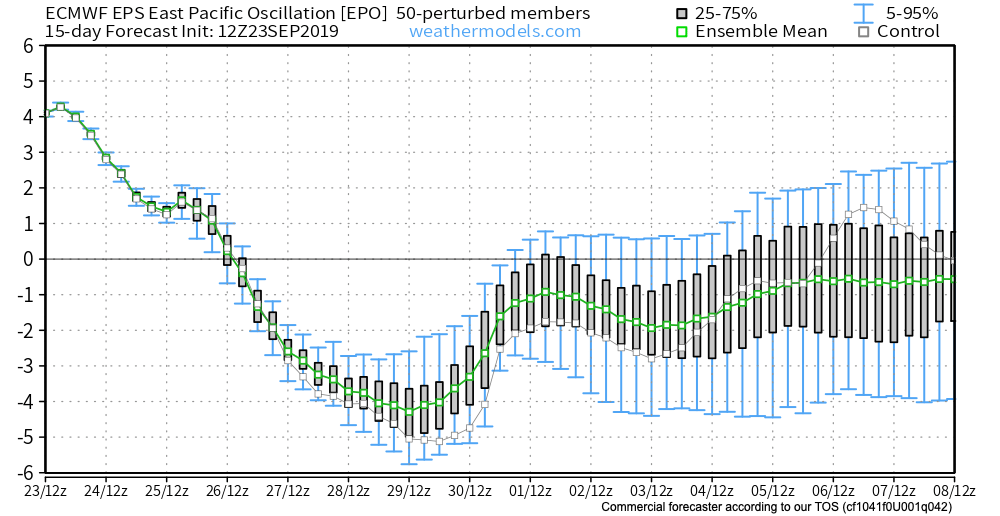
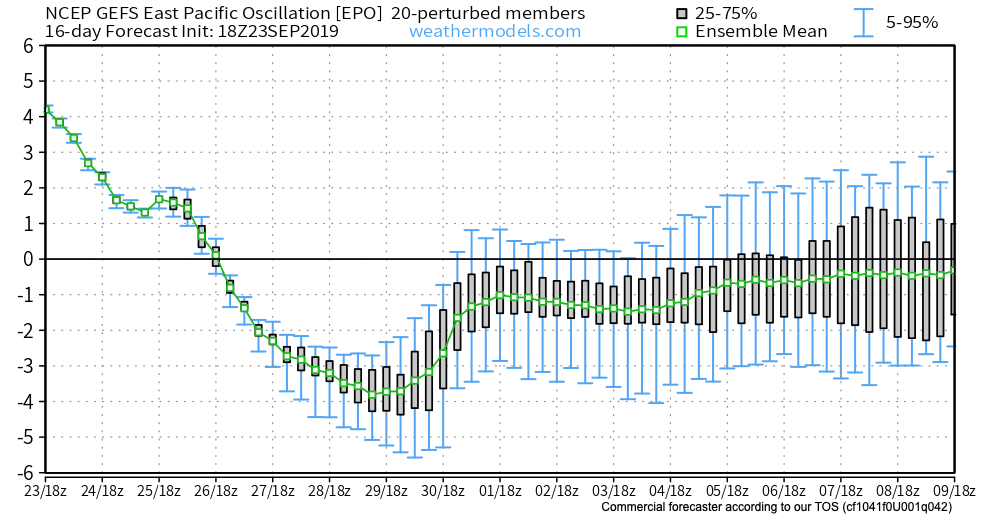
A negative EPO pattern favors a trough across the eastern portion of the country, especially here in our neck of the woods, with western ridging.

All well and good, right? WRONG. The MJO, or Madden Julian Oscillation, is forecast to stall out into early October in Phase 1.

This time of year, Phase 1 argues strongly for eastern ridging and well above normal warmth while the western portion of the country can experience early wintry conditions.
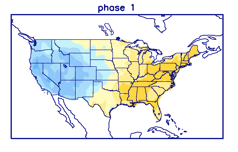
Talk about contradiction! That’s what makes weather so fun and fascinating. Expect to be humbled often and to always learn! At various times of the year, select teleconnections can mean a lot more than other times of the year. For example, during the summer and fall, we lean heavily on the EPO, PNA, and MJO (if amplified). During the winter and spring, it’s important to take into account what the AO and NAO have to say. It’s important to know when to “pick and choose” when to use particular teleconnections… Furthermore, the various MJO phases (1-8) mean drastically different things at different times of the year. While lovers of chilly fall conditions have grown to hate an amplified Phase 1, they have to love it come winter (shown below). Just look at that difference!

Before jumping ahead to another example of “contradicting signals,” we’re confident the amplified MJO Phase 1 will carry the day through the short to medium range period. Note the strong agreement between the EPS and GEFS below with respect to temperature anomalies in the 6-10 day period.
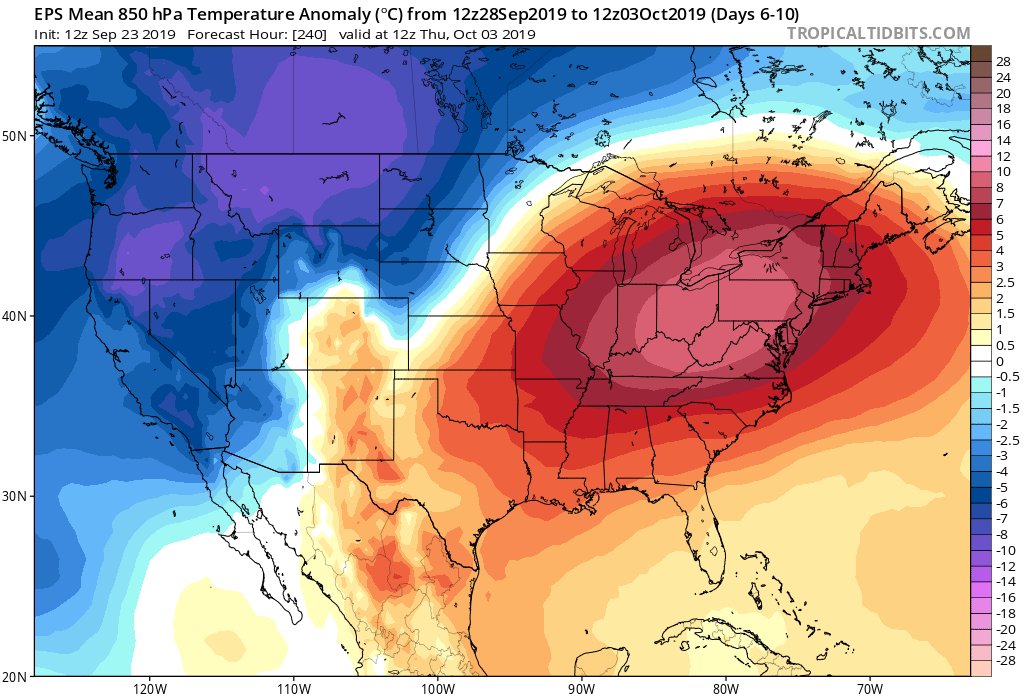

With that said, there will be challenges within (the big difference as early as this weekend between the GFS and European operational data). A lot of that has to do with the “fight” between the EPO and MJO to take control.
As all of this unfolds across the East, the west will begin to cash in on early winter. Well below average cold and snowy conditions will begin to make headlines over the weekend into next week across not only the Rockies, but some of the low ground, as well. Should the MJO swing into Phase 2 (and I think it will towards mid-Oct), then watch out. We’ll be looking at a rather significant shift towards a much colder feel- and it’ll sting even more so with the late season heat over the better part of the next couple of weeks.
Flipping the page to winter (remember, our prelim. winter outlook will be posted later this week) and the contradiction continues. Upon looking at the current SST configuration, one could easily argue we’re talking about a La Nina winter unfolding ahead.
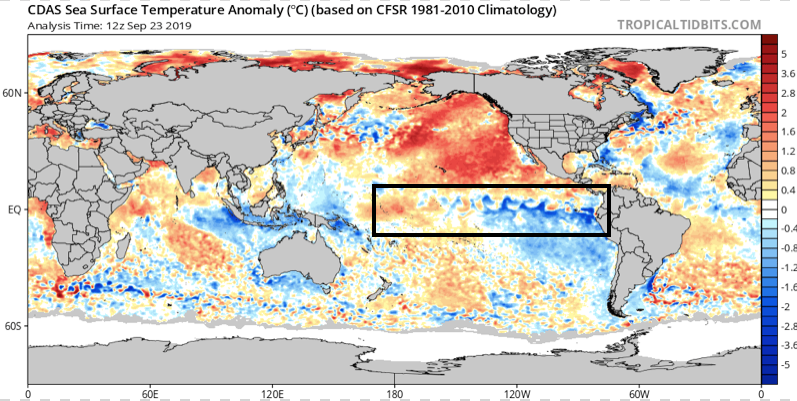
Meanwhile, the current SOI would suggest we’re in a moderate El Nino.
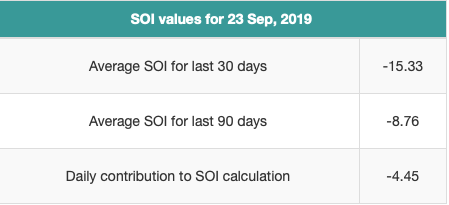
If you think this can’t wreck havoc even on the short-term forecast pattern, think again…
To close, while the conflicting data can create headaches at times, it’s more fascinating than ever trying to sift through the data and build our forecast(s). It’d be wise to expect more wild swings ahead- leave it to us to try and minimize the impacts of those swings in your day-to-day personal and professional lives. Accordingly, it’s also ultra-important to factor in additional items, such as solar and PDO into the equation for the upcoming winter.
Speaking of, without giving too much away, if I’m a winter weather fan (and I am), I wouldn’t worry in the least about the current warmth… 😉
While we’re still a couple months away from debuting our official annual Winter Outlook, we’re deep in research mode for what the ’19-’20 winter season may produce across central Indiana.
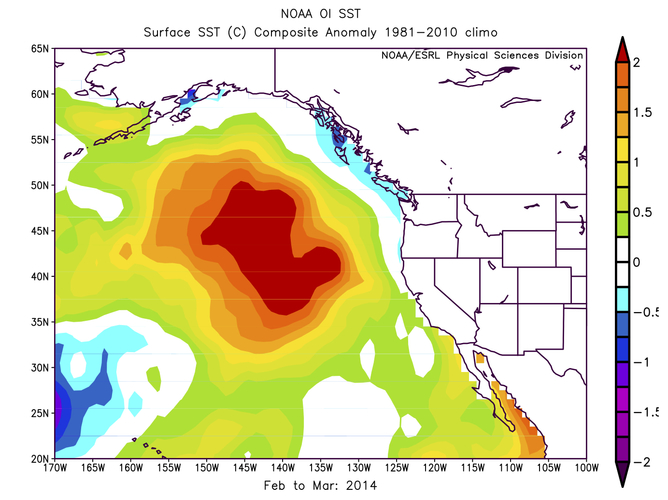
The very warm northeast Pacific sea surface temperatures are of the upmost interest.
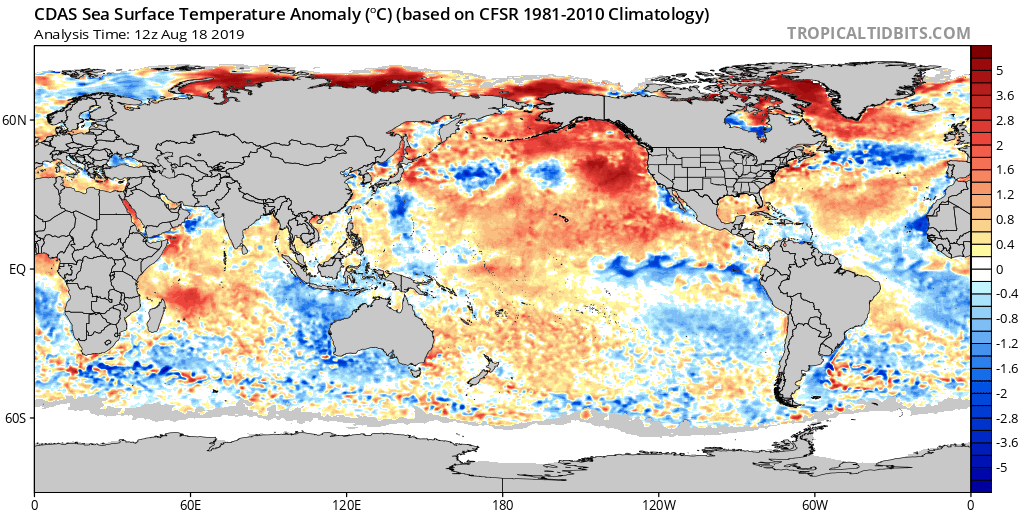
Note how the northeast PAC waters continue to warm:

These warm waters continue to “raise an eyebrow” and will have likely have a rather significant say in what ultimately takes place later this winter across a widespread portion of the country.
We don’t have to think too terribly far back to the infamous ’13-’14 winter and what the “warm blob” produced:
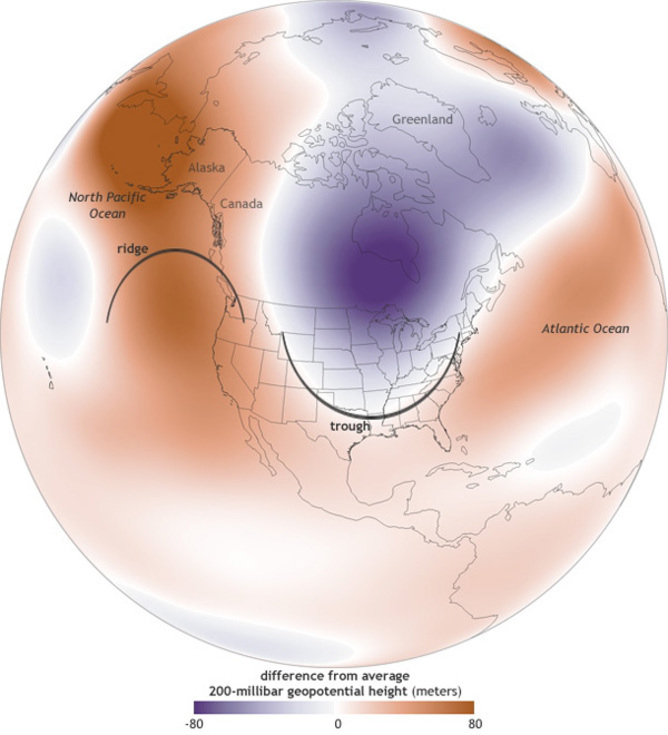
Some of the new climate models are going to a similar look at 500mb for the upcoming winter season:
In fact, one could easily make the argument with such anomalous ridgBing across western Canada, there should be more of a downstream effect (more of a significant trough across the eastern portion of the country).
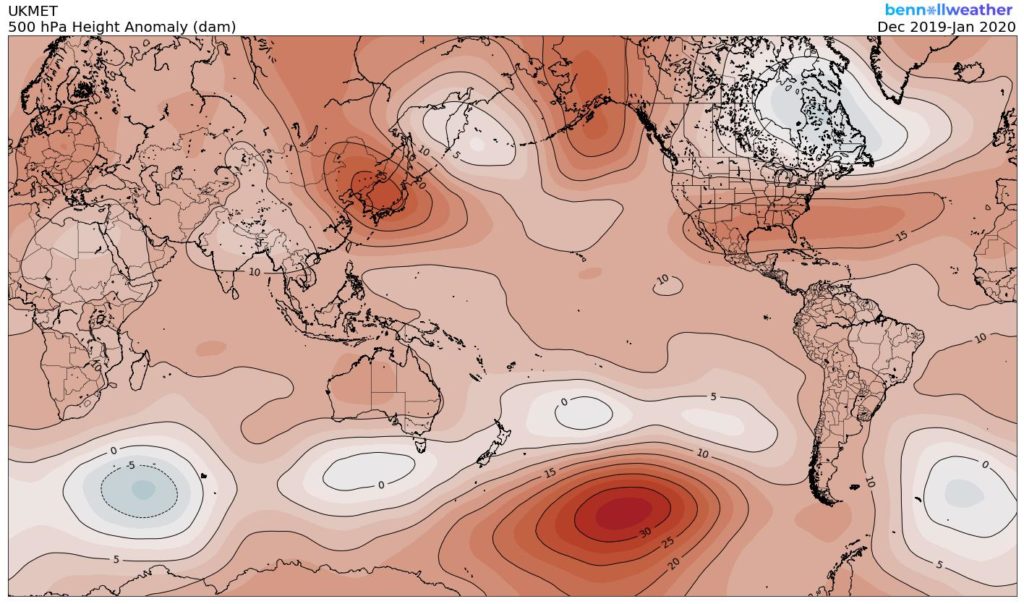
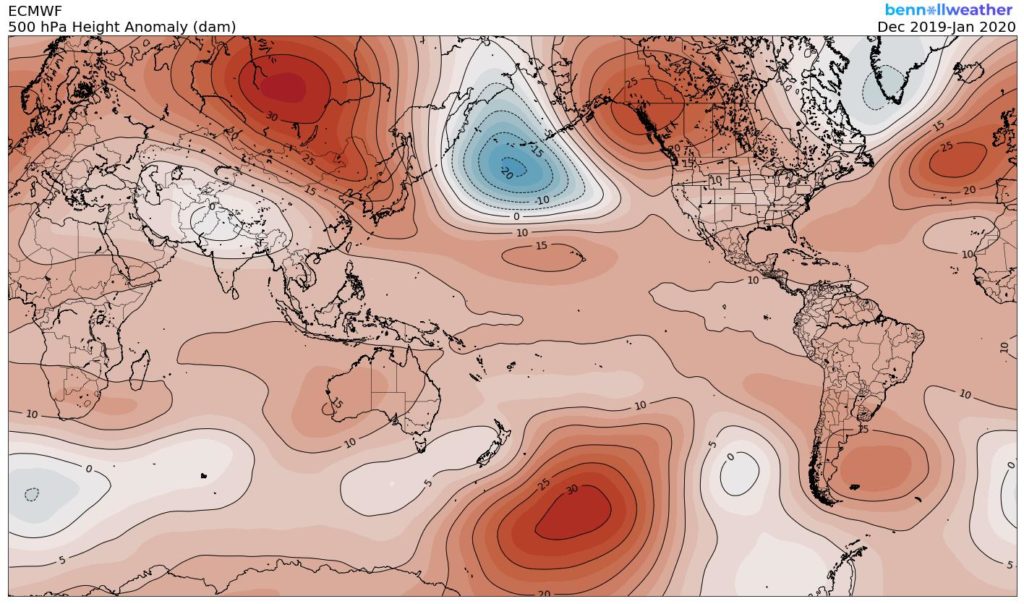
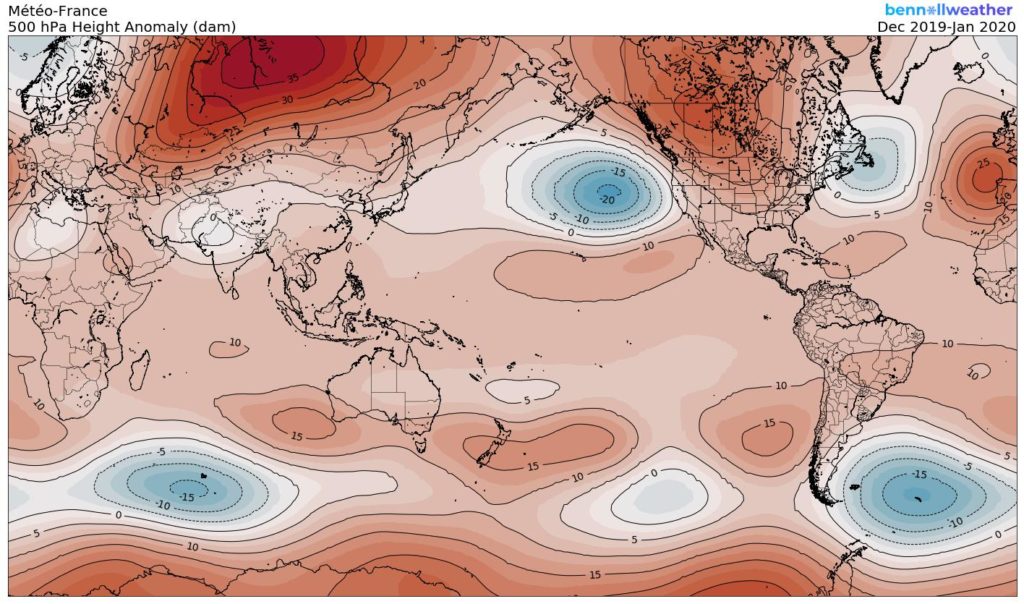
While there will be many more factors that we’ll have to build into the upcoming winter outlook, the warm NE PAC waters most certainly argue (and strongly at that) for a rather persistent western Canada/ NW Conus ridge and more of an eastern trough…
I. Drier air continues to surge south and with it will come much cooler temperatures overnight into Tuesday morning. We still believe most central Indiana reporting sites will fall into the middle 50s Tuesday morning. Turn off that A/C and open up those windows!
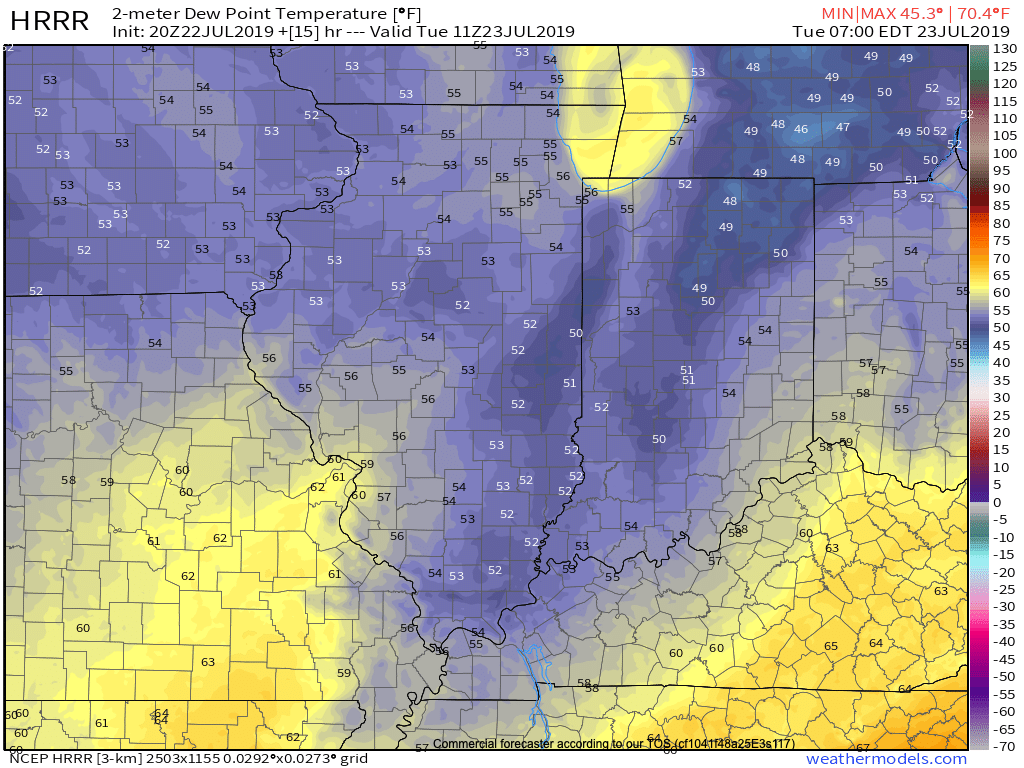
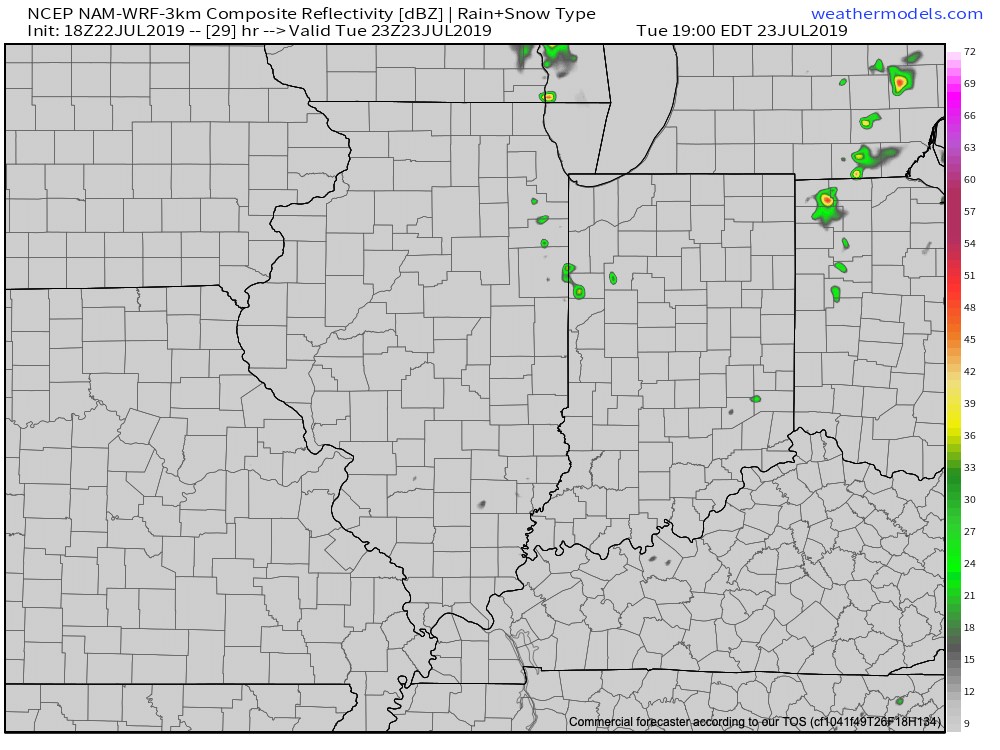
II. Weak upper level energy will push south and lead to isolated to widely scattered instability-driven showers across northern parts of the state tomorrow afternoon. A couple of these quick-moving showers could scoot into central Indiana, but we continue to believe most will remain free of any precipitation tomorrow.
III. Overall, we’re looking at a very quiet weather pattern through the weekend with an extended period of dry weather, thanks to high pressure. Temperatures will slowly warm from the unseasonably cool and refreshing levels into mid week to more of a seasonal feel this weekend.
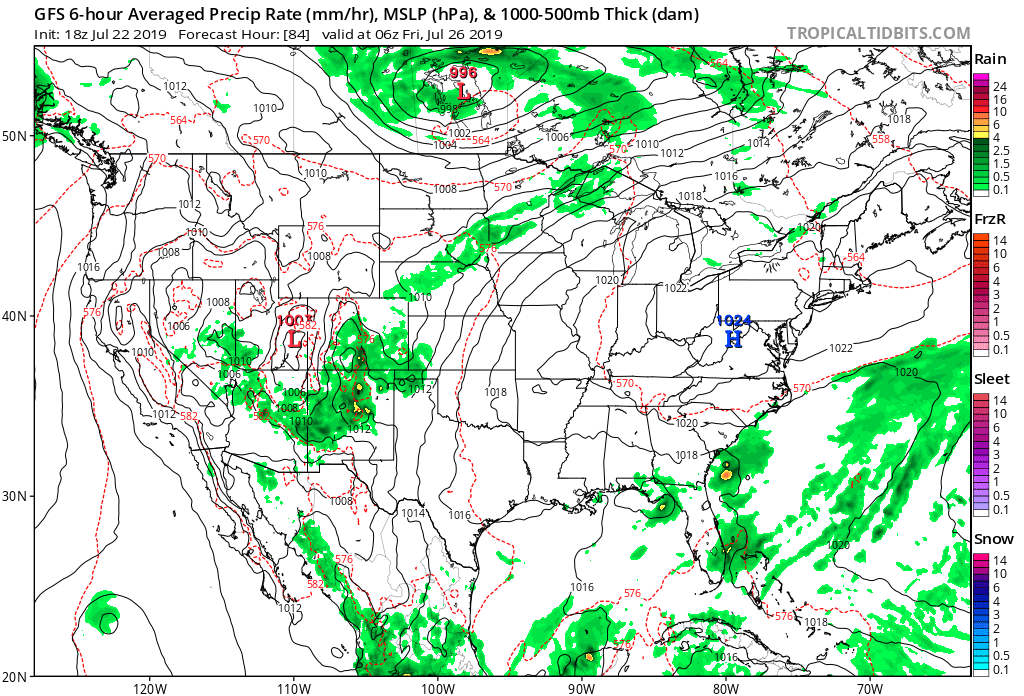
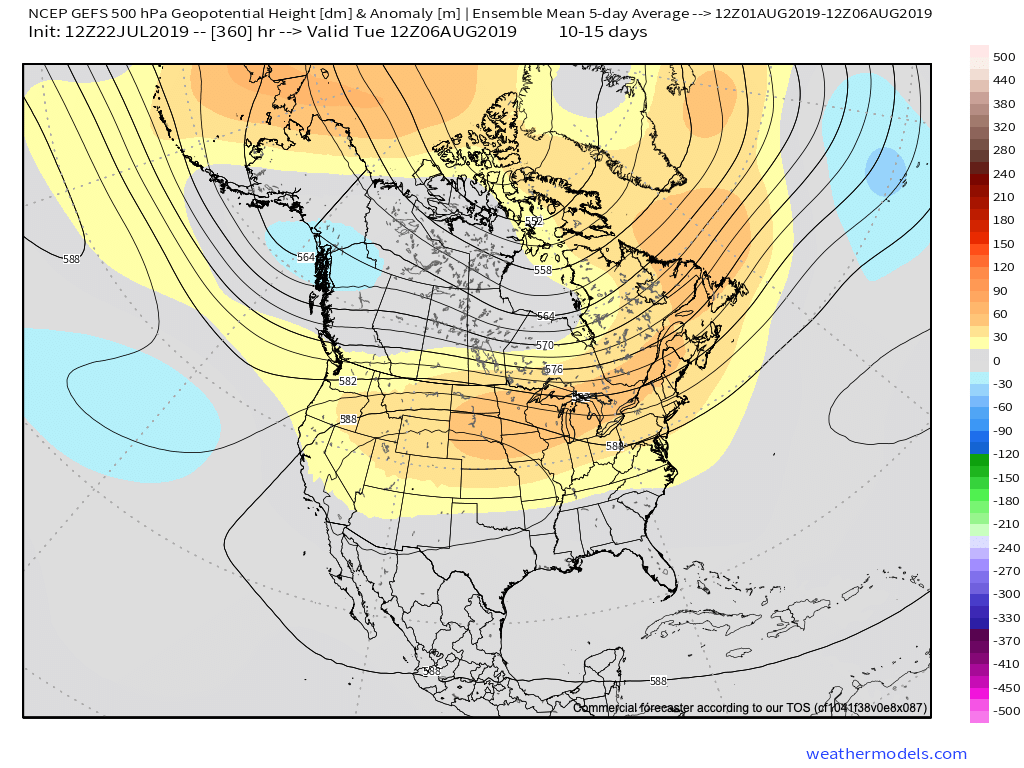
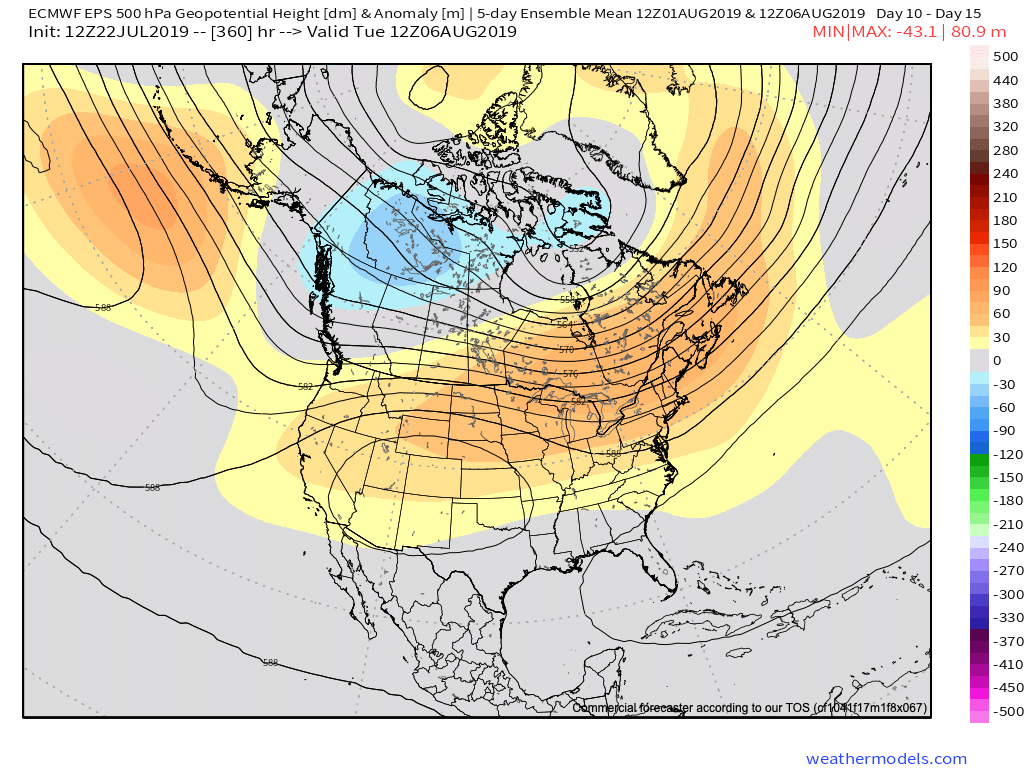
IV. As we look ahead, the upper air pattern should transition to more of a classic summer-like regime to open August. However, data shows the ridge continuing to “retrograde” west with time, resulting in a period of wetter conditions with a northwest flow aloft Days 10-15 (roughly Aug 2nd- Aug 7th). It’s always good to see agreement between the European and GFS ensemble products below.
V. Research continues on the upcoming fall and winter and it’s becoming increasingly difficult to ignore the warm sea-surface temperatures across the northeastern Pacific. Interestingly, most seasonal model data maintains this warm “blob” into the late fall and early winter. Note where we are currently (center photo) vs. where the projection off the UKMET (top left) for Oct-Dec and European (bottom left) for Nov-Jan.
While only 1 of several ingredients used in building our seasonal outlooks, this can promote the tendency for more persistent western ridging and downstream trough (associated colder pattern) across the East…

The year continues to fly by! We’re now finalizing our forecast for the last month of meteorological summer and will include a look-ahead to our early fall ideas with the official August Outlook that hits the site later next week. With that said, here are some of our early August ideas:
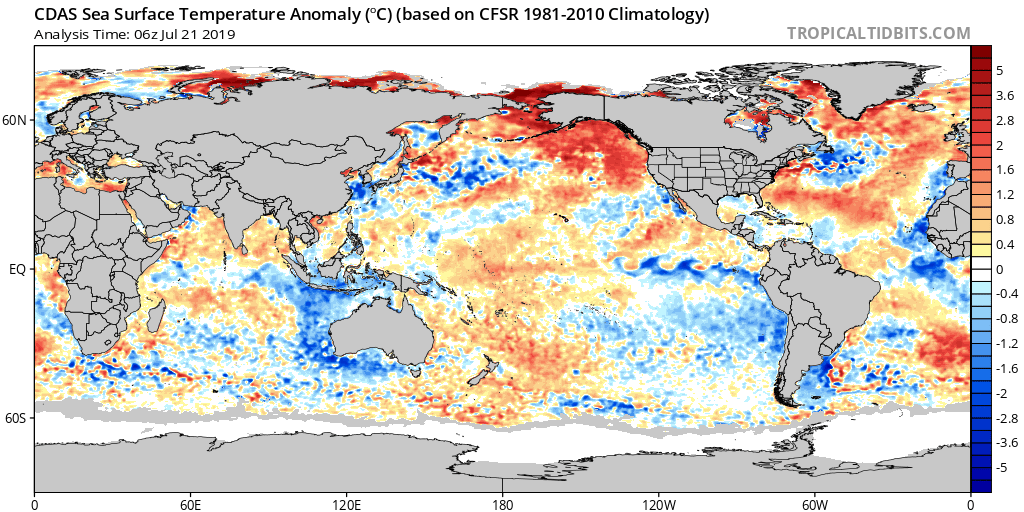
I. Sea surface temperatures remain well above average through the western Atlantic basin as well as the northeastern Pacific. This should promote warmer than normal conditions, overall, along the coastal areas. Additionally, we’ll need to continue to keep a close eye on the potential of additional “home grown” (Gulf of Mexico and off the southeast US coast) tropical development as we move closer to the peak of the hurricane season.
II. The MJO isn’t nearly as hyper as months past. While we’ll continue to keep a close eye on things, we currently don’t anticipate being able to lean on this tool as a good indicator for what may transpire through the month of August (at least early on).

III. We need to keep a very close eye on the EPO over the upcoming week to see if modeling continues to project a significantly negative phase into August. This can “up the ante” for a cooler than normal central US during August if so.

IV. Lack of widespread drought/ dryness. The wet spring and early summer really can help make an impact longer term and that has been seen as early as this week (added humidity with the heat wave), but also helps overall when it comes to late summer and the respect to the staying power, or longevity, of heat waves.
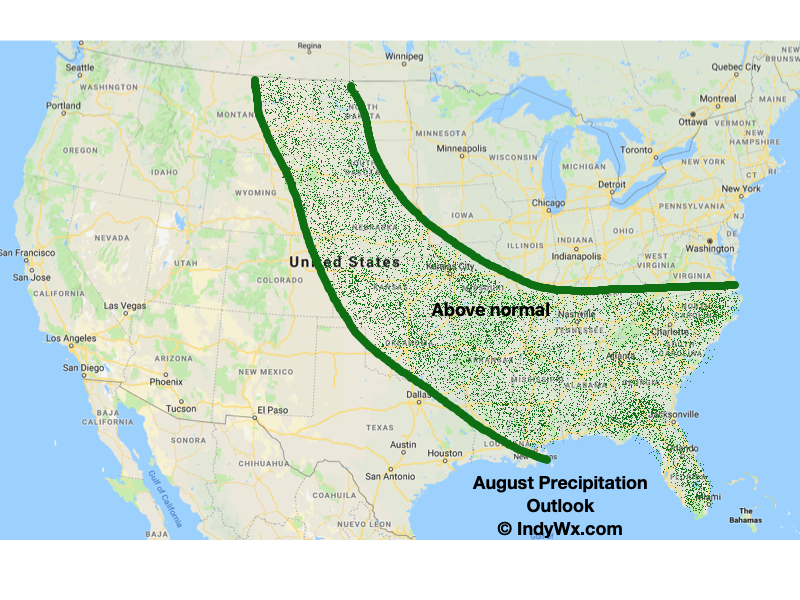
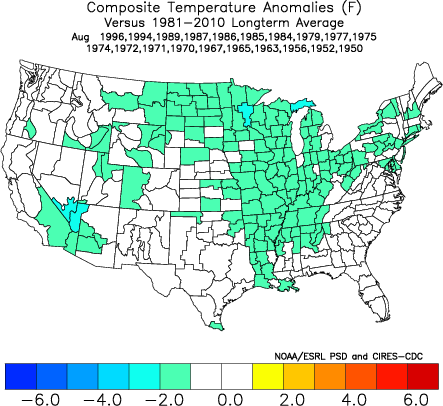
Here’s our early thinking with respect to August temperatures and precipitation. Again, our final, more detailed, outlook will be issued next week!