Important To Know What Lever To Pull And When…

As another year comes to a close and the winter pattern begins to “mature,” we thought we’d do a little rambling…

This evening’s rambles have to do with the variety of “drivers” that at times like to take control of our weather pattern. You hear us use terms like the MJO, EPO, AO, PNA, and NAO (amongst others) often, but at times, these various pattern drivers can have more impact than others, and at varied times of the year.

Traditionally, if the MJO (Madden Julian Oscillation) is highly amplified, that’s going to serve as the basis of our medium or longer range forecasts. However, if the MJO is in the null phase, other teleconnections can take control of the wheel. Sea-surface temperature configuration can give hints to the way these elements may behave during the season(s) ahead, but we caution each respective season takes on a flavor unique to it’s own. That’s what makes this business so fun, challenging, and, at times, frustrating. 🙂

It’s also important to understand when the ingredients noted above have the greatest impact on our immediate weather. We love to lean more heavily towards the NAO and AO mid-to-late winter into the spring, for instance. Case in point, a negative EPO and positive PNA can quickly trump a positive AO/ NAO this time of year, and vice-versa.

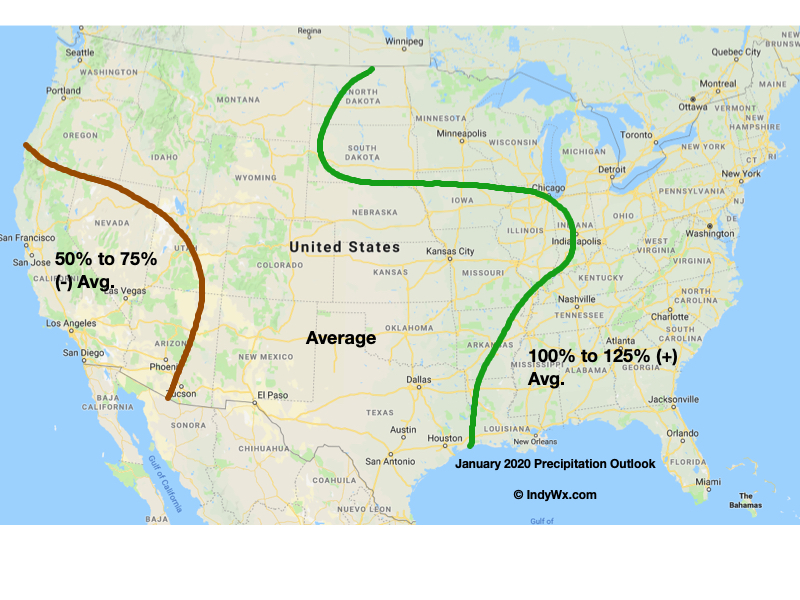
In the event you didn’t have a chance to see it Sunday, we released our January Outlook. We have a very stormy month outlined that includes cold “overwhelming” things as the month progresses. A lot of this has to do with the fact we think we see a “shake-up” with the MJO out of the warm phases and into the traditional cold phases of 8,1, and 2 taking shape during the 2nd half of the month. Additionally, we continue to believe the favorable north Pacific sea surface temperature configuration (for a cold Great Lakes and OHV) will begin to force the negative EPO/ positive PNA.

The NEW European Weeklies show the transitional time of things through the 1st half of the month, but note the building more persistent NW NA ridge during the 2nd half of the month and corresponding reflection of an eastern trough. Should the MJO be heading into Phase 8 around this time frame (and we think it will), this trough will likely correct stronger in future updates for late month.
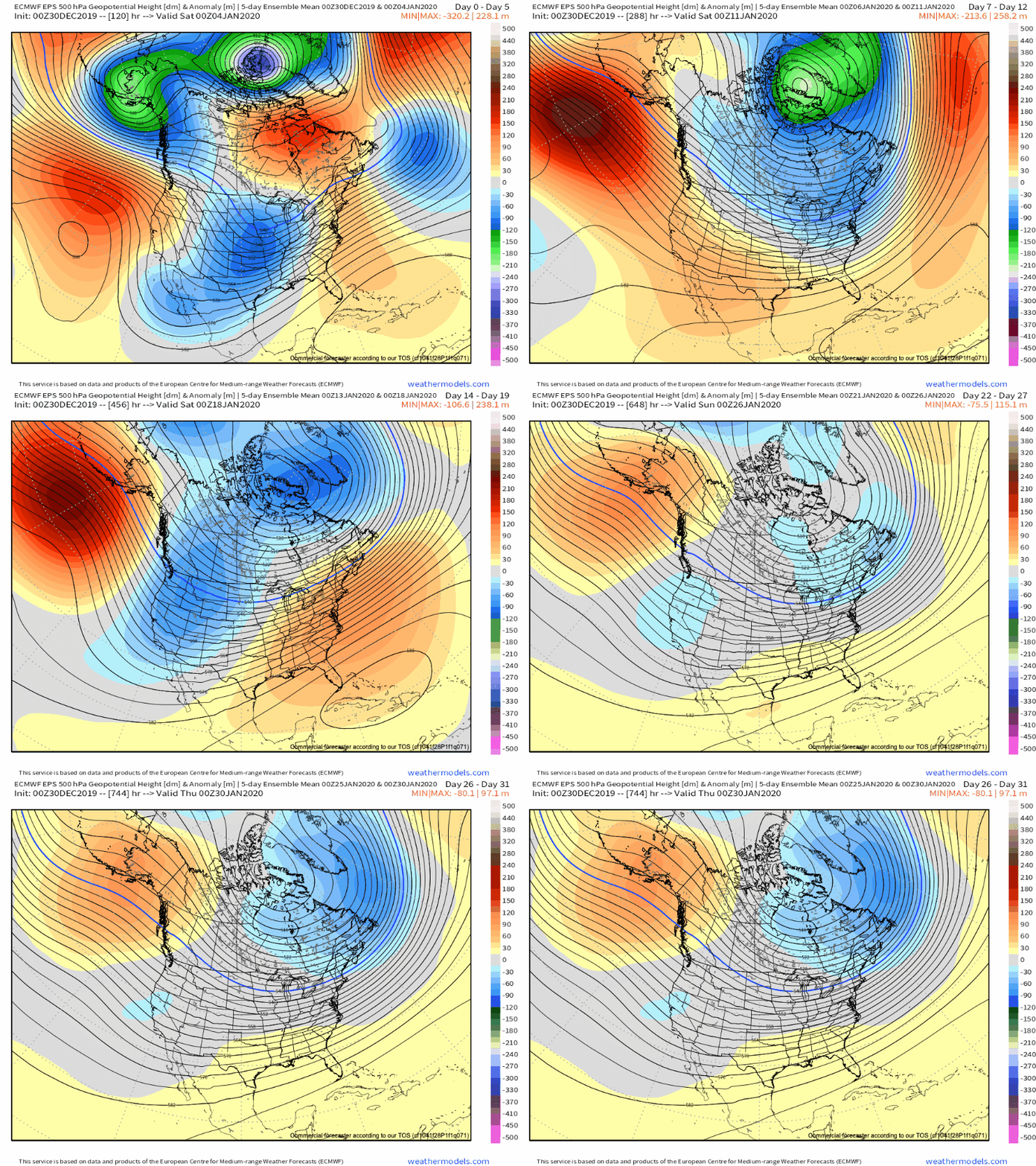
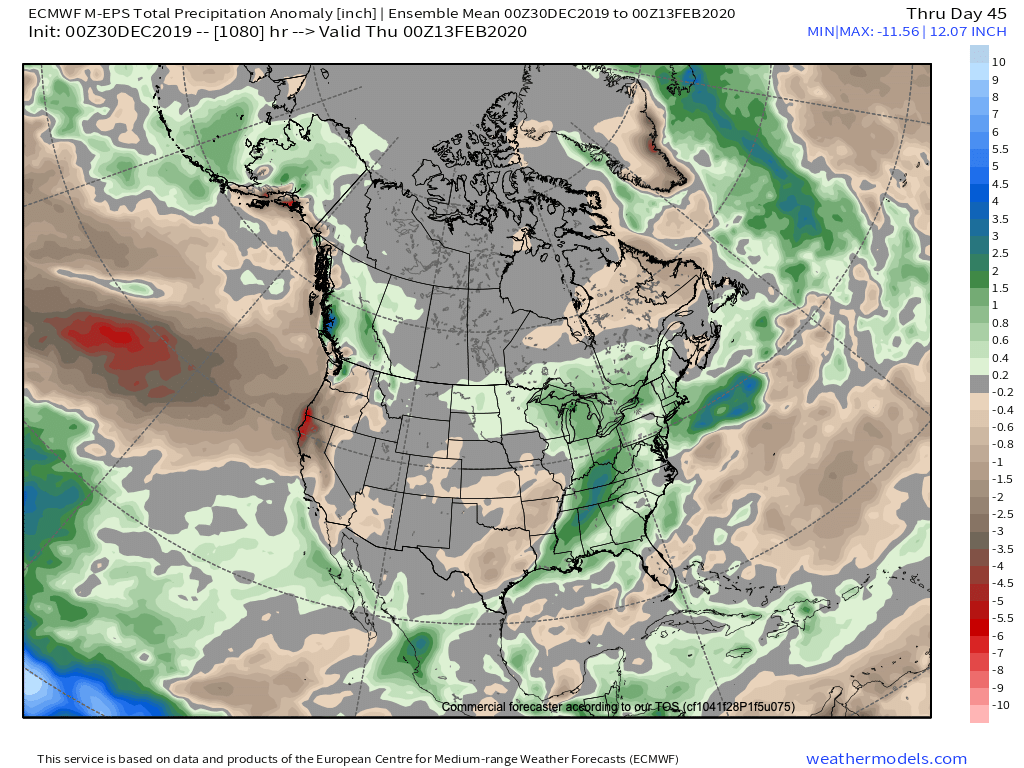
The model sees the stormy time of things through the month and into February. (Important to note that even “warm” months this time of year can also feature above normal snow. Just see this December- nearly an inch above normal for the month). As things stand now, we see multiple opportunities for snow as January gets underway, including Saturday PM, and again Tuesday night into Wednesday.
Make it a great evening! We’ll be back early in the morning with a fresh video update.

January 2020 Outlook: Don’t Put Us In The “Winter’s Done” Camp…

The 1st half of December got off to both a colder and snowier than average start. In what’s now going to be known for a “warm” December around these parts (last 9 consecutive days have run above, to well above, average), it’ll also go down as a snowier than average month. The recent warmth has ignited chatter within (and outside) the weather community that winter may be finished. Simply put, please don’t confuse us for being in that camp.

We thought December would turn warmer than average across the eastern half of the country, but that the ‘mean’ winter pattern would begin to show itself in January. A big reason for this has to do with the sea surface temperature configuration, including the warmer than average northeast Pacific and reflection of a Modoki El-Nino. With a couple days left in December, this still holds true.

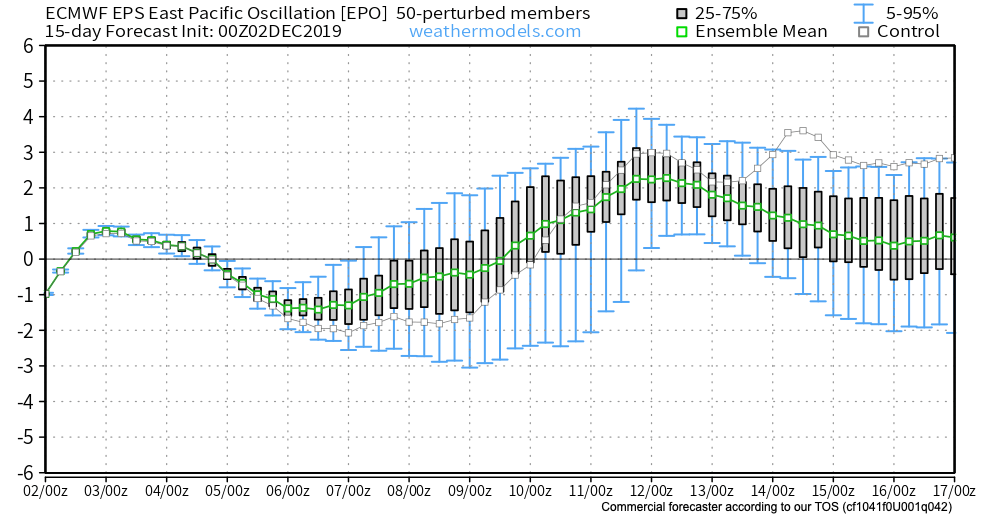
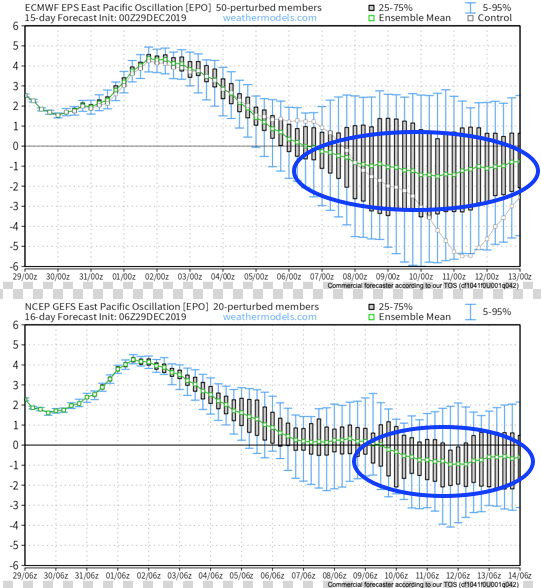
Simply put, as the winter season matures, these should work in tandem to generate a more persistent ridge across NW North America with a more sustained trough setting up across the Great Lakes region. This negative EPO pattern should carry the day from mid-late January, through February (already know where we’re leaning with our February Outlook ;-)) and into March.

Models seem to be discovering the negative EPO pattern on the horizon:

Interestingly, until then, the MJO rumbling through Phases 7-8 will likely generate wintry “fun and games” during the 1st full week of the month. This will come at the end of a relatively mild open to the month, and could set the stage for what we believe will be a situation where cold “presses” southeast and eventually overwhelms the pattern. The exception may be along the immediate Southeast and coastal areas up into the Northeast region. Here, more sustained ridging will likely be associated with the MJO getting into Phases 5-6. Elsewhere, we anticipate the negative EPO to begin to win the day. The month should be quite stormy for the Southeast into the upper Midwest and Great Lakes into the Northeast.

Our official January Outlook reflects our cold, stormy thoughts.

Initially, cold will dump into the West, but likely begin to spread out as the negative EPO develops. We also note the majority of models are beginning to “tap the brakes” with respect to the overall amplitude of the MJO swinging through the warmer phases (some now even hint of keeping things in the wheelhouse or curling back into the colder phases).

More specific to central Indiana, we think the month opens milder than average before cold begins to “win out” during the 2nd week of the month. The potential of a winter storm precedes the colder shift and our short-term products will handle that situation. The back half of the month should feature more sustained cold weather. With an active storm track, we believe January will produce the 2nd consecutive month of above average snowfall across central Indiana.

Unlocking The Puzzle?

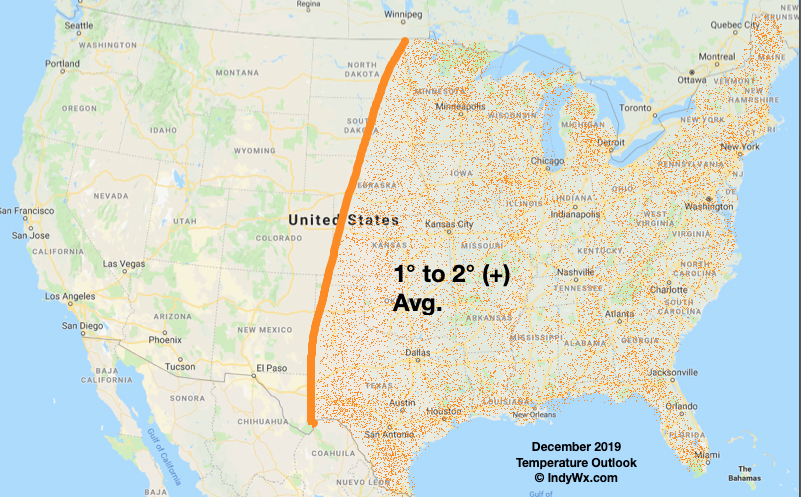
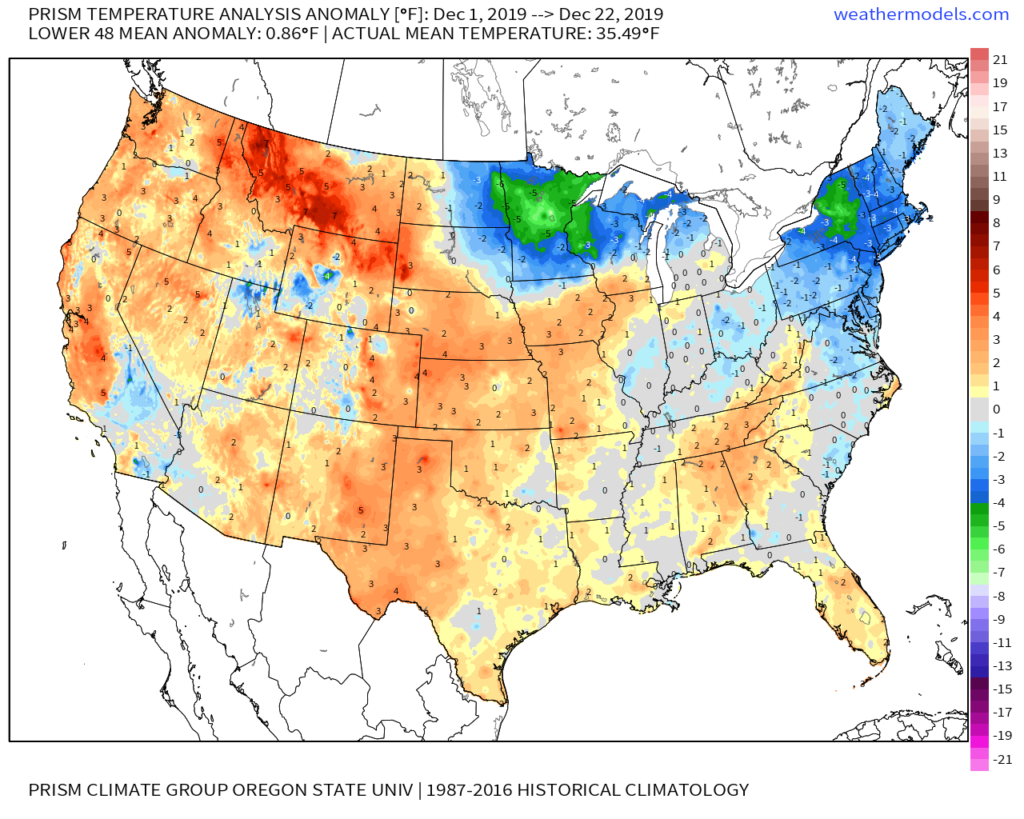
Before we take a look-ahead to January, reviewing our December forecast vs. reality (and what’s to come), shows that we’re in a strong position to grade well for the last monthly forecast of 2019- especially across the eastern half of the country.

IndyWx.com December Temperature Outlook:

Reality Month-to-Date:

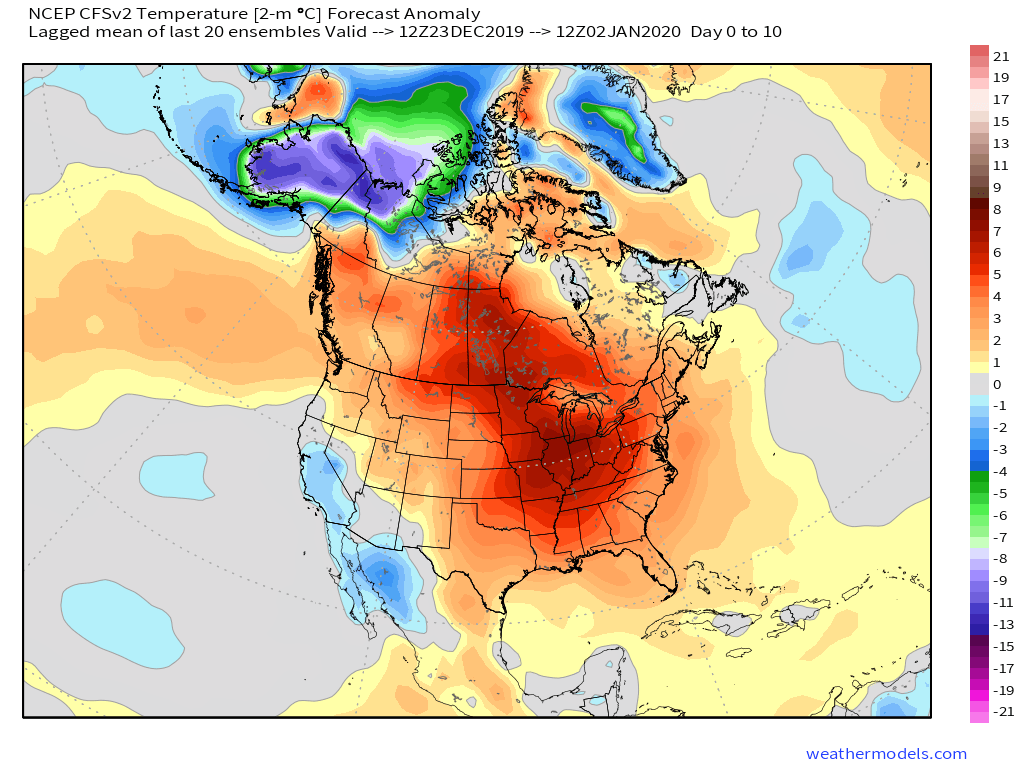
Remainder of the month:

As we look ahead, at least until we get to mid and late winter (when the AO and NAO can begin having more influence on the pattern), I think we’ll go as the MJO sees fit. There are growing signals the MJO should begin to get more amplified as we get into the new year and this should play a significant role in the overall January pattern. The idea is a relatively warm open to the month (cooler than what we’ll see the next week, but still a touch milder than average) that trends colder as the month progresses.

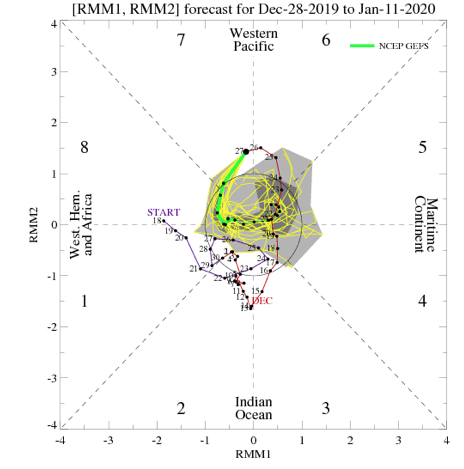
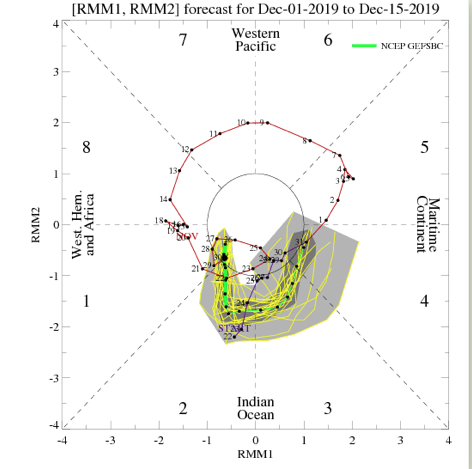
The MJO looks like it will cycle into Phase 5 before “curling around” into Phases 6 and 7.

This would yield a transitional time of things from a predominant eastern ridge that gives way to expanding cold late Week 2 into Week 3.

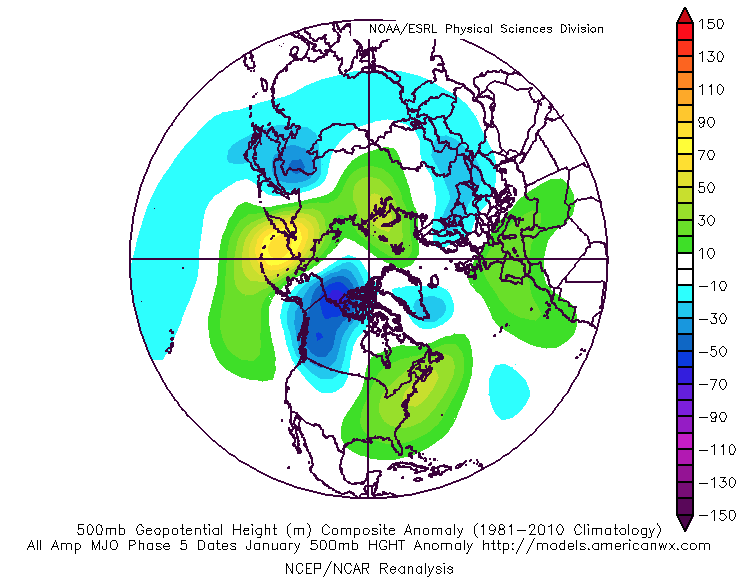
Phase 5: JAN
Phase 6: JAN
Phase 7: JAN

By the way, there are reasons to believe the amplitude would likely continue into Phase 8, 1, and 2, late month and into February. If so, this would result in cold overwhelming the pattern along with increased storminess (plenty of winter storm threats to boot). Truth be told, after a mild open to meteorological winter (nice to still cash-in on an early season snow event), there are plenty of reasons to believe we’re looking at winter to return with authority as January evolves.

Our complete January Outlook will be online Sunday.

More December Rumblings: MJO, PNA, EPO Don’t Favor Sustained Cold (Yet)…

For those that may not have had an opportunity to review our December Outlook over the busy Thanksgiving weekend, you can do so here.

This morning, we wanted to again review our forecast and provide further context behind our overall active, warmer than normal call for the month as a whole.

Before digging in to those additional details, here’s our 2019 December Forecast:

The “baseline” of this slightly-moderately milder than normal December is due to what appears to be the tendency of the MJO to run into the warmer phases (remember, Phases 3-5 this time of year argue for warmer than normal conditions across the East). The most updated MJO forecast continues to stay the course here.

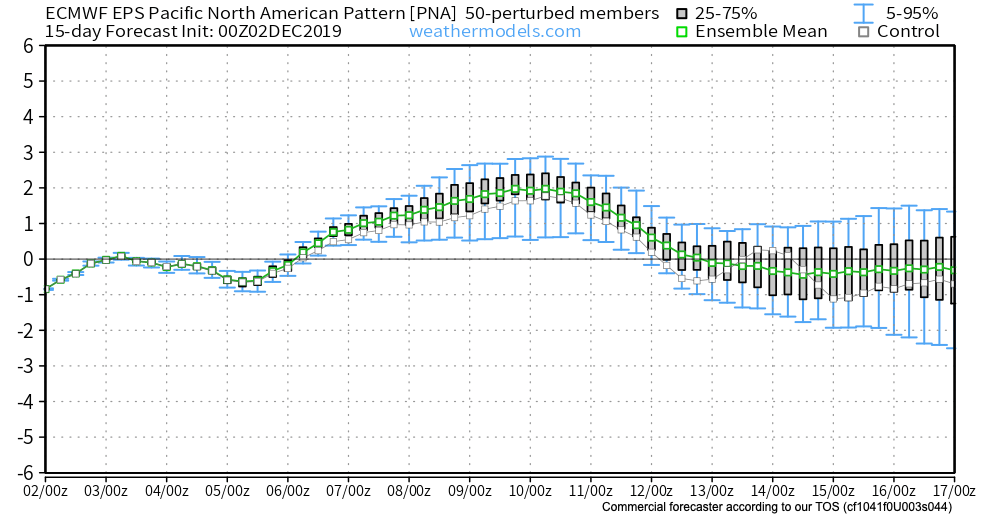
At least through mid-December, the PNA and EPO are also forecast to be in phases that would support warmer than normal conditions across our portion of the country in the overall sense.

This isn’t to say that we won’t have cold and snow to deal with at times this month. We just believe the colder, wintry conditions that may present themselves will be transitional and that warmth will win out at the end of the day.

As we look ahead, there’s reason to believe other factors will come into play that will begin to change the pattern towards one that’s more suited for prolonged cold around, or just before, Christmas. Furthermore, despite the relative warmth forecast for the month of December, we remain firm on the idea of a colder, snowier than normal winter season.