VIDEO: Hint Of Fall The Next Couple Mornings…
You must be logged in to view this content. Click Here to become a member of IndyWX.com for full access. Already a member of IndyWx.com All-Access? Log-in here.
You must be logged in to view this content. Click Here to become a member of IndyWX.com for full access. Already a member of IndyWx.com All-Access? Log-in here.
In our JMA Weekly recap from last week, we noted the model was transitioning towards a wetter pattern for early and mid June.
It’s encouraging to see the latest ensemble data from the American GFS and European (courtesy of TropicalTidbits.com) support this idea, as well.
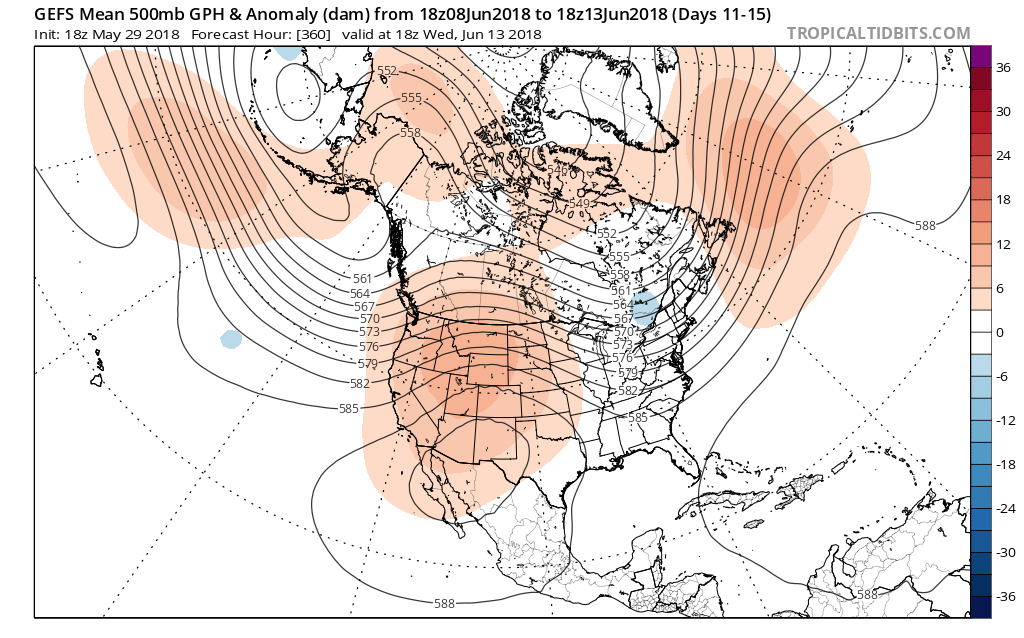
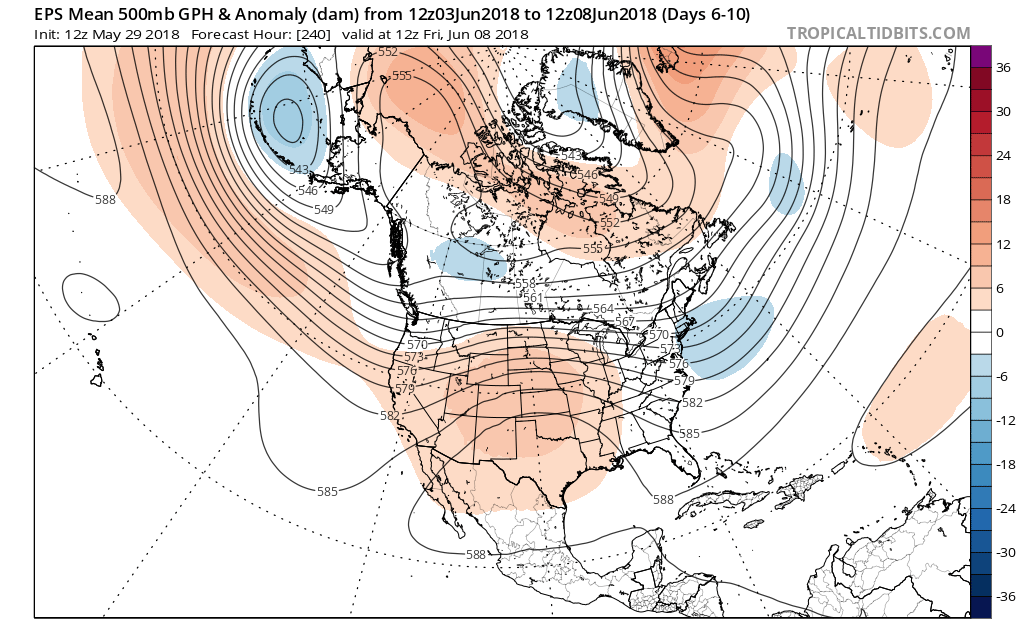 In addition to a wetter pattern, we would also want to pay attention to the potential of a gusty storm complex or two riding southeast around the hot dome off to our southwest.
After an unusually dry May (- 3.44″ as of this post), Alberto’s remnant moisture will help us, at the very least, cut into the rainfall deficit tomorrow. Longer term, it sure is nice to see the medium range guidance in agreement on a wetter time of things. As we’re all aware, this is a crucial time to determine the overall long-standing summer pattern. Dry ground and early warmth can easily “feedback” on itself, and it’s easy to understand some of the concern, particularly AG-related over the past few weeks. With that said, it’s certainly not too late to try and at least ease some of the worry a bit.
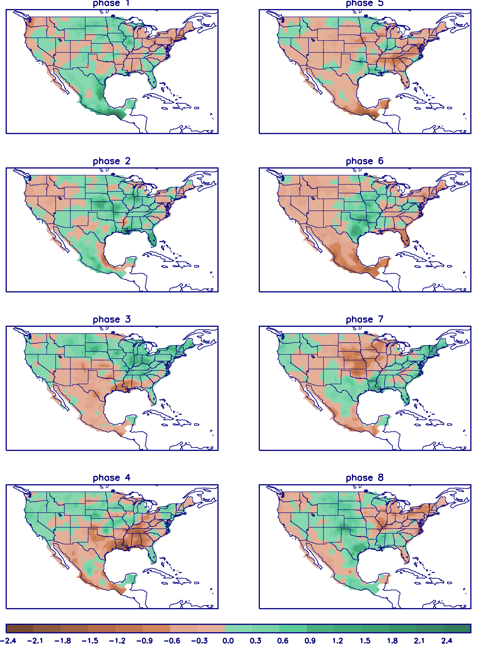
When we look at the MJO, we note the amplitude and it’s forecast to swing through the wetter phases, at least locally, (4,5,6) through the month of June:

 In closing, the JMA Weeklies led the charge in the idea of more active times returning in June, and the combination of GFS and European ensemble data suggests they had merit. With the added bonus of having the MJO on our side, it’ll be hard to avoid a change of the guard towards an overall wetter pattern in the weeks ahead. Perhaps Alberto’s remnant moisture is only the beginning…
1.) A gorgeous Thursday evening will give way to increasing cloudiness overnight along with isolated to widely scattered thunderstorm coverage into the wee morning hours Friday. The culprit? A warm front lifting north through central Indiana.
 2.) Sunshine will develop as the day progresses Friday and we’ll notice an increasingly muggy feel through the afternoon and evening. A true taste of summer can be expected as we put a wrap on the work week, including highs in the middle 80s and dew points climbing into the mid and upper 60s.
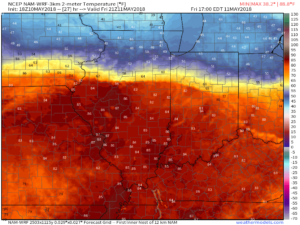
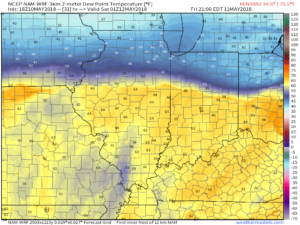 Also note the tight temperature gradient across the state. That temperature gradient will serve as the focal point between a mostly dry central Indiana through the first half of the weekend and “busier” times across northern parts of the state into the southern Great Lakes region. Locally heavy rain will fall at times with storms for our friends “up north!” We’ll remain very summer-like here into next week.
3.) Most of the weekend will be rain and storm free across central Indiana with many more dry hours than not. With that said, we’ll monitor for the prospects of a couple rounds of showers and thunderstorms Saturday evening into Sunday.
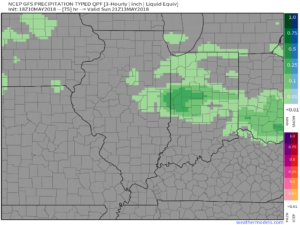 4.) The balance of next week will run significantly warmer than normal and feature an almost daily threat of showers and thunderstorms. While there will be some “haves and have nots,” most area rain gauges should accumulate 1″ to 2″ of rain by the end of next week.


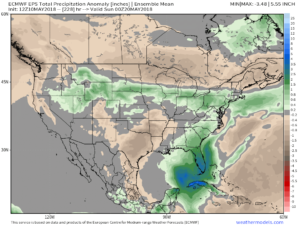 5.) Speaking of rain, the new European Weeklies in tonight, courtesy of weathermodels.com, also point towards wetter times in our future. This is encouraging as it supports the going idea shown this morning from the JMA Weeklies, CFSv2 Weeklies, and GEFS. Needless to say, despite the recent dry shift, we’re not concerned for long term moisture issues (or lack thereof ;-)).
For the first time this spring, you’ll really notice the muggy nature to the air by Wednesday afternoon, as dew points climb from the pleasant 50s (Wednesday morning) to near…
You must be logged in to view this content. Click Here to become a member of IndyWX.com for full access. Already a member of IndyWx.com All-Access? Log-in here.
The upcoming 10-days will run cooler than normal, overall, but it’s the cool on the front end that will be most noticeable before a nice warming trend develops towards the weekend and into early parts of Week 2.
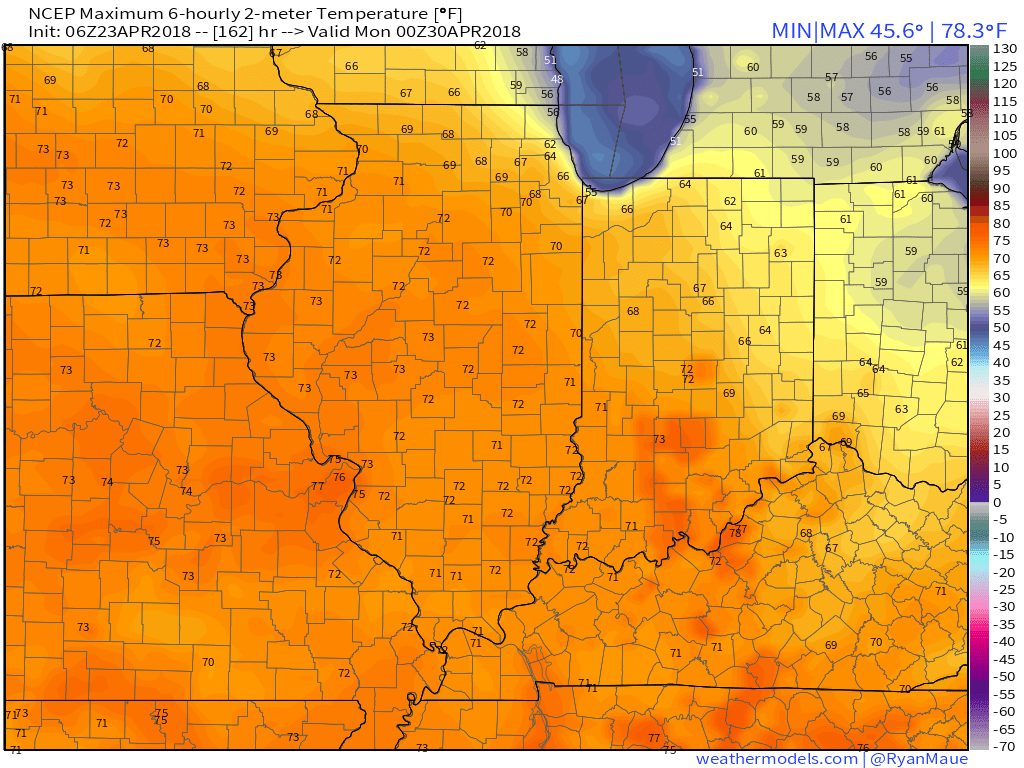
 After a chilly work week (relative to average), 60s will return this weekend and temperatures will zip into the lower and middle 70s early next week, before approaching 80° by the middle of next week.
 Despite the showers that will impact central Indiana today, it’s mostly a dry pattern over the upcoming 10-day period. Additional rain chances will continue Tuesday (scattered, nuisance-level) and with a frontal passage Friday. With that said, 10-day rainfall will only run between one half and three quarters of an inch for most of the region.
The majority of the Ohio Valley will run drier than normal through the period.
