We’ve been relatively spoiled so far this summer- both in regards to temperature and precipitation. That said, as we approach the second half of July, things appear to be changing for the hotter and drier side of things.
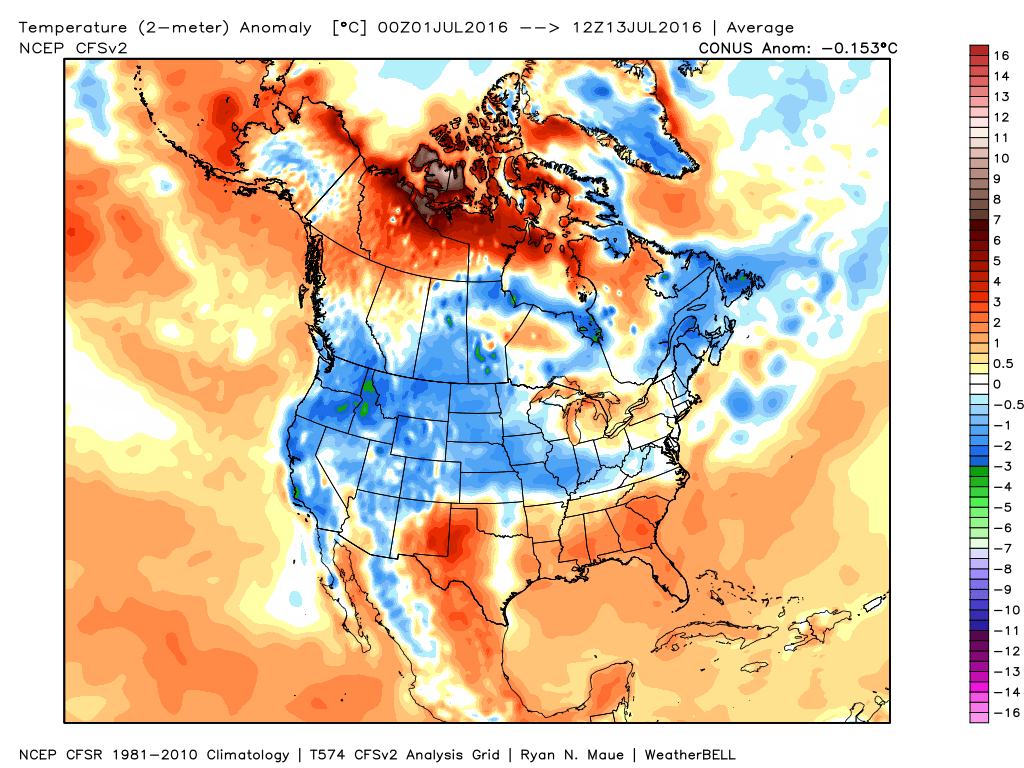
July, so far, has been very pleasant, locally. BTW- another push of drier air is inbound that should lead to a nice weekend, including low humidity values.
 Ensemble data continues to suggest that the mean ridge position (hot dome) develops over the eastern portion of the country early next week before slowly retrograding northwest with time.
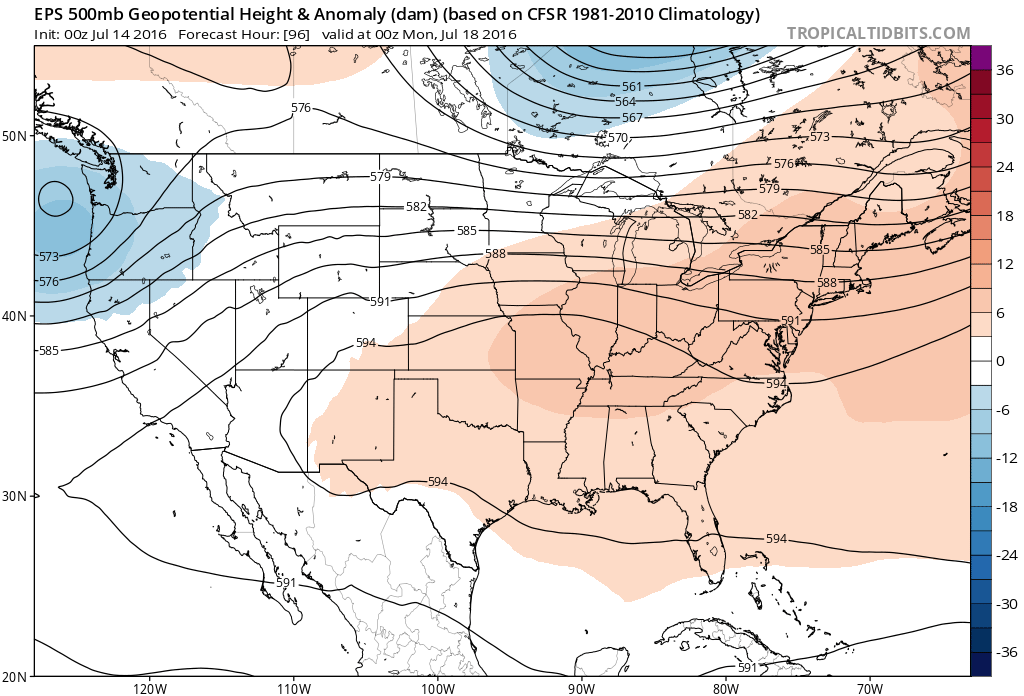 By the middle and latter portions of next week, the hot dome is set up in a position that will yield an extended stretch of hot temperatures across the state, including multiple mid-90 degree highs across central IN.
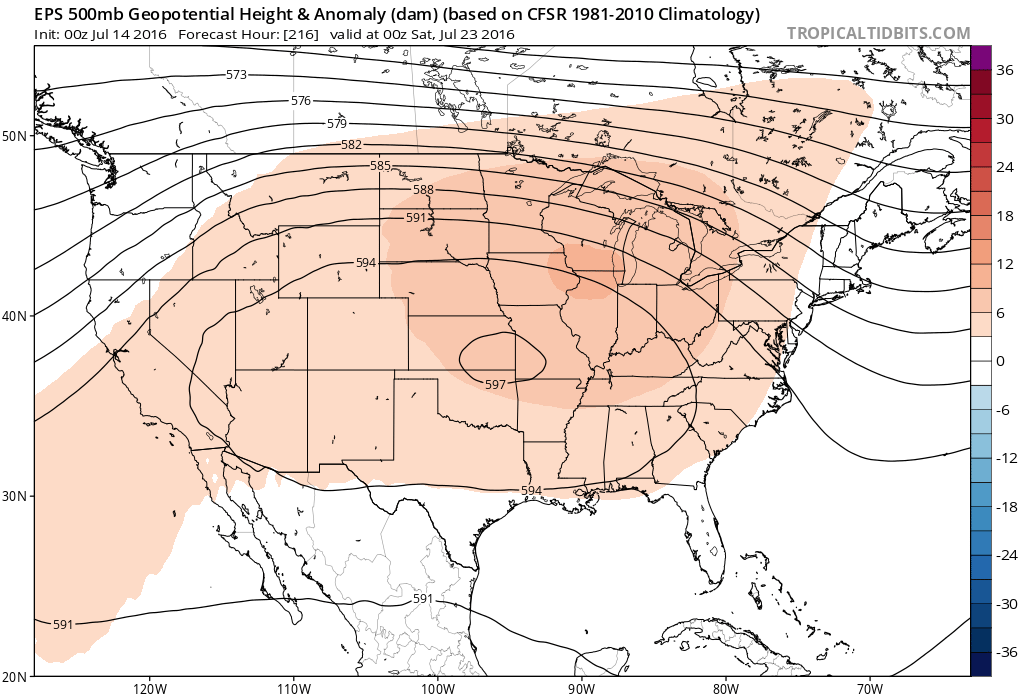
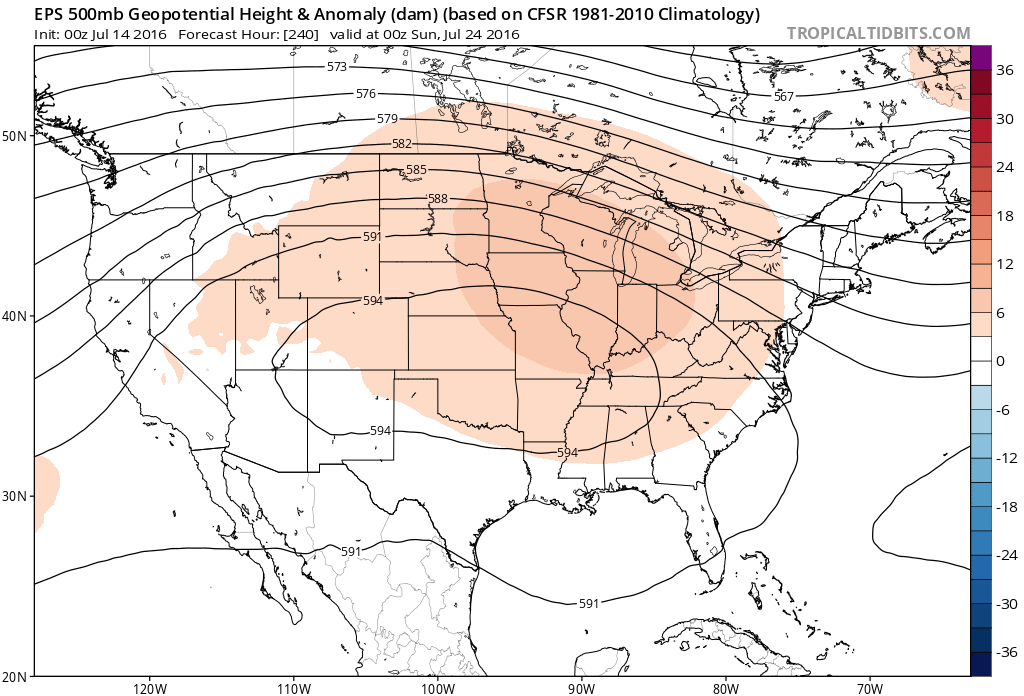 Given the current look of the ridge position, this would also be a rather dry pattern, as well, as the storm and rain track would shift north across the Canadian border into the northern Great Lakes states. (Follow that 588 line above for a good indicator of the storm track).
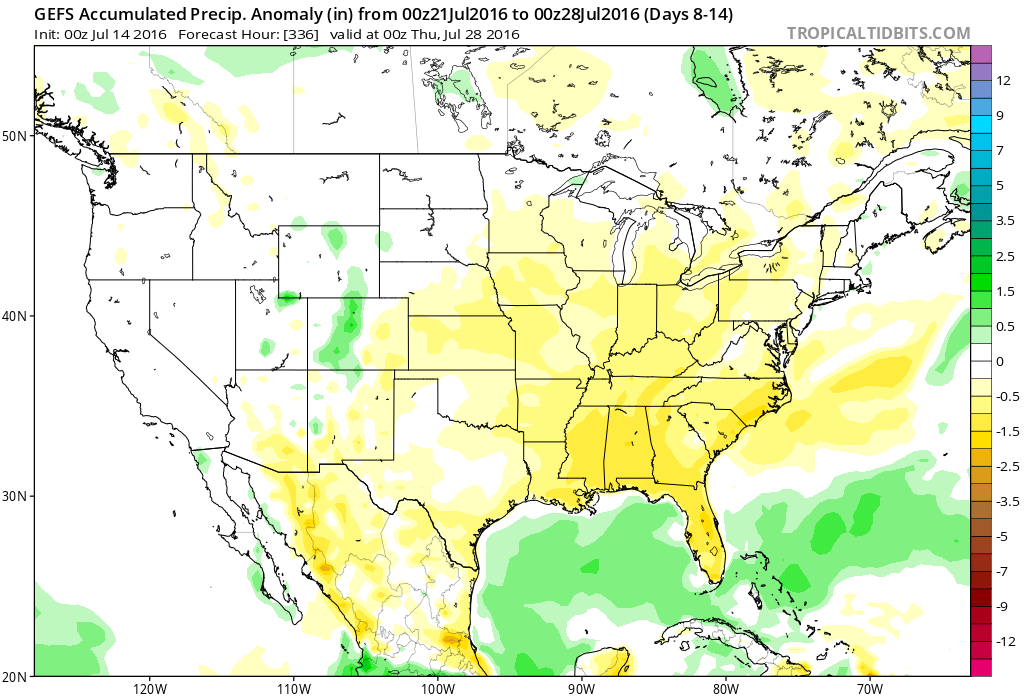 One always has to be careful in trying to predict the timing of the ridge breaking down/ overall placement this time of year (models can struggle), but for now it appears as if we really heat things up and dry things out as we move through next week- especially the middle and latter portions of the week.
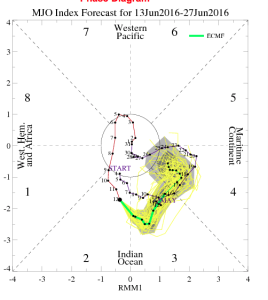
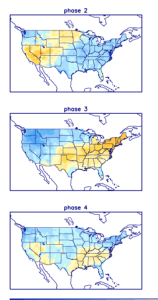
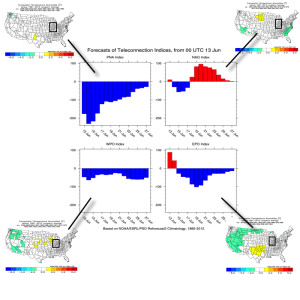
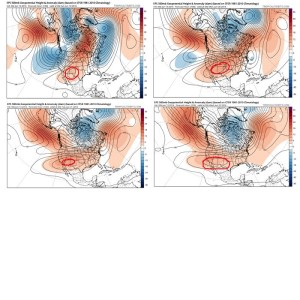 The teleconnections aren’t much help in trying to generate longer term thoughts. They would favor more of a “normal” period temperature-wise, locally. (BTW, thanks to the fine folks at MAD US Weather and ESRL for the data below).
 Looking at some of the model data, the general consensus is for a warm look to go through the back half of the month, but we caution that we can’t simply “broad brush” the forecast through the EOM as warm and relatively quiet (a note on that in a moment).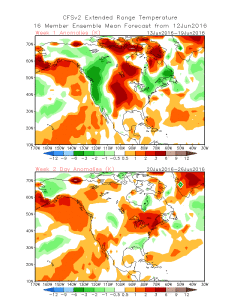
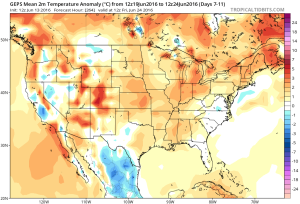
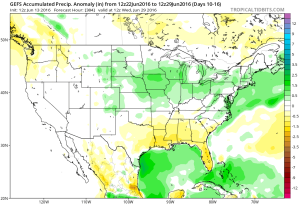
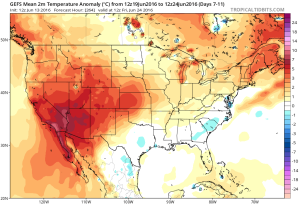 As mentioned above, despite an overall warm look on the models there will likely be periods of cooler “jabs” and it sure looks like a rather transient pattern to us across the Mid West and Ohio Valley, featuring more of the sustained heat across the Southwest region. Transient patterns usually also yield for potential wetness and we note the GFS Ensembles trending in that direction to wrap up the month.
 In the shorter term, there will also be localized heavy downpours, but it’s a continued case of “haves and have nots.” There won’t be any particular rhyme or reason to the specific placement of heavy, gully-washer type showers and storms mid week.