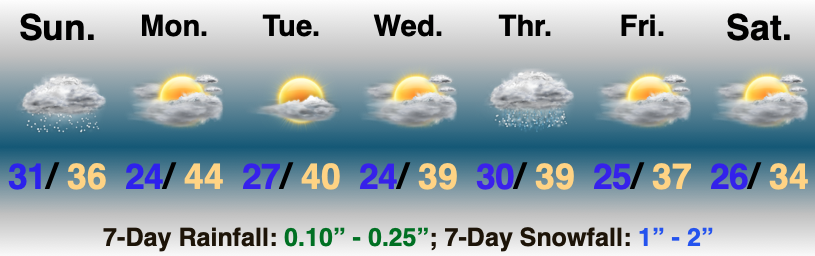
Temperatures Trend Colder Late Week…Upper level energy will scoot out of the region as quickly as it arrived and will take the snow with it. Look for snow to diminish from west to east through mid morning. Heaviest bands of the white stuff set up along and north of the I-70 corridor overnight. While the system tracked a tick further north than originally expected, northern portions of our 2”-4” zone should verify once all is said and done (please keep those reports coming). Southern portions (closer to the I-70 corridor) will bust on the low end. Improving weather conditions are dialed up through the 1st half of the new work week, including a return of the sun! (ENJOY)!
Our next system of note will arrive Thursday into early Friday. Operational guidance continues to struggle with handling of features beyond 3 days out (thanks in part to the maturing high latitude blocking pattern) and this feature will require our attention for the chance of a wintry mix of rain/ snow. Stay tuned as we fine tune!
Drier, colder weather is dialed up to head into next weekend. Enjoy the down time while you have it. A fairly active period of weather seems to loom on the horizon for mid and late month…
Thank you again for your patience with posts (along with video troubles) the past few days. We’ll be settled back into the home office Monday and will resume “regularly scheduled” programming at that time.
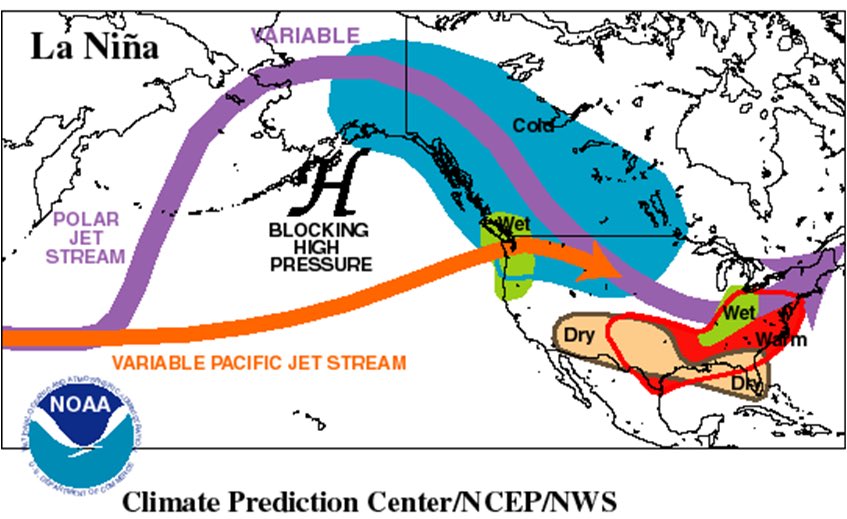
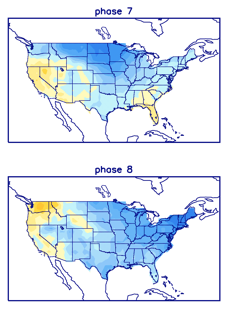
As we’re getting set to turn the page into a new season, modeling already agrees that the overall pattern is very much unlike the big “player” on the field (La Nina). While all Nina (as well as Nino and La Nada) events are different and unique, the “average” La Nina pattern is shown below:
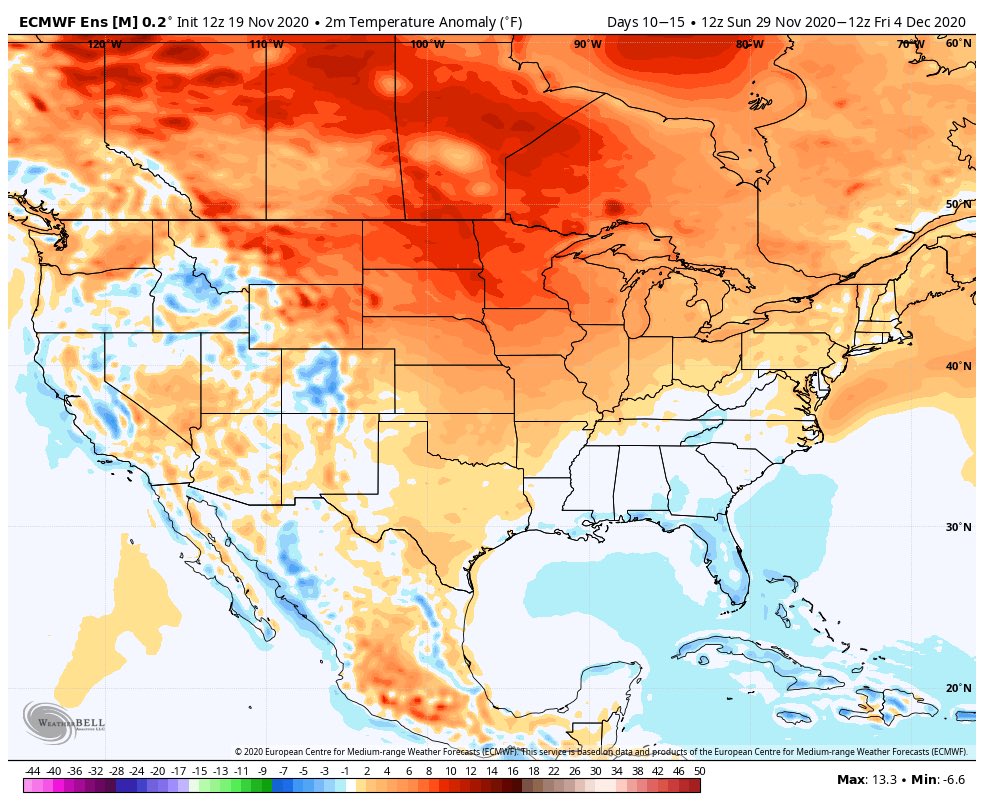
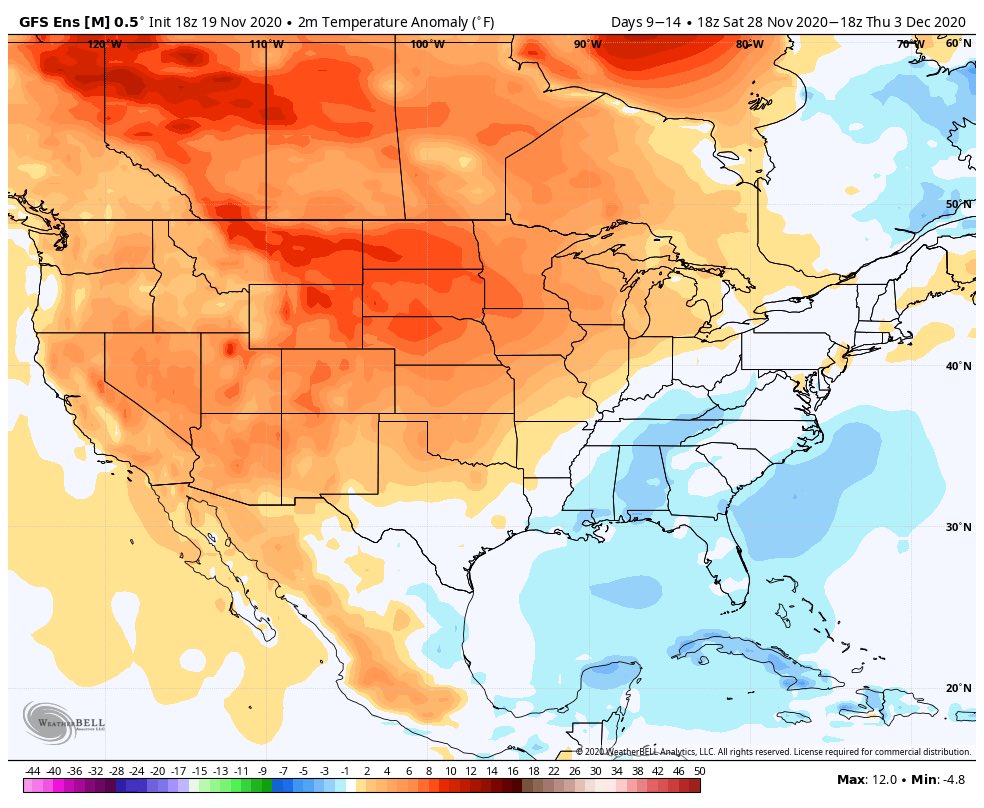
Note both the EPS and GEFS for early December are polar opposite of this traditional La Nina look:
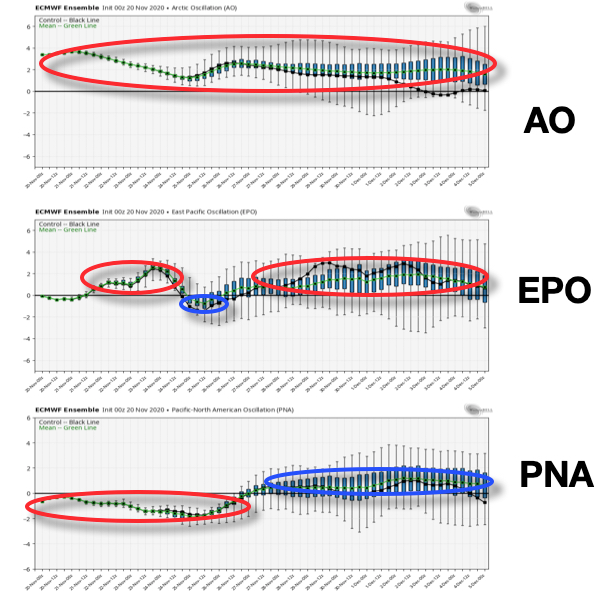
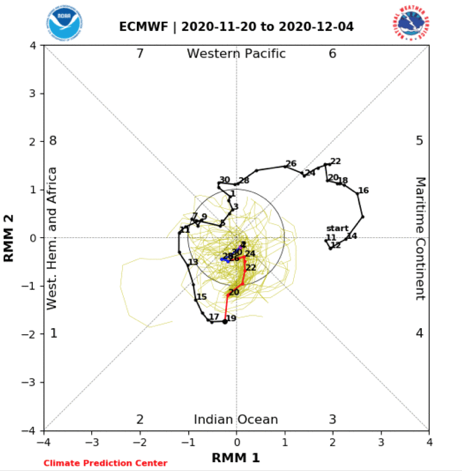
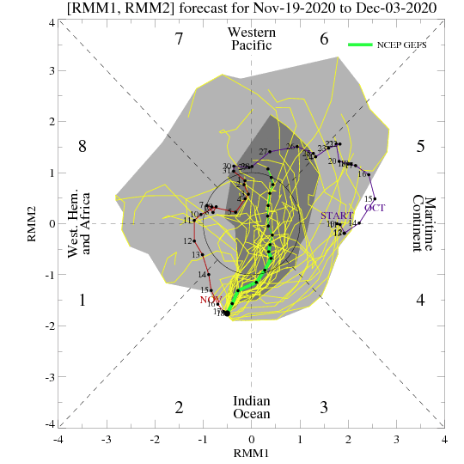
Before we look further at the various data, let’s review the latest teleconnection trends and MJO plots.
Teleconnections: In short, the consensus is it’ll be hard to drive any sort of sustained cold weather into early December. Note the AO is expected to run positive throughout the upcoming couple weeks, the EPO is mostly positive, as well. The one potential “fly in the ointment” that we’ll continue to keep a close eye on? The PNA and whether or not it continues to trend positive down the road.
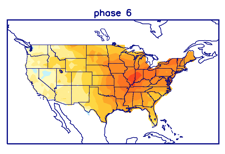
MJO: This is much more problematic as the data disagrees on what takes place down the road. The European products stall things in the null phase (meaning we need to pay more attention to the teleconnection drivers) while the American data seems to want to take things towards Phase 6 by early Dec. This is interesting on multiple fronts. Obviously having to do with the battle between the models, but also whether the amplitude continues down the road. If (big If) the American model wins out, it could mean we swing things into the colder phases towards mid-December. Again, this is a very low confidence forecast and will require a close eye as we move ahead.
Model Data over the next couple of weeks:
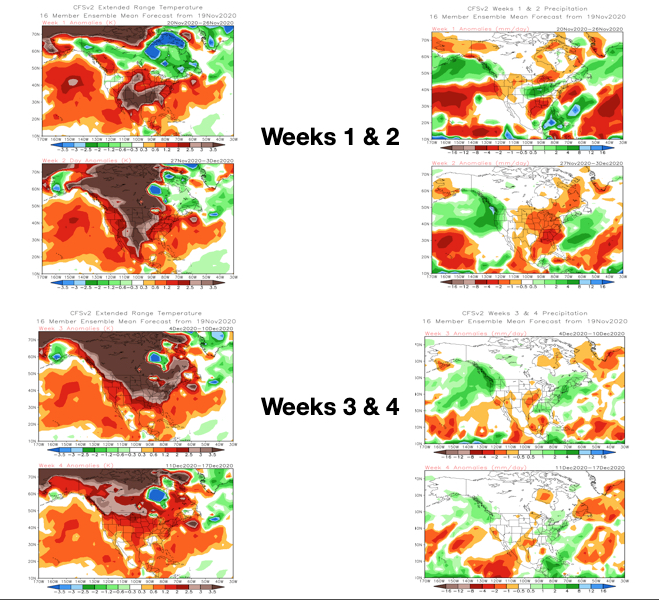
CFSv2 Weeklies- warmth dominates over the next few weeks. Note the model sees the wet pattern in the immediate term before drying us out Week 2. Eventually, the wet pattern is shown to return during the Weeks 3-4 time period.
JMA Weeklies- Similar story to the CFSv2 Weeklies above. Warmth dominates, but what we’ll need to look for is the possibility of the model trending cooler “underneath” with time as the warmth builds over the top. While not an overly cold pattern by any means, should this take place, all of the sudden a rather “boring” pattern from a wintry perspective can flip and become more interesting. Note the precipitation pattern is also similar: wet now, drier Week 2, and a return of the more active times Weeks 3-4.
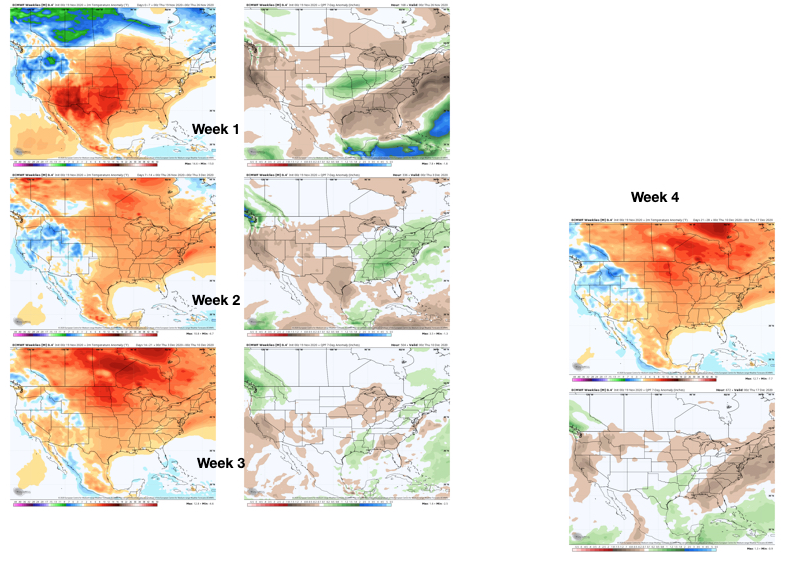
European Weeklies- Not much difference from the other weekly products with a warm look, overall. Similar to the JMA, we’ll need to watch if the warmth continues to build in Canada which would likely result in cooling across a portion of the Lower 48 (most likely Southeast region first) with future updates.
The overall consensus is it’ll be tough to get any sort of long-lasting well below normal airmass between now and Dec. 10. While it looks warmer than normal through the majority of the next couple of weeks, that’s not to say it’s a pattern without challenges, as pointed out above. (Heck, areas of northern IN may deal with wintry precipitation over the weekend). Of greatest interest, personally, is the PNA trend and watching the models “duke it out” with the MJO.
Our quiet and unseasonably pleasant weather pattern will carry us straight through the weekend and to open the early part of the work week. Until Tuesday, expect a “rinse and repeat” pattern to the likes of what we’ve been enjoying the past several days. For those wrapping up final Harvest20 work or perhaps getting a jump on the exterior Christmas decorating, you couldn’t ask for better conditions.
Things will begin to change Tuesday as the first of (2) cold fronts moves through the region. Clouds will increase Monday evening and showers (perhaps even embedded thunder) will blow into town Tuesday PM into Wednesday morning.
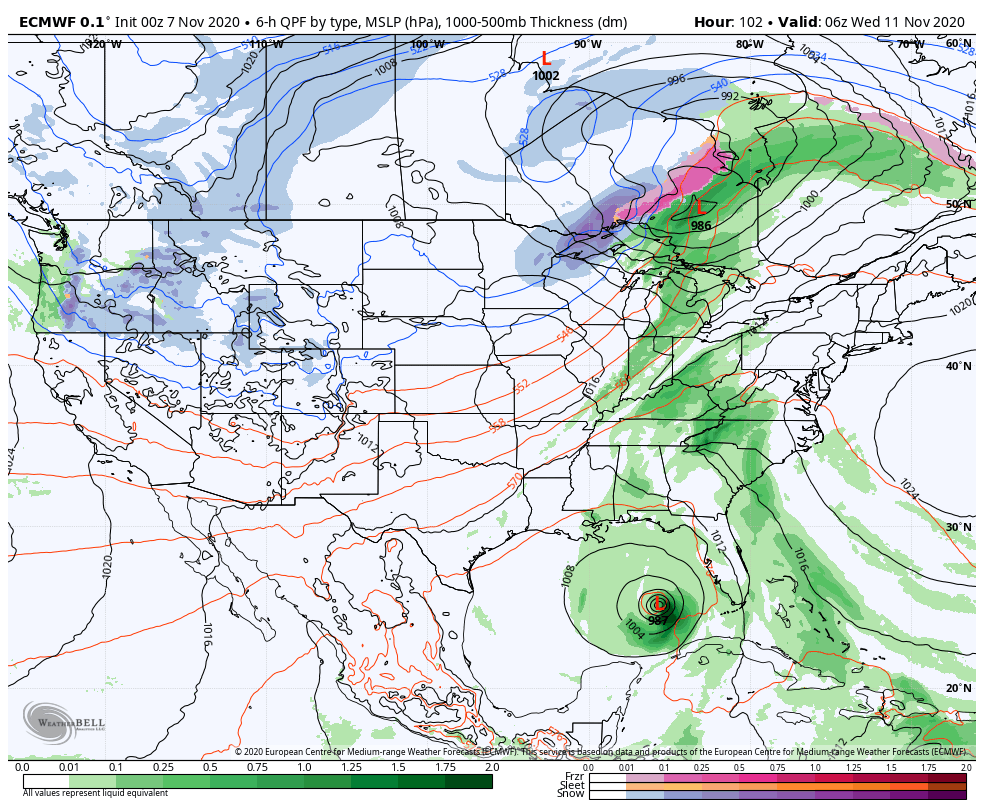
Note “Eta” is also expected to be churning in the Gulf of Mexico at this point- at least in some shape or form. While we don’t expect impacts from what’s left of Eta up this way, our friends in the Southeast and potentially up the eastern seaboard should monitor the progress of Eta during the upcoming week.
Temperatures behind the frontal passage Wednesday will “cool” back to seasonal averages for this time of year.
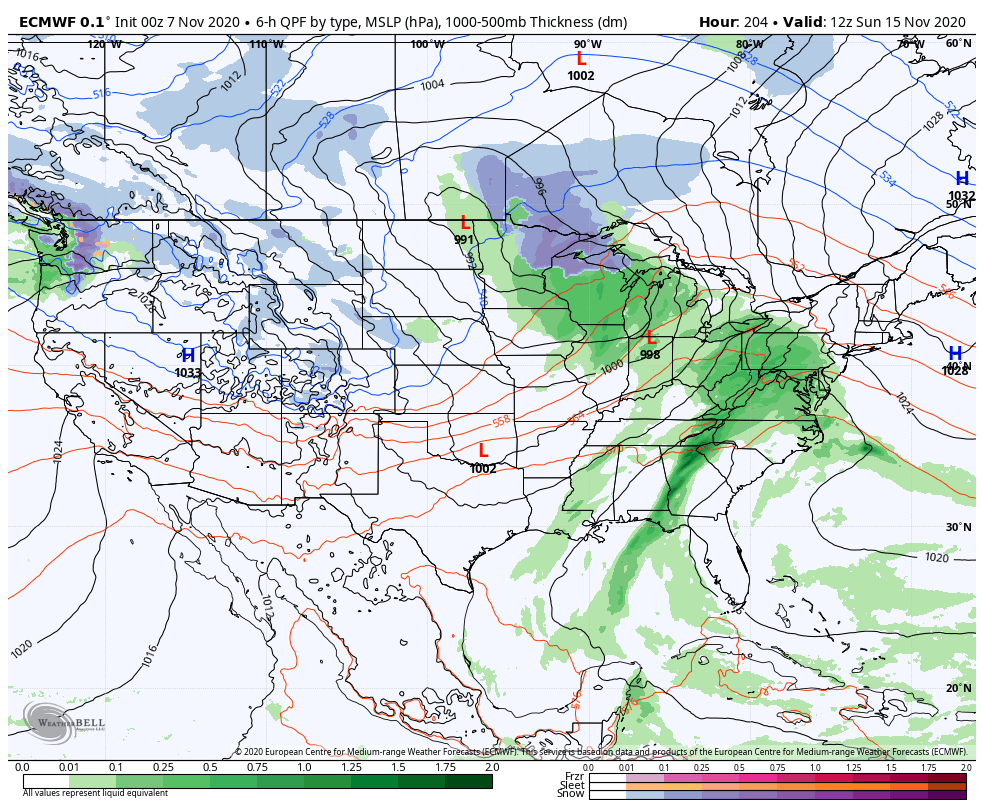
As we look ahead to next weekend, another cold front will sweep through the region. Accordingly, we can expect another round of showers and thunderstorms Saturday into Sunday. It then appears as if a “pop” of colder air (lows around freezing and highs in the upper 40s to lower 50s) will flow into the region early parts of Week 2, at least briefly.
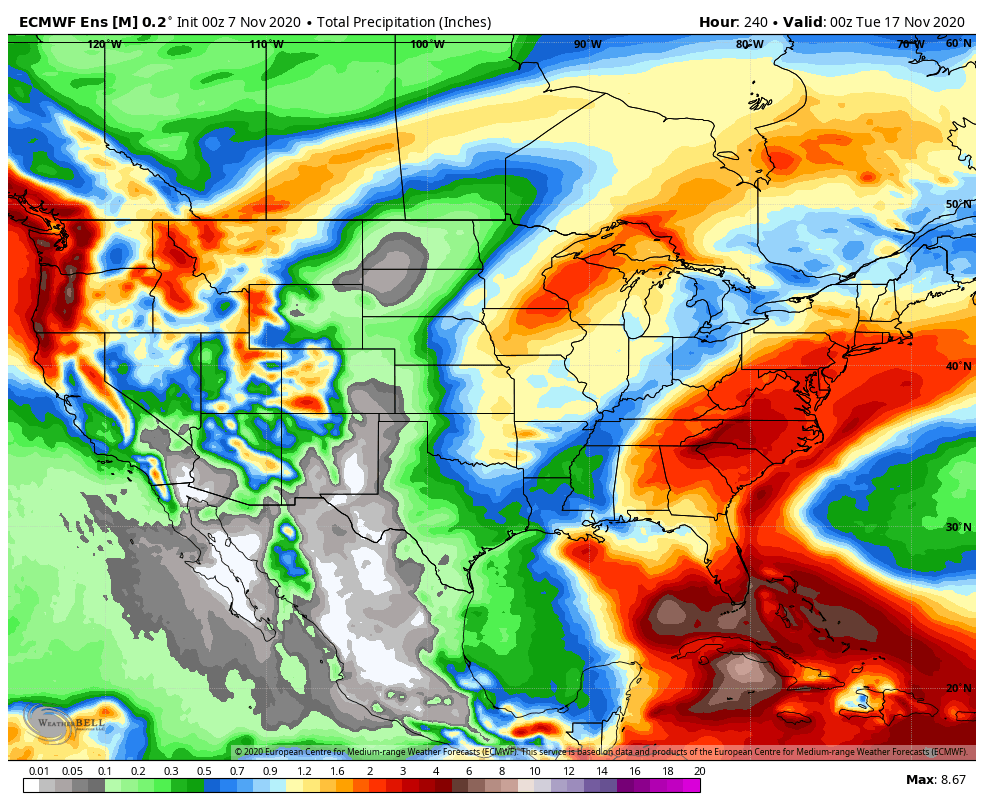
Models aren’t overly excited on rainfall numbers, locally. We’ll forecast between 0.50” and 1” falling between the two frontal passages which is in line with both the GFS and European ensemble data.
You must be logged in to view this content. Click Here to become a member of IndyWX.com for full access. Already a member of IndyWx.com All-Access? Log-in here.
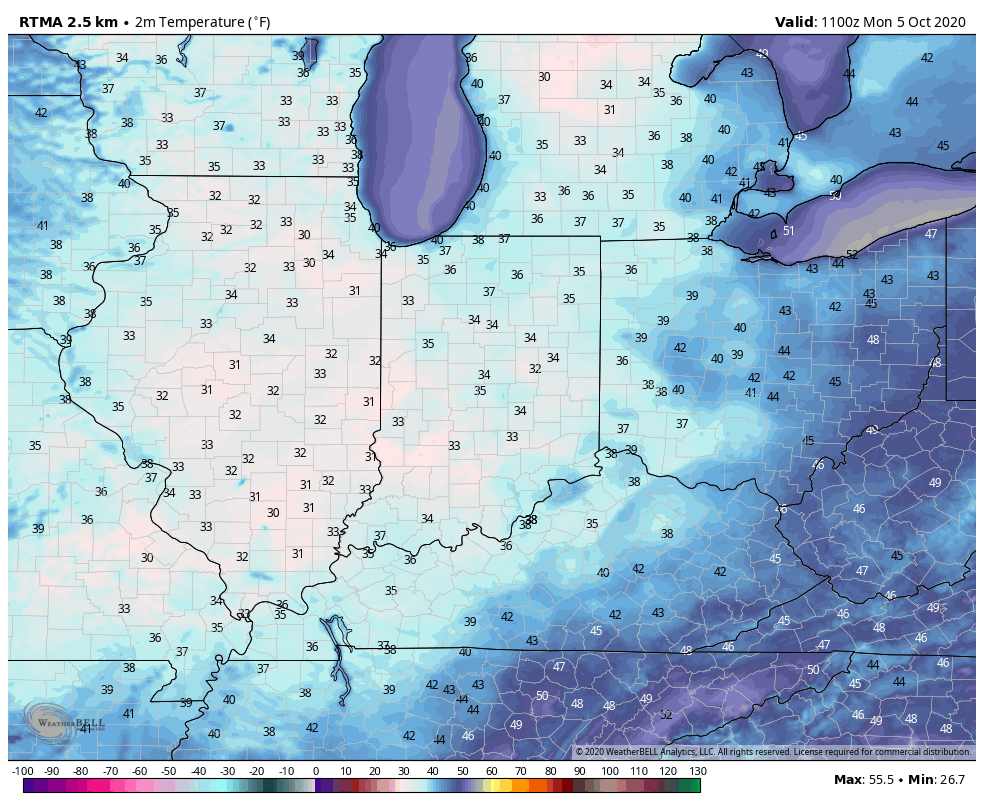
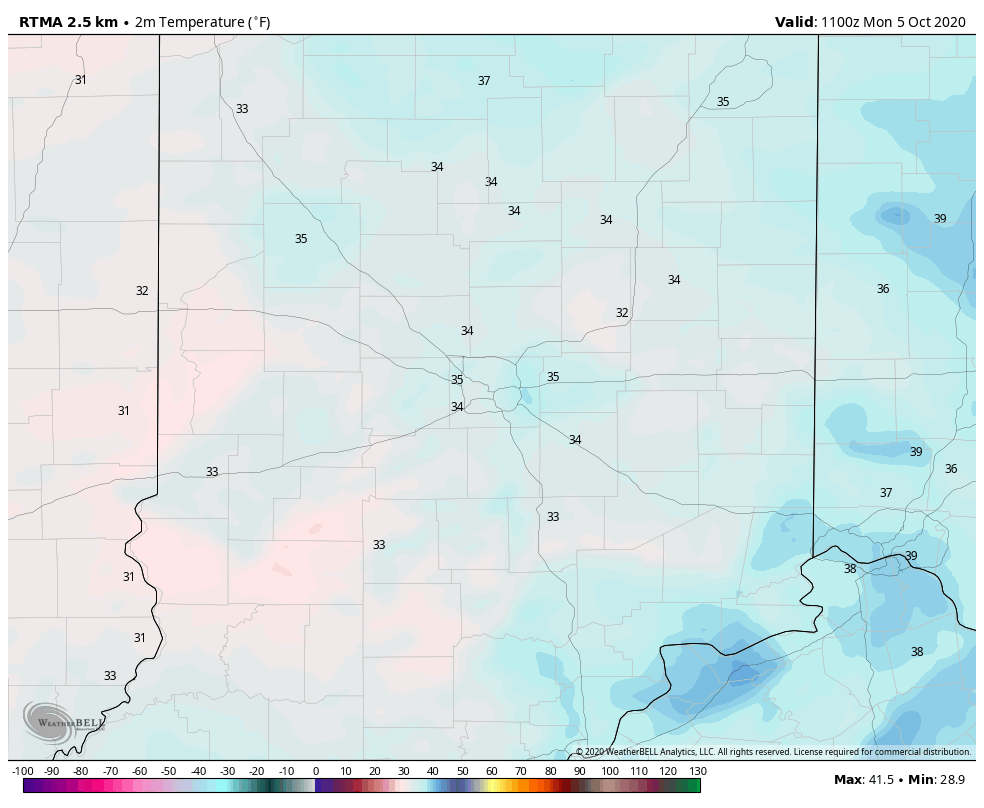
Before we talk tropics, frost is widespread this morning across the state. We note some are even at the freezing mark as we start the new work week.
This is right around average, or just a few days early, for our first 32° freeze of the year across central Indiana.
Expect bright sunshine and another classic fall sky this afternoon which will help warm us to around 60°.
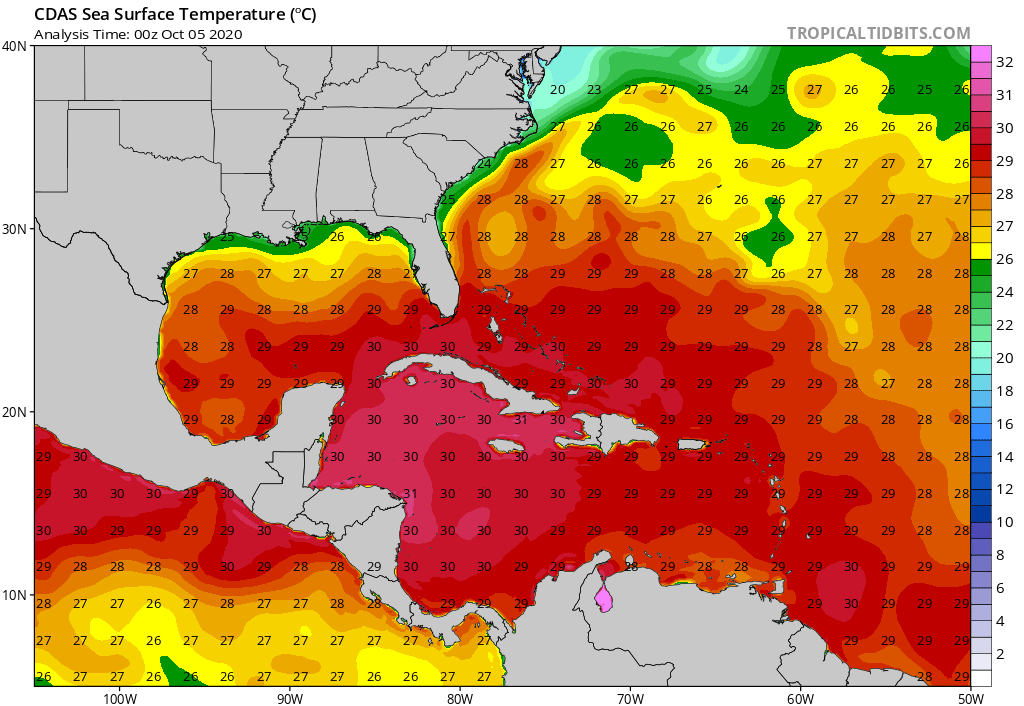
The week ahead will feature quiet conditions across the region. We’ll watch a couple of cold fronts scoot by to our northeast and, of course, soon-to-be Delta in the Gulf of Mexico. Delta will likely strengthen into a hurricane before reaching the north-central Gulf Coast late week. There are ingredients in place that may result in rapid intensification later this week and the potential of Delta strengthening into a major hurricane is on the table, IMHO. Thankfully, the combination of increasing wind shear and cooler sea surface temperatures right along the coast (thanks to the early fall fronts that have made it unusually far south) should help lead to weakening prior to landfall. The problem with that, however, is if the system is coming in as a major, storm surge will still be quite significant.
If you have plans to travel to the northern Gulf Coast, please pay particularly close attention to the develops over the coming hours and days. As of this morning, it appears as if we’ll be looking at a Friday landfall.
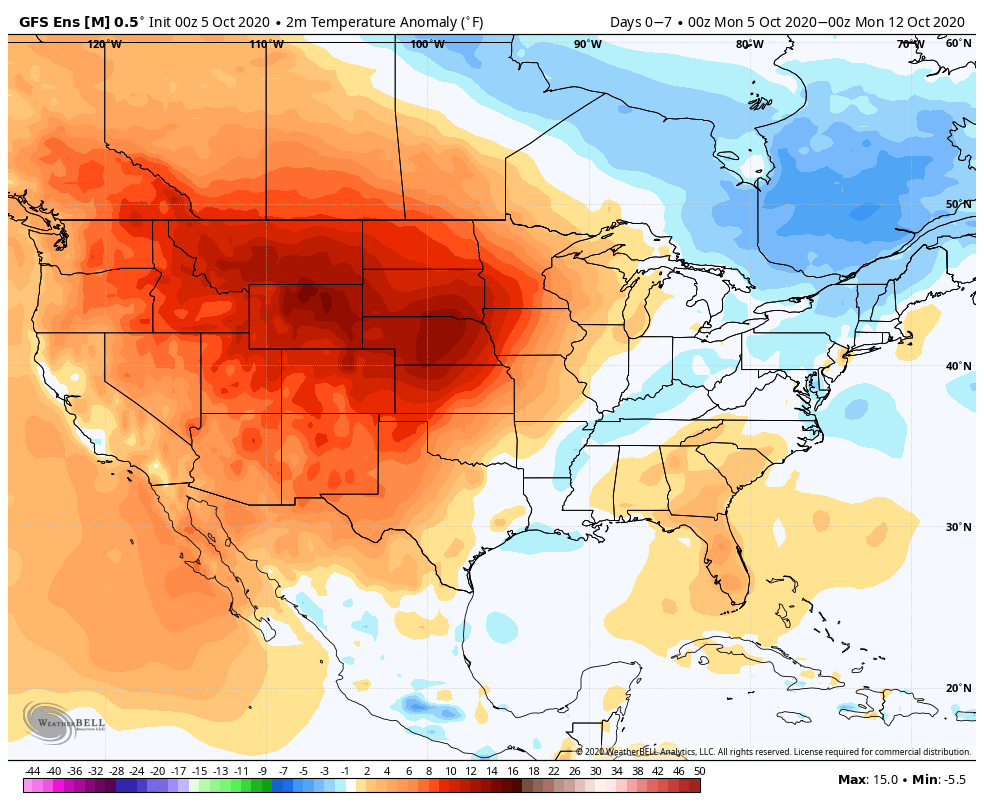
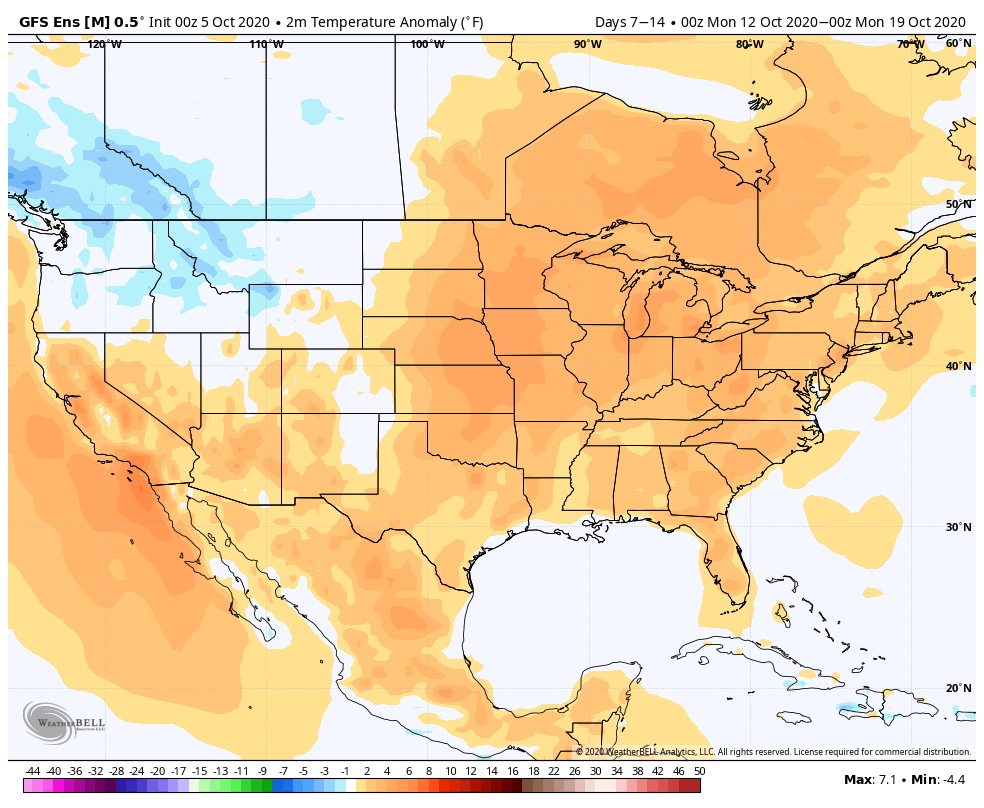
Back here on the home front, quiet conditions are expected this week- and for the most part over the next few weeks. Perhaps the next item of excitement will be a cold front pegged to move through the region in the 8-10 day period. We’ll need to keep close eyes on the EPO/ PNA trends in the Week 2 period for the possibility of a sharp jab of colder air behind that cold front. This would come after a nice surge of warmth (Indian Summer) compared to normal. Additionally, looking even further ahead, longer range guidance is beginning to get excited around the potential of unseasonably cold (wintry like) air to open November.
Week 1
Week 2
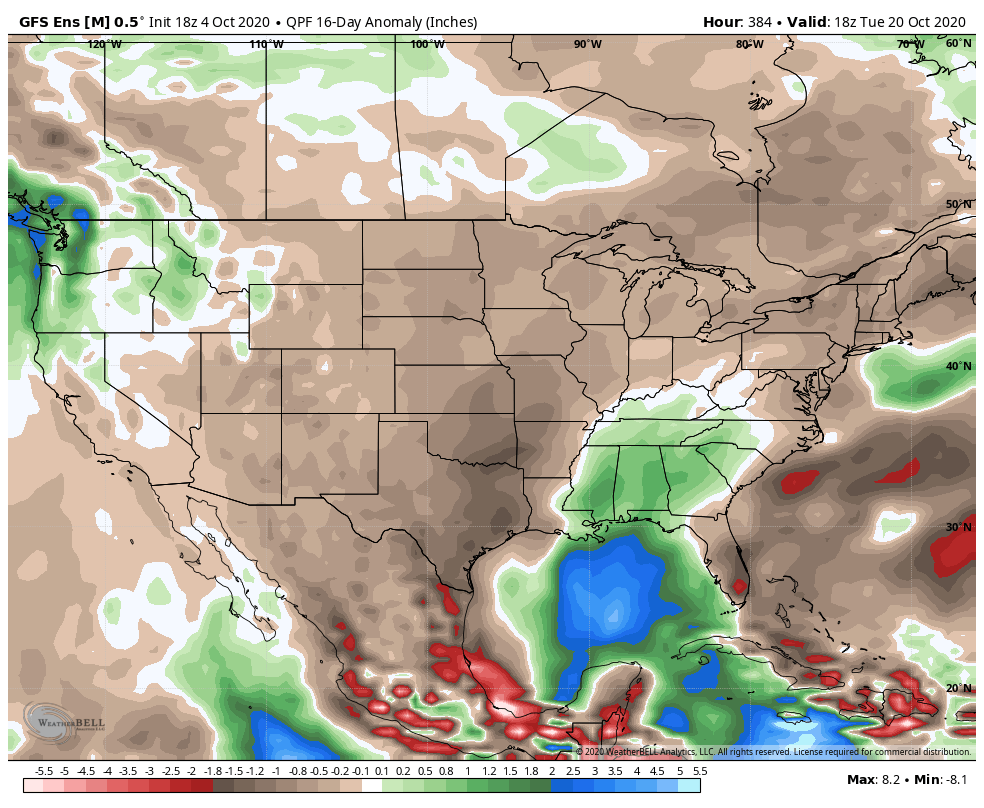
As expected, the pattern should continue to run quite dry through the better part of the period: