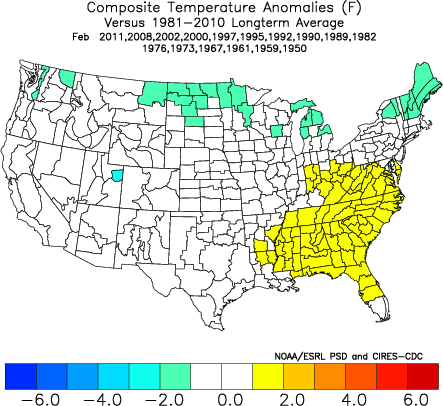
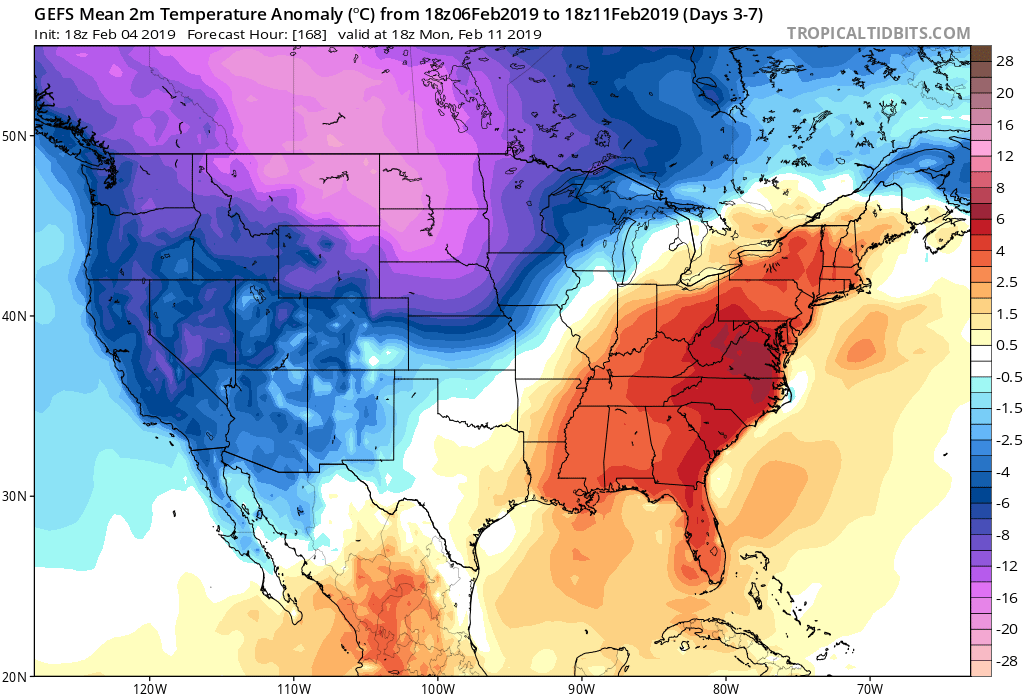
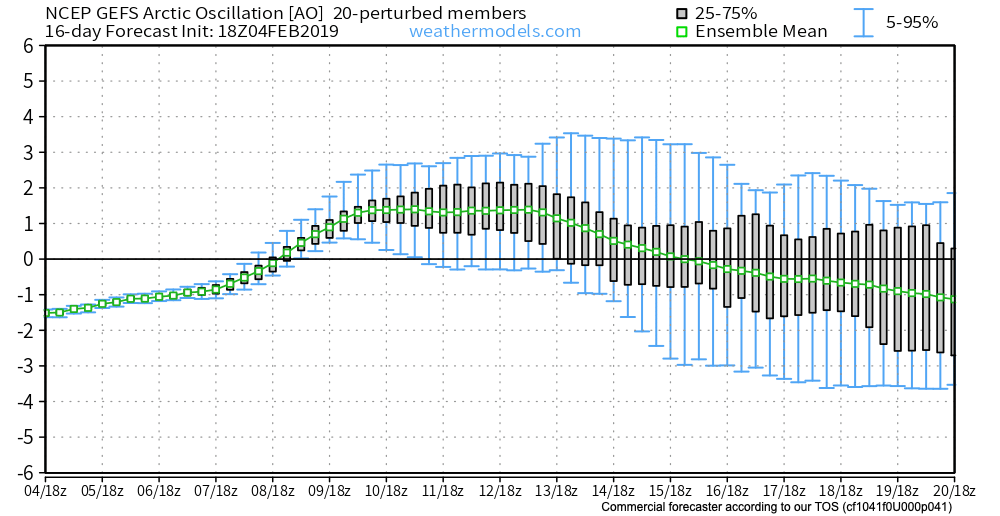
Sunday Morning Video Update: Walking Through The Active Week Ahead; Looking Towards Mid-Feb…

A new week has dawned and with it will come a very busy weather pattern. Thankfully, today we’ll enjoy a “hint of spring,” including temperatures approaching the 60 deg. mark…

You must be logged in to view this content. Click Here to become a member of IndyWX.com for full access.  Already a member of IndyWx.com All-Access?  Log-in here.

Plot Thickens With The MJO…

There’s a lot of interest (no matter the time of year) in the medium to long range weather pattern. With operational modeling updating up to (4) times per day during this time range, there’s always at least some degree of fluctuation between model runs. At times, that fluctuation is more significant than others. It’s at those times when it’s more important than ever to lean on analogs, teleconnections, and other pattern drivers.

Recall that the MJO has been hyper active for the better part of this season- and has played a significant role in the winter pattern through the 1st half of this season. When the MJO features significant amplitude, it’s imperative that we pay close attention.

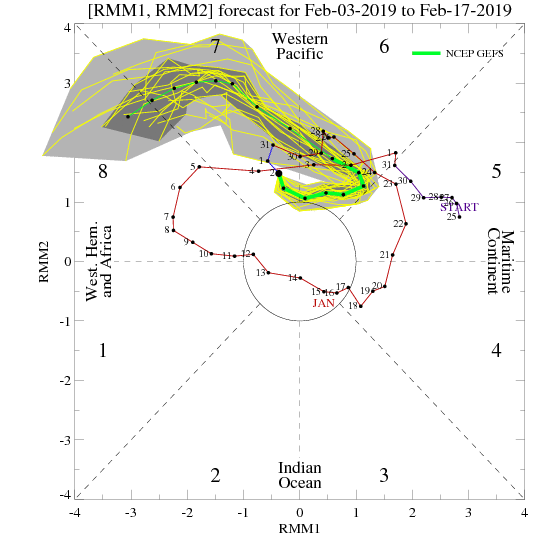
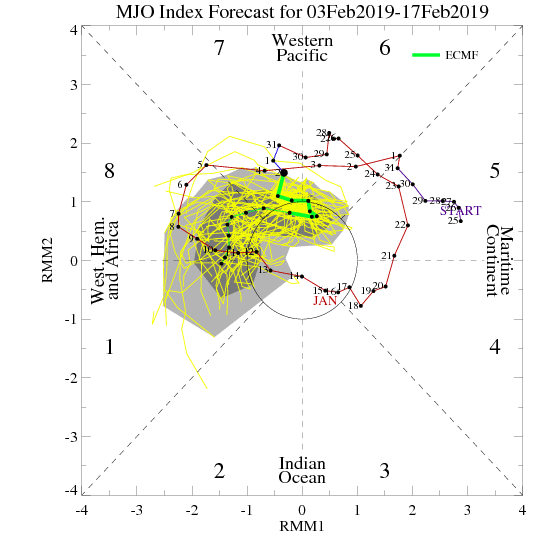
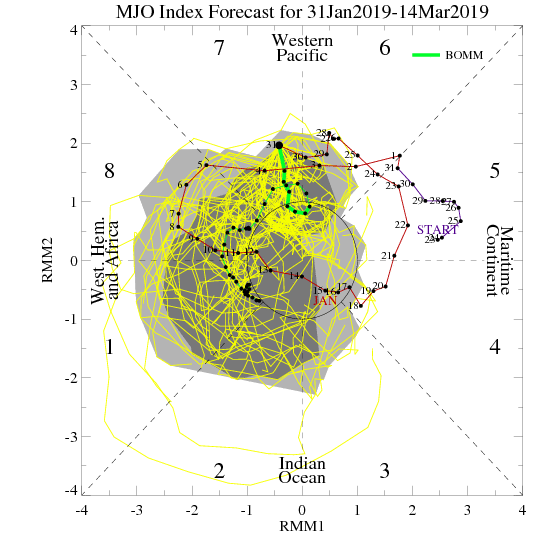
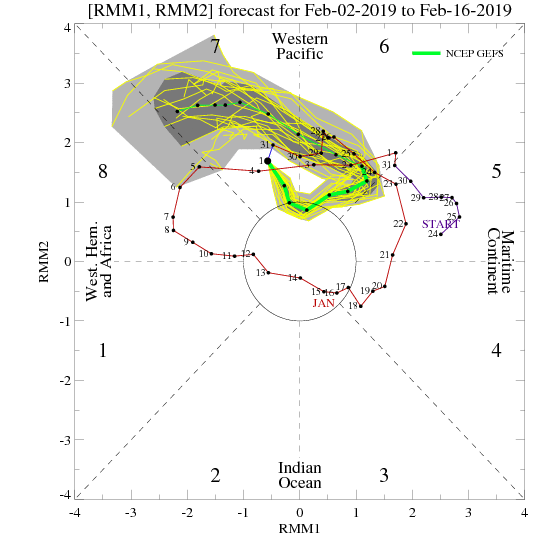
With that said, we note today that the models handle the current MJO pulse much differently between one another over the next couple of weeks.

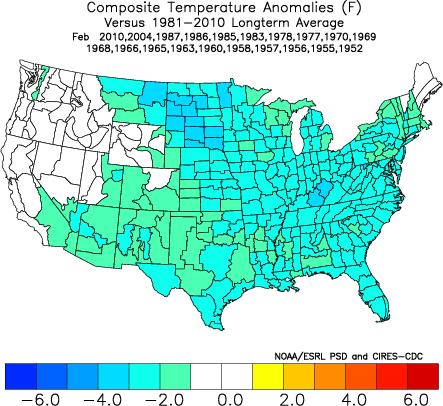
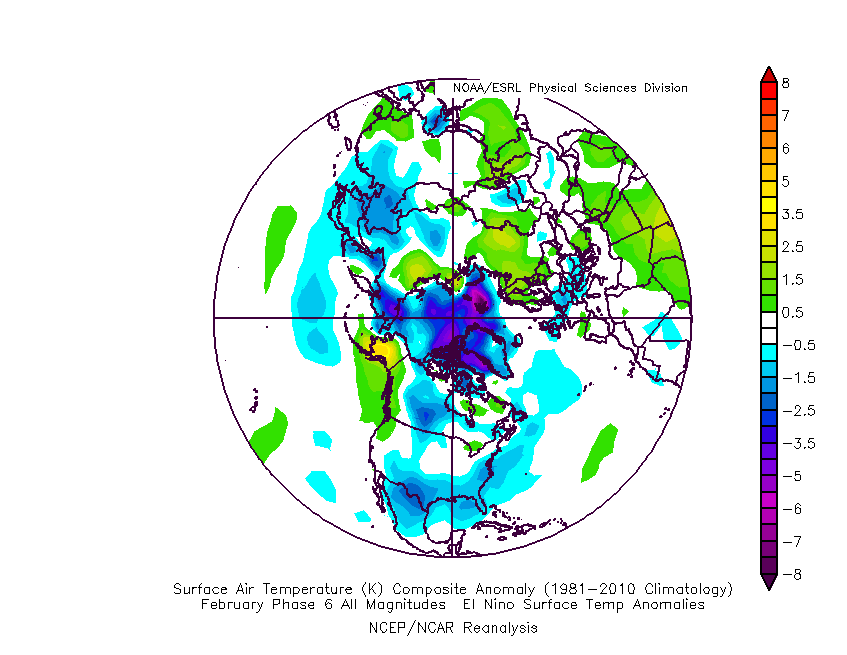
For example, let’s go with the GEFS (image 1), curling the MJO into Phase(s) 6 and 7. From a temperature perspective, this is how that would be reflected at the surface

Phase 6
Phase 7

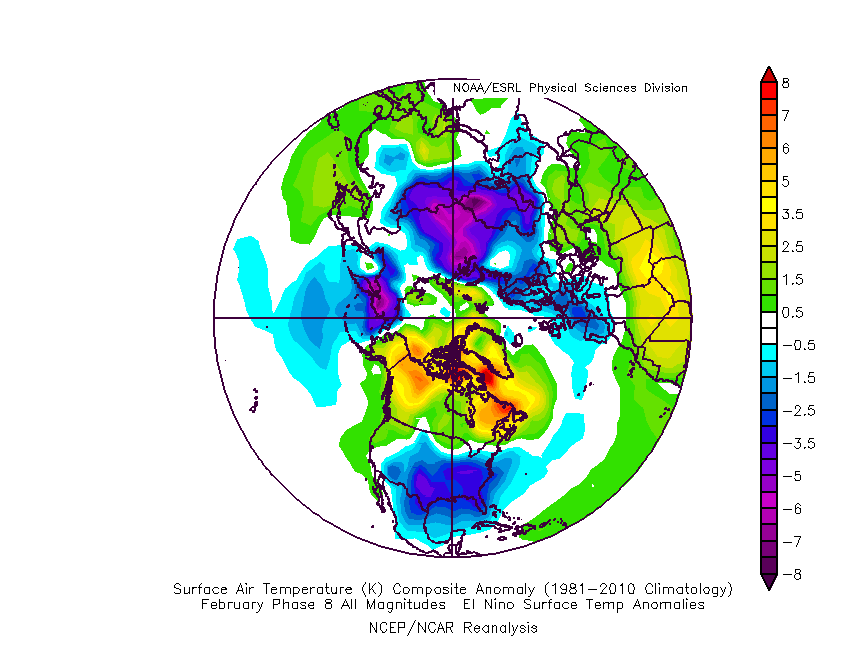
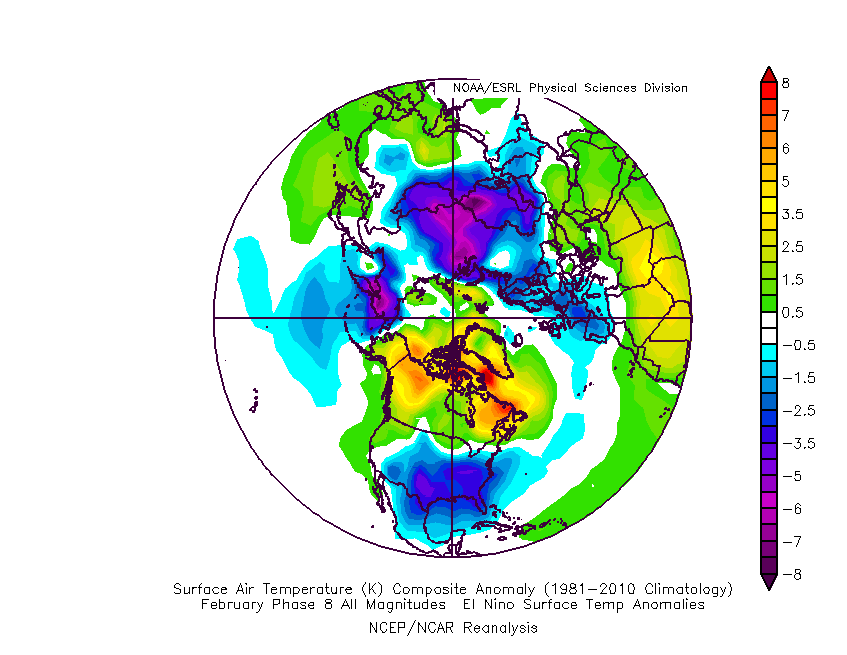
With that said, the European is more bullish heading into Phase 8 by mid-February. If correct, that opens the door for more significant (and widespread) cold.

Phase 8

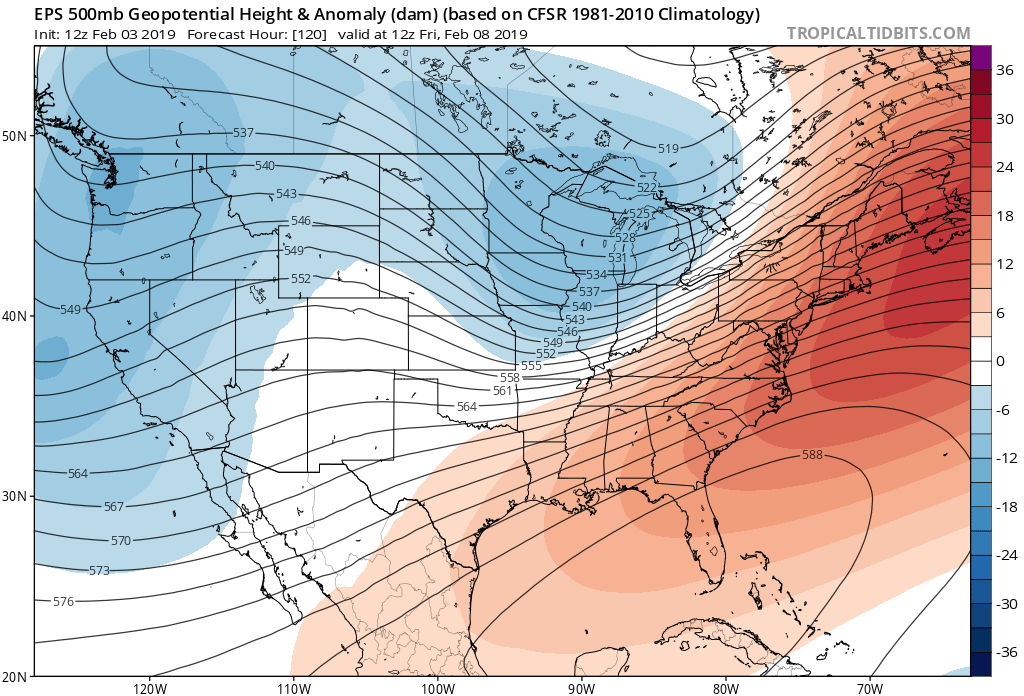
We’ll continue to keep a very close eye on the MJO over the next week, or so, and hope for better overall agreement between the data. However, given a balance of current teleconnections, SSTs, and MJO, we continue to believe the pattern over the next few weeks will transition from a “battle zone” initially towards one that features cold overwhelming the region by mid-month.

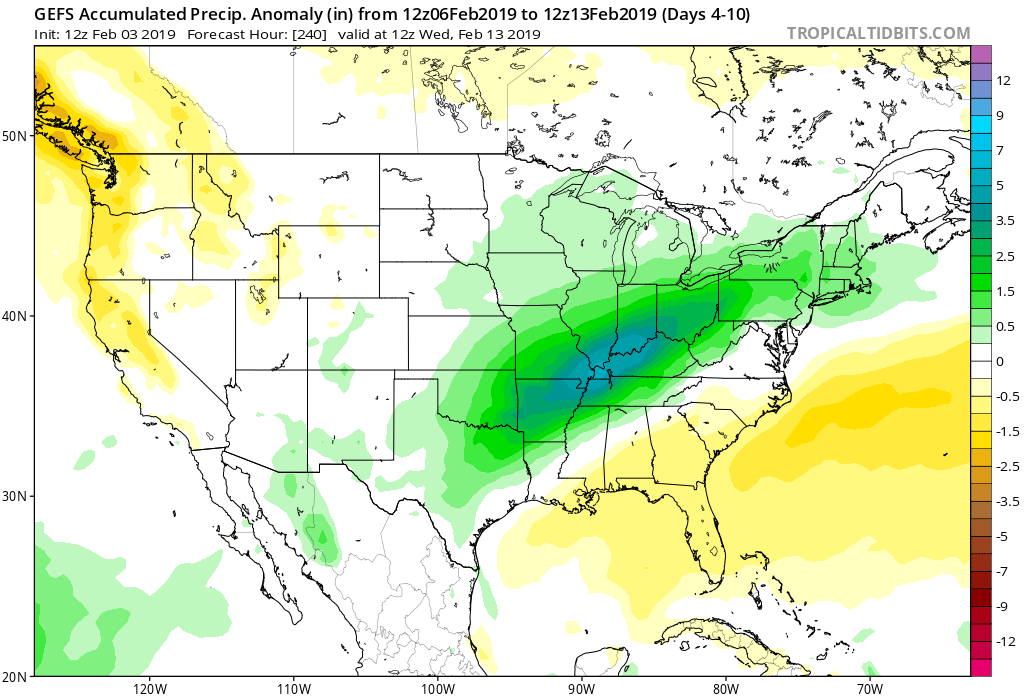
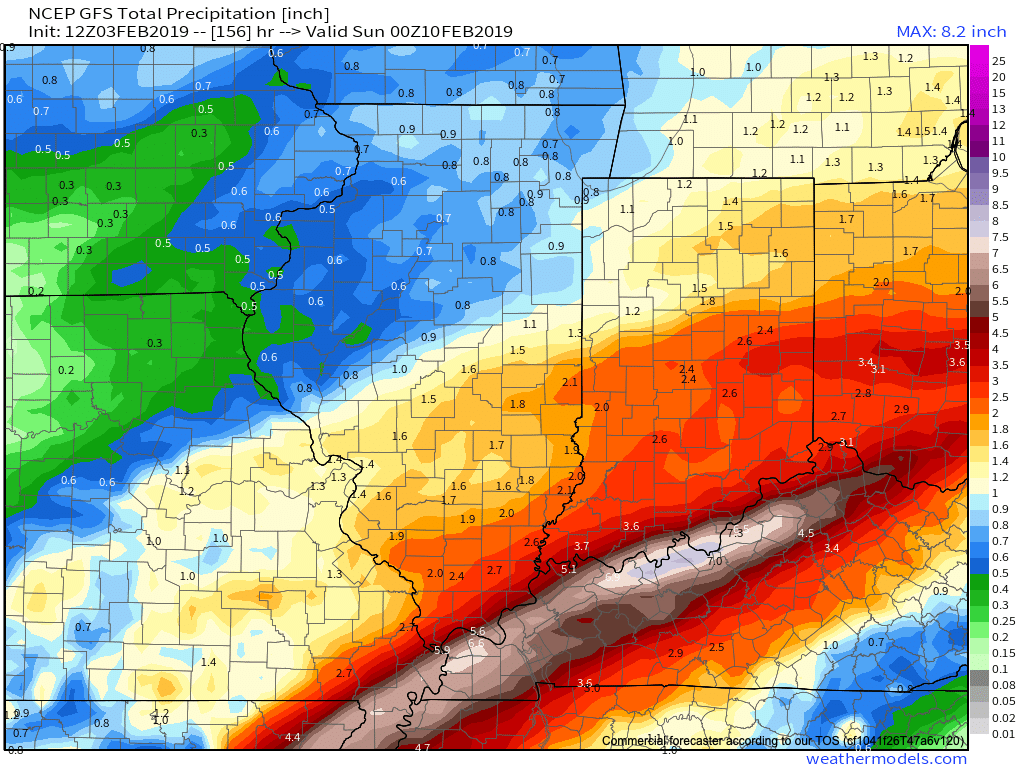
There will likely be rather wild temperature swings through the first 1/3 of the month and that will help power the active pattern. At the end of the day, we expect well above normal precipitation, near-average to slightly colder than normal temperatures, and above average snowfall during the month of February here across central Indiana.

“Pulling The Curtain Back” On The Late December Pattern…

Late December through early January is a critical time period where most folks (even those maybe not normally interested in the weather) are glued in on the forecast.  For some, they’re rooting for a white Christmas, while others are preparing for holiday travel to see loved ones.  The idea here of a transitional pattern remains and this should promote active weather during the holidays this year.

Understanding things can change with respect to timing from this distance (in some cases 2+ weeks out), these are the dates we’re targeting for storm impacts across central Indiana:

  • Dec. 20-21
  • Dec. 24-25
  • Dec. 27
  • Dec. 30-31

Before we talk specifics, it’s important to look at some of the pattern drivers.  Some of these drivers include teleconnections such as the NAO, AO, PNA, and MJO.

Forecast indices with respect to the AO, NAO, and PNA are expected to be more or less neutral through the late month period.  This is what the respective teleconnection “state” would result in the temperature department across the country.

Arctic Oscillation

North Atlantic Oscillation

Pacific North American Pattern

The basis of our late-December forecast is built from the MJO, or Madden-Julian Oscillation.  We note the MJO is expected to rumble through Phase 4 before heading into Phase 5 around Christmas.  Phase 4 (image 2 below) is a warm phase and correlates well to what the week ahead will provide.  However, Phase 5 (image 3 below) is a colder phase and could “up the ante” for the potential of wintry weather around Christmas.

If the MJO amplitude remains, it’ll roll into Phase 6 to close the month and open January.  Here’s how that would correlate in the temperature department:

The upcoming week will run milder than normal- lining up perfectly with MJO Phase 4.

The first of our targeted holiday storm systems will come at the tail end of the warm Phase 4 and will likely deliver a wind-whipped rain in here as early as Wednesday night and Thursday morning.  However, as the storm pulls northeast along the Ohio River, it’ll deepen on its journey into the eastern Great Lakes region.  This will help pull colder air into the region, likely resulting in rain transitioning to snow Friday.  Given the path of the storm, this doesn’t favor some sort of prolonged backlash snow event, but it could be enough to result in accumulating snow across eastern Ohio Valley sections and downwind of the snow belt regions of northern IN, OH, and MI.

The pattern, as a whole, appears to be one of transition to close the month and open January and it’s not really until we get to mid-January where we think all of the drivers “align” to create more of a lock and hold cold pattern.  With that said, a stormy late December pattern can present problems, even in the midst of relatively mild times.  We’ll be here to dissect the storms as they come throughout the holiday season…

Looking Ahead To The Merry Month Of May…

Folks are growing tired of the cold and snow, and for good reason; it’s mid-April for goodness sakes.  As of today, we’re currently ranked as the 5th snowiest spring (March-May) in recorded history, with Indianapolis recording 14.2″ thus far.  By the way, we’re only .3″ from moving into the 4th place spot.

With that said, it’s not just April that’s been unusually cold and snowy, but the entire year thus far.  As of April 15th, year-to-date CONUS temperatures are running more than 1° below average:

More specific to Indianapolis, here’s the monthly temperature breakdown so far for 2018:

  • April: 5.7° below normal (MTD)
  • March: 3.3° below normal
  • February: 5.6° above normal
  • January: 3.0° below normal

As we look ahead, there are a couple of key items that we’re monitoring closely to get a better idea as to where this pattern is heading as we rumble into the merry month of May:

NAO- does it show signs of finally flipping to a positive state with any sort of duration?

MJO- does it go into the “wheelhouse” or continue to rumble into the milder phases (5 and 6 this time of year)?

The North Atlantic Oscillation (NAO) is a bit troubling as it shows signs of heading towards a negative phase once again as we open the month of May.  This would promote the threat of colder than normal temperatures continuing in early May. With that said, May is the first month of the next several (until winter returns) where the overall influence of the NAO state begins to lessen it’s grip.  Unlike from the mid and late winter months into the early spring (Jan through April), mid and late spring, through the fall, isn’t controlled by the NAO.  With May being a “transition” month, we’ll favor a colder than average pattern continuing during the early portion of May as the NAO looks to trend negative.  As we move towards mid and late month, we won’t rely on the NAO like we have been lately as the said influence “wanes.”

The Madden Julian Oscillation (MJO) is forecast by most data to head towards the “null” phase.  The consensus of modeling takes it into the wheelhouse after traversing Phase 3 (present) which is a cold phase.  The end result?  Unfortunately, we can’t rely on the MJO with any sort of confidence from this distance for the month of May.

Looking at the data itself, the CFSv2 and European Weeklies (just to name a couple) show conflicting ideas.  The CFSv2 (courtesy of weatherbell.com) is in the warmer than normal camp for May while the NEW European Weeklies (courtesy of weathermodels.com) suggest the chill lingers throughout the month.

While we have conflicting temperature ideas, both suggest a drier than average month emerging:

At the end of the day, our call on May’s forecast from mid-April would be for an early cooler than average start before flipping towards more of a seasonable to slightly warmer than normal regime.  Our idea all along this spring has been that when this pattern flips, the potential is present to jump right to a summery feel.  In the face of the new European Weeklies, we still feel this warmer idea mid and late May is on the table.  We’re in agreement with the data of a drier than average month.