
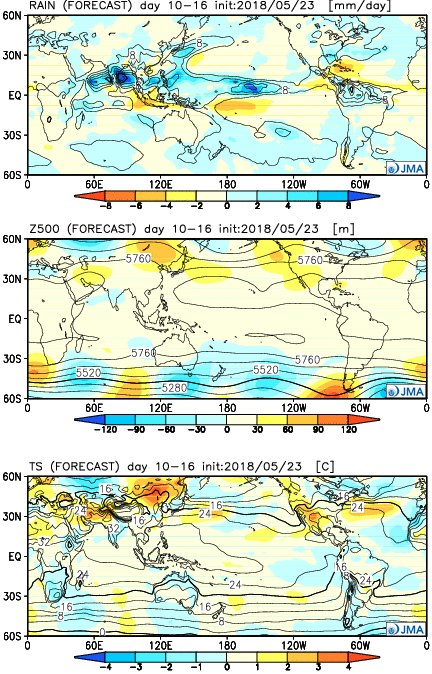
The JMA Weeklies update every Thursday morning and this gives us another tool to look at when developing the forecast over the upcoming 3-4 weeks. Here are some highlights from the most recent update:
Week 1
The big story in Week 1 is the surge of tropical moisture with the area of disturbed weather in the GOM (Gulf of Mexico). Unfortunately, it’s not until possibly Week 2 that remnant tropical moisture may interact with an approaching cold front to provide better rain chances here. The big story for the balance of the upcoming Week 1 period, locally, will be the heat. An unseasonably warm stretch will continue through the Memorial Day weekend and on into the middle of next week.
 Week 2
The model shows a bit of a transition in the pattern with the core of the heat shifting west during the Week 2 period. With this, there are some hints that the pattern will turn increasingly wet and stormy, locally, including a backing off of the extreme 90° heat.
 Weeks 3-4
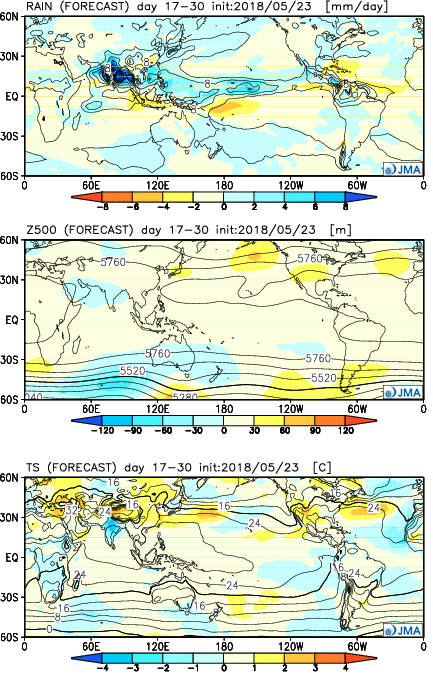
An intriguing “ring of fire” pattern develops in the Weeks 3-4 time frame. If correct, this would result in a more active pattern across the Mid West with a busy northwest flow pattern emerging. Storm complexes are notorious for tracking in a northwest to southeast fashion around the hot dome. Sure enough, the model is going with a wetter than normal pattern here. It’s hard to disagree with that given the look at 500mb.
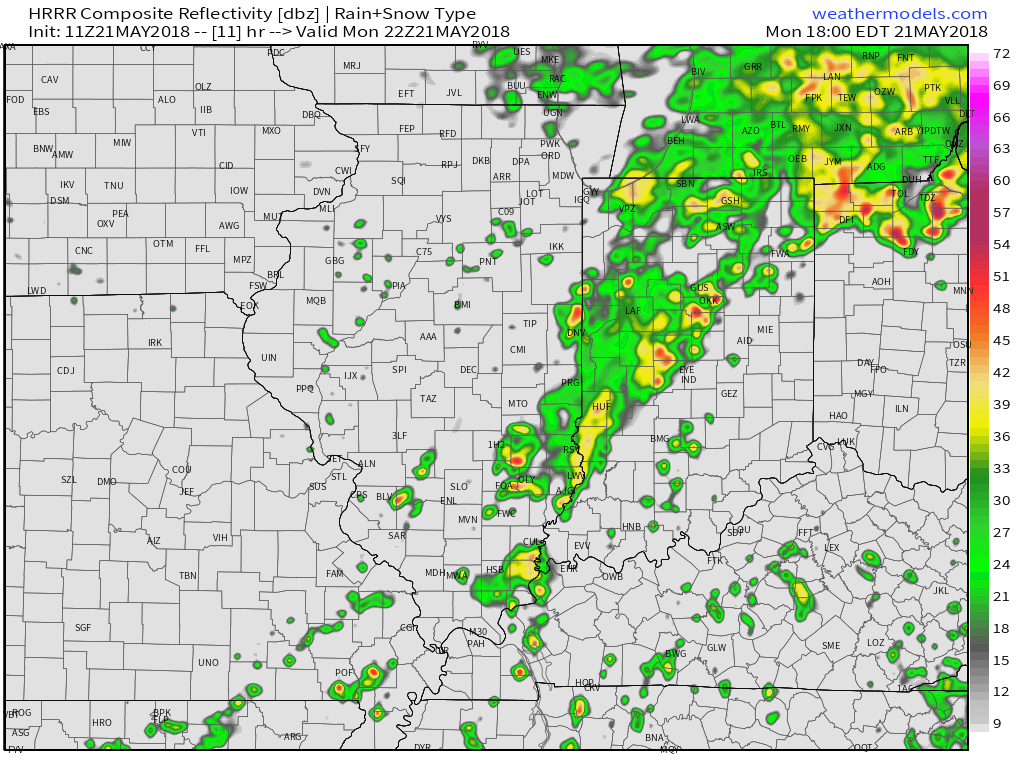
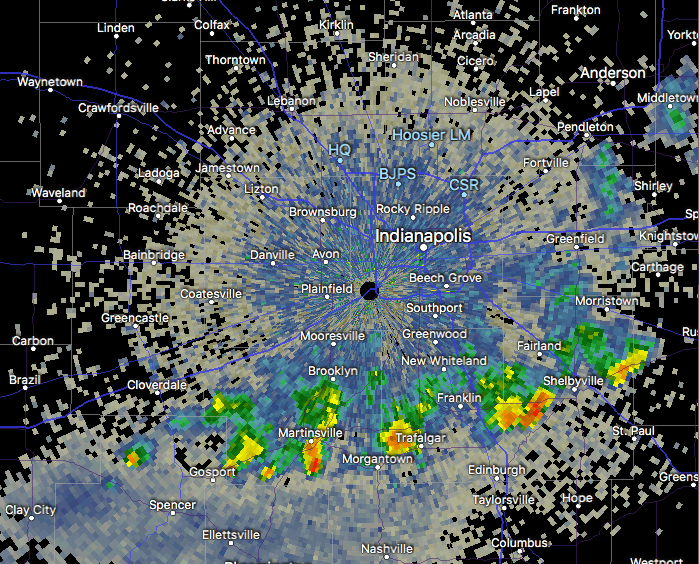
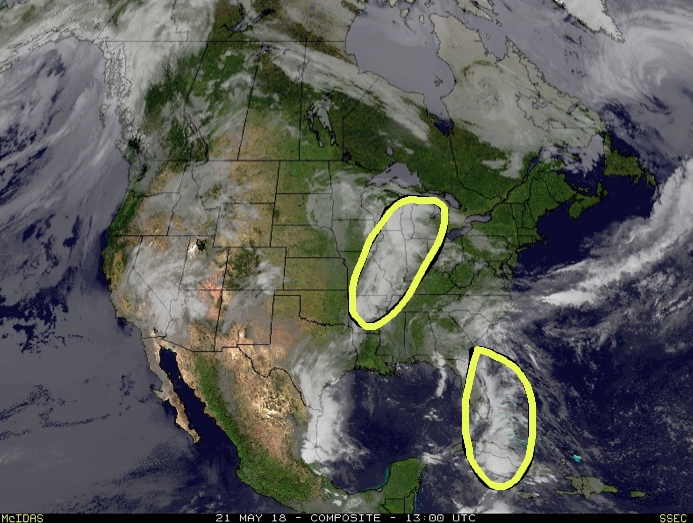 Back here on the home front, a quiet start to our Monday will turn stormy at times this evening as the front nears. We think best coverage of showers and thunderstorms will come between 5p and 10p. There will be some winners and losers when it comes to rainfall amounts by midnight. Some can expect over an inch in the stronger storms while others may only see a tenth of an inch, or so. Something that must be taken into forecasts moving forward is the tendency of most model data (high resolution and global data alike) to “over forecast” rainfall amounts as of late. Also of note is for the potential of a couple of strong to severe storms to develop this evening. We always have to be wary of fronts draped across central Indiana as they’ve been known to help tornadic activity spin up. We’ve lost count of how many slight risk days with warm fronts nearby that turn busy… If you’re planning to be outdoors this evening, please have a means of receiving the latest watches and potential warnings that may be issued.
 High pressure will build in for the midweek period and supply plentiful sunshine along with continued warmer than average conditions. Overnight lows will fall into the upper 50s (couple of degrees above average) with the drier air mass in place, but afternoon highs will continue to climb into the lower and middle 80s (around 10 degrees above average).
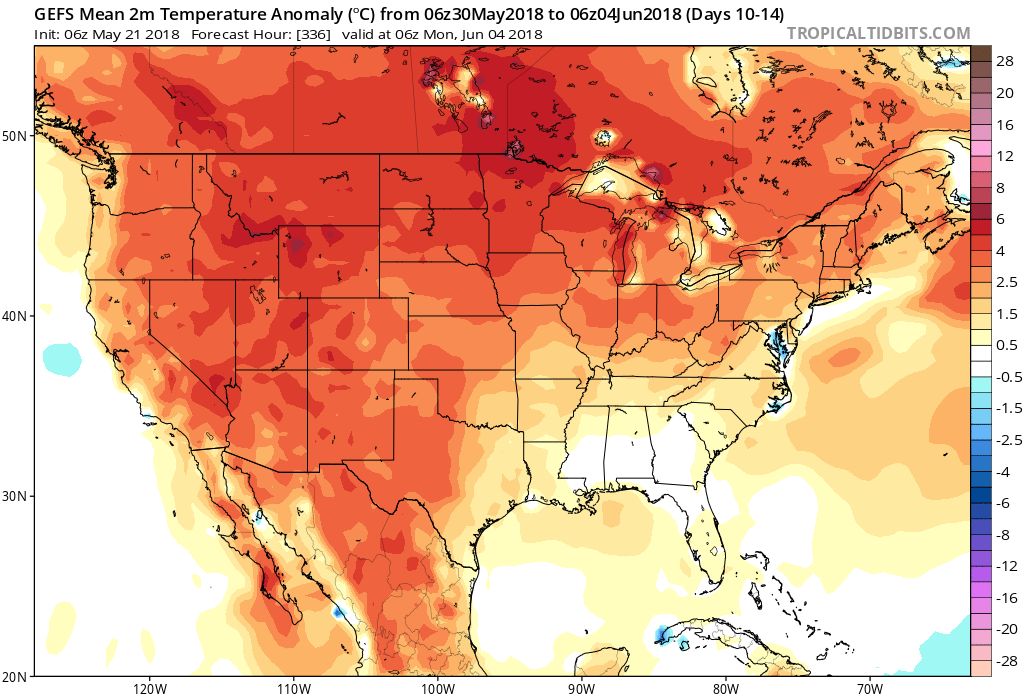
 Longer term, thoughts are shifting towards the open to meteorological summer (where is this year going?!). The GFS ensemble suggests the overall warm pattern remains intact as we open a new season with widespread warmth expected through the first few days of the June.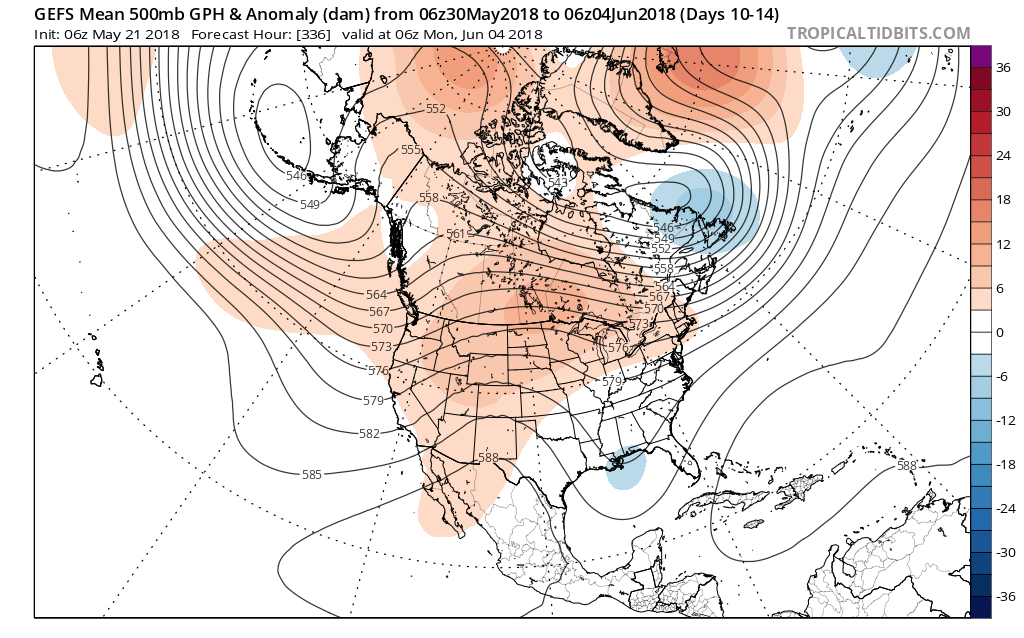
 2.) Overall, a drier air mass will build into central Indiana today and Thursday (cooler, too) before moisture returns to close the week. Scattered showers and embedded thunder are more likely Friday and again late Sunday into Monday.
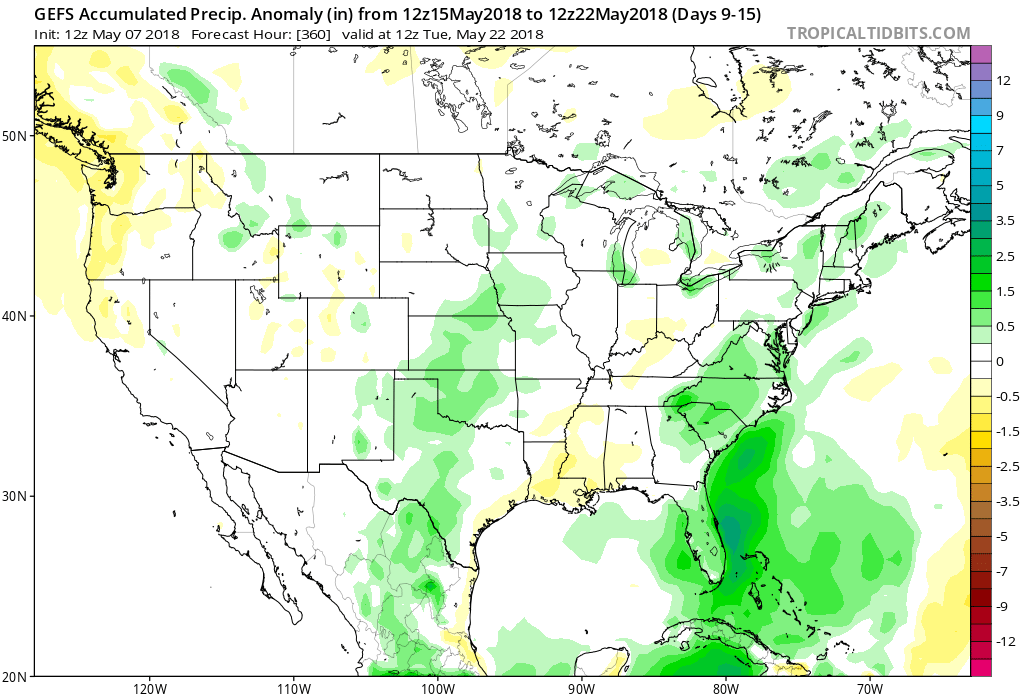
 3.) Looking ahead, we notice a more active pattern is presented off the overnight GEFS model. The heat ridge backs west and sets up a busy “ring of fire” pattern with a northwest flow aloft across our region. We have a ways to go before developing consistency and overall confidence, but this is at least an encouraging sign. The end result, should this come to fruition, would be a significantly wetter open to June.
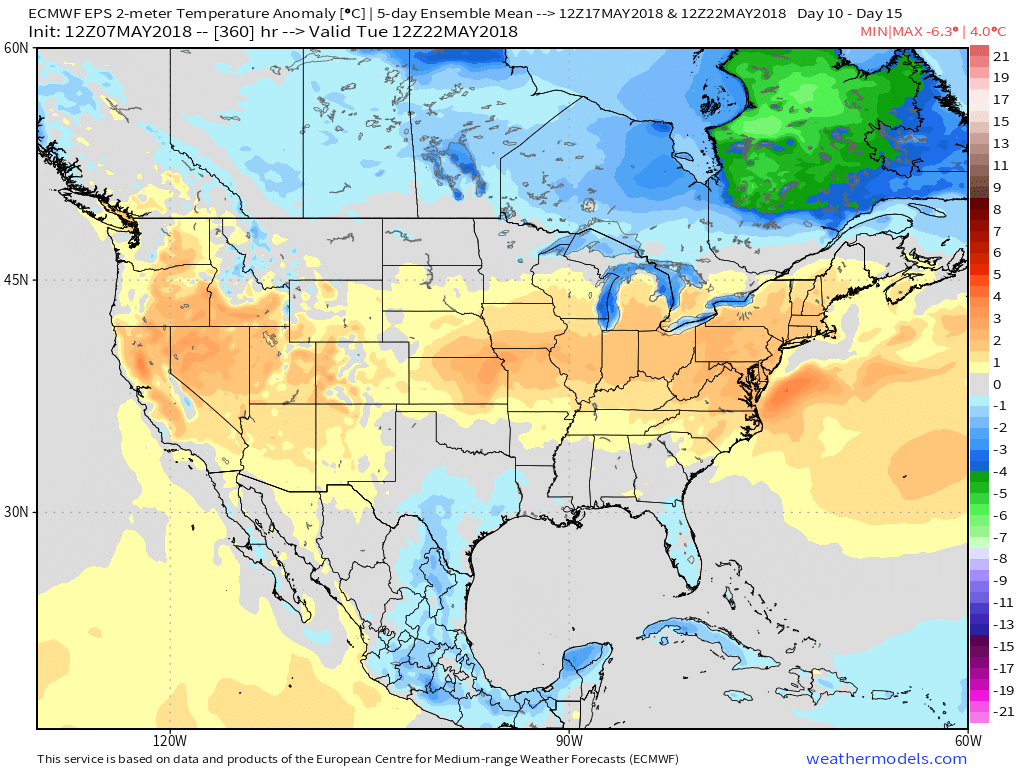
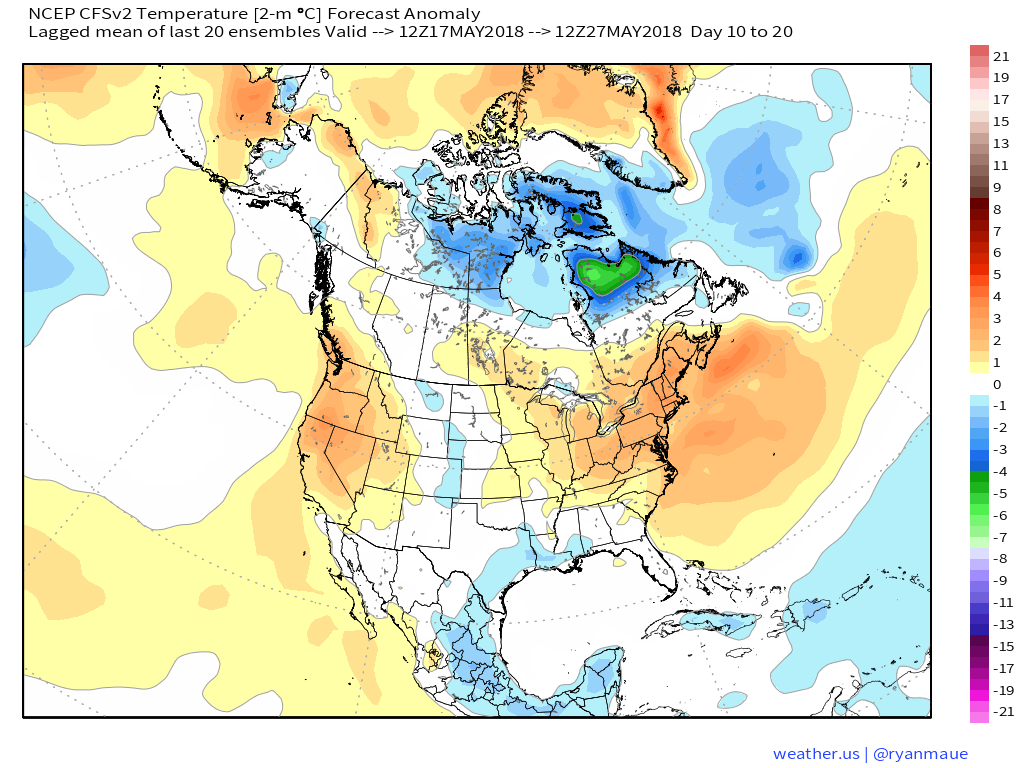
 At the surface, all three major global models agree on warmth in the long range period, including the GEFS, EPS, and CFSv2: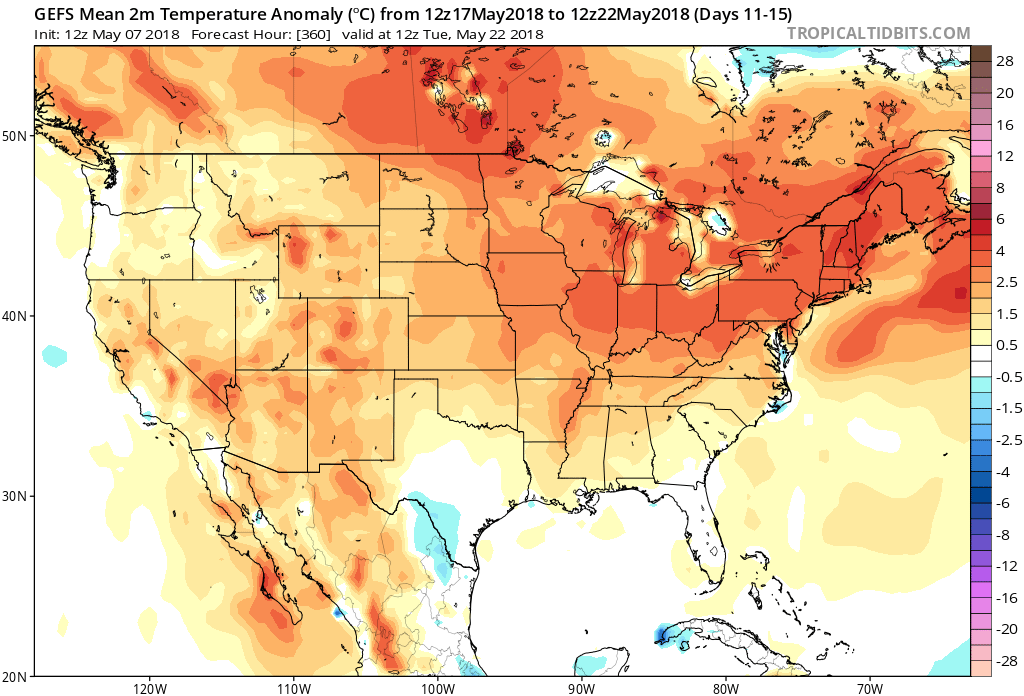
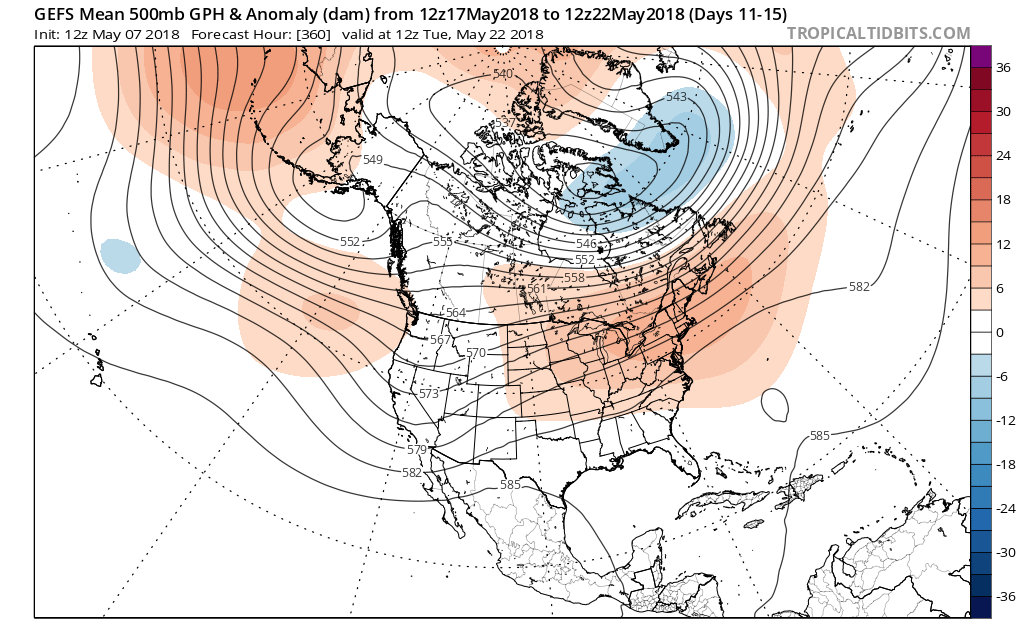
 Guidance suggests below average precipitation during the period. With broad scale ridging in place, we agree on a drier theme compared to normal. While trying to put our finger on the flip from the prolonged cold to warmer was difficult to nail down from March and April, May always looked like a drier than average month from several weeks out. (One note is the potential of active times across the Great Lakes region as “sudden summer” gains steam to the south and stubborn chill refuses to let go to our north. The gradient would promote heavier than normal precipitation relative to average).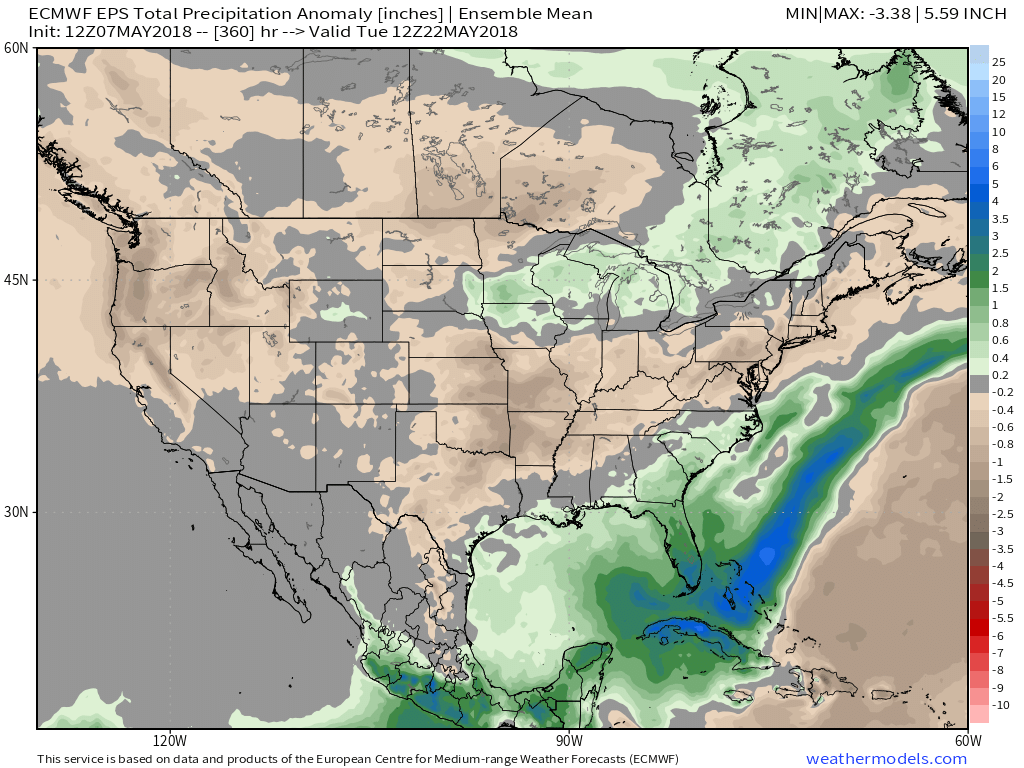
 Given the agreement in the data, along with some additional pattern drivers, we continue to believe the medium to longer term period (including mid and late May) will feature an overall warmer than average pattern along with drier than normal conditions.