VIDEO: Widespread Rain Arrives Late Tonight; Colder Pattern Looms…
You must be logged in to view this content. Click Here to become a member of IndyWX.com for full access. Already a member of IndyWx.com All-Access? Log-in here.
You must be logged in to view this content. Click Here to become a member of IndyWX.com for full access. Already a member of IndyWx.com All-Access? Log-in here.
I. High pressure will dominate the early part of the work week, helping to supply plentiful sunshine and seasonably mild temperatures. We’ll continue to enjoy the much-needed dry theme the weekend ended on!
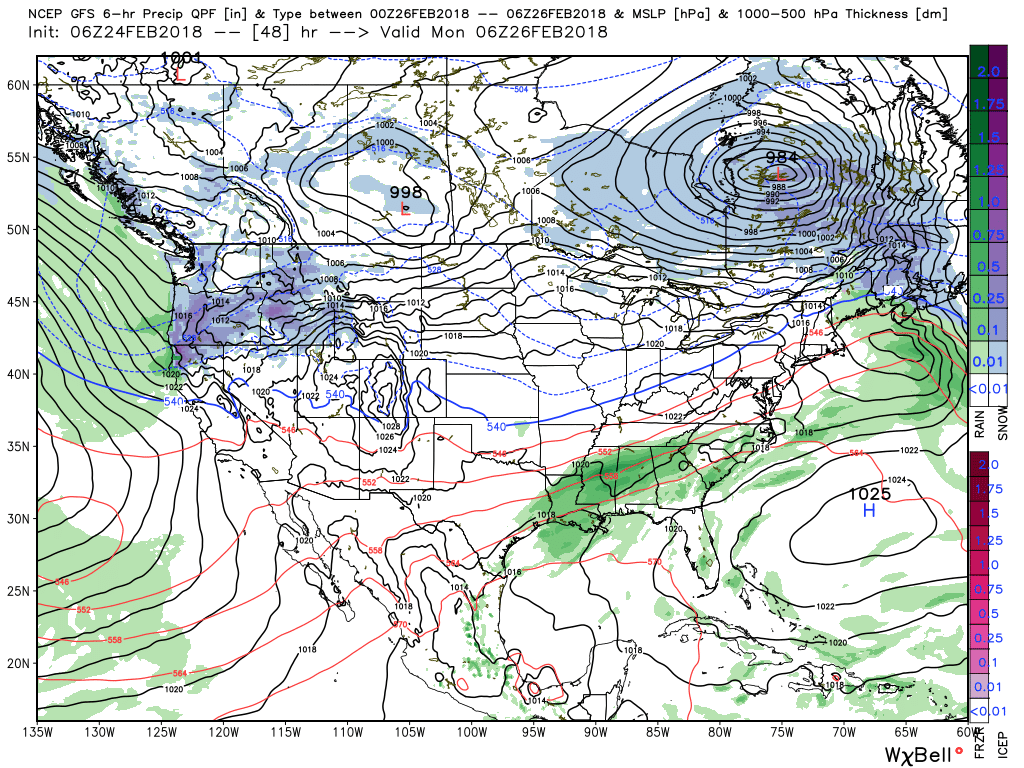
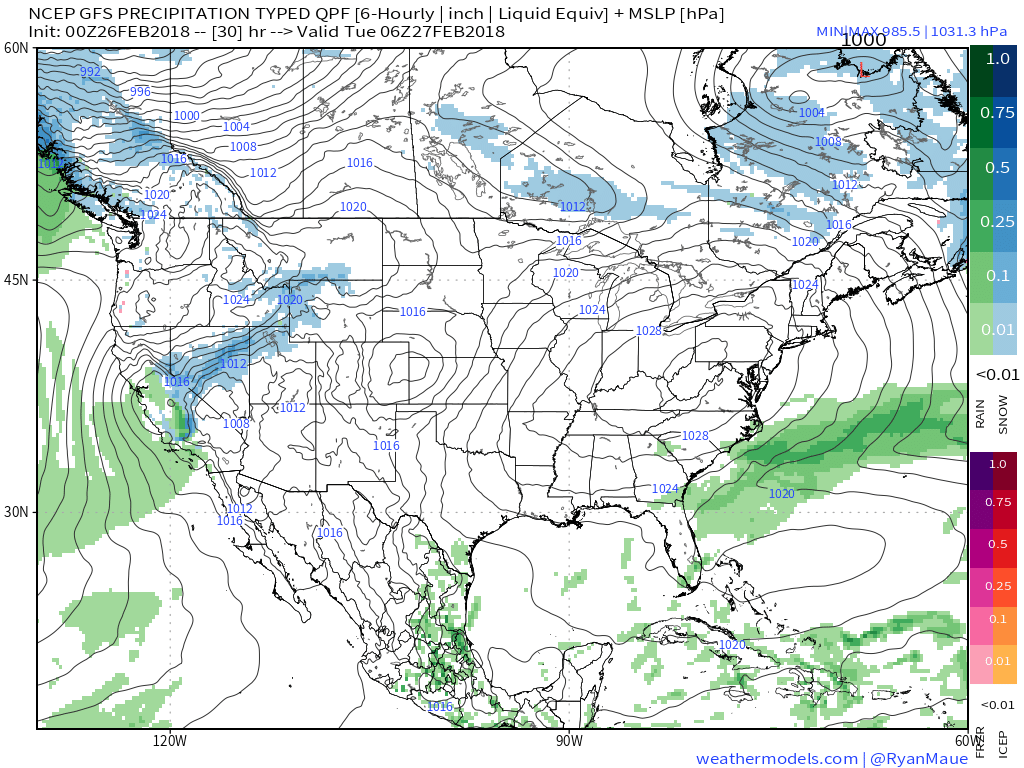 II. Our next weather maker will arrive midweek and provide a few showers Wednesday (not a huge deal from a precipitation perspective). However, as a deepening surface low tracks into the Great Lakes Thursday morning, a period of heavier rain and even thunder is possible. In general, this looks like a 0.50″ to 1.00″ type event.
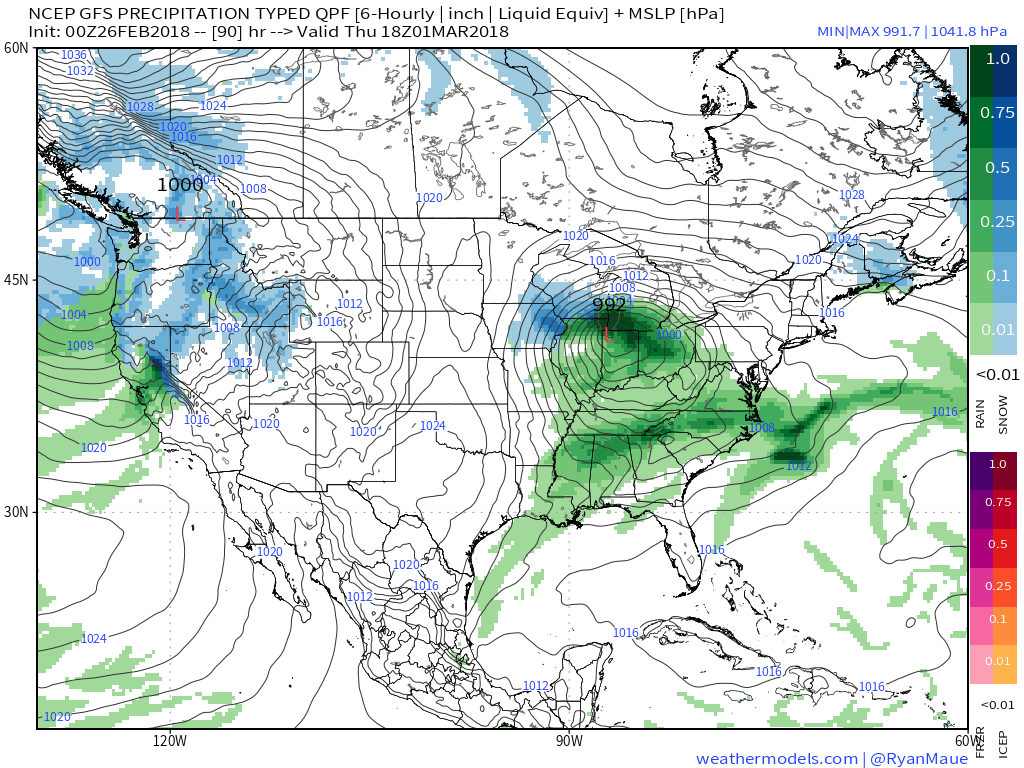
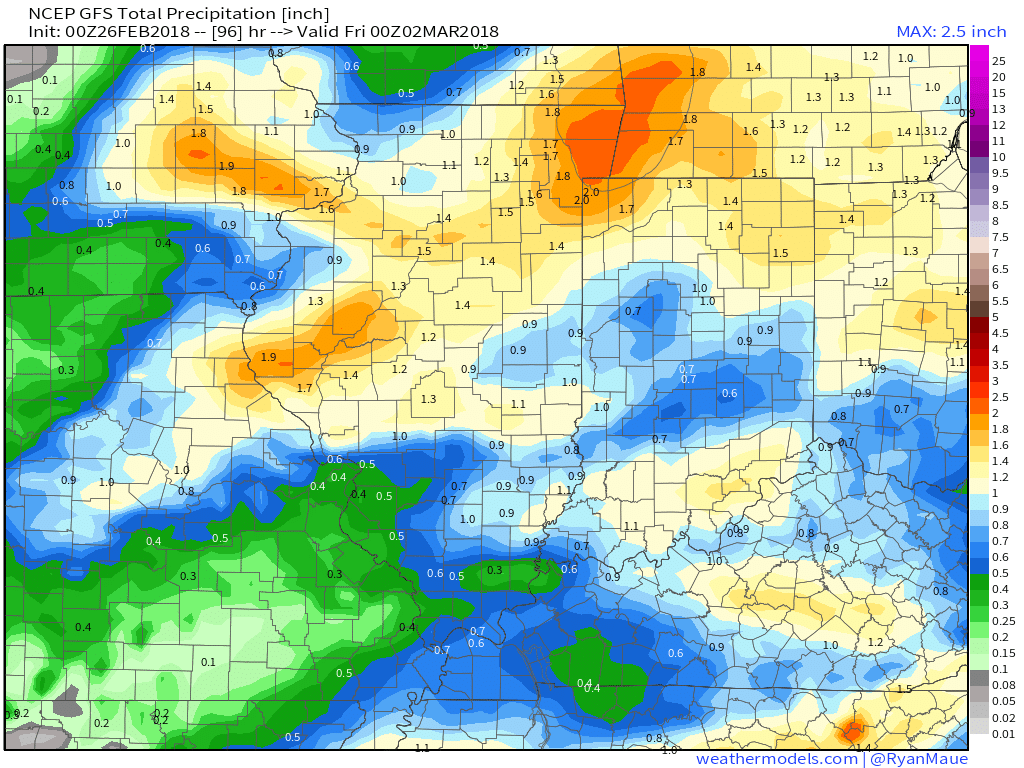 III. Somewhat cooler air will whip in behind the low, allowing leftover precipitation to end as a couple wet snowflakes across the northern half of the state Friday morning. The bigger story will be the “bumpy” start to Friday with strong and gusty north winds.
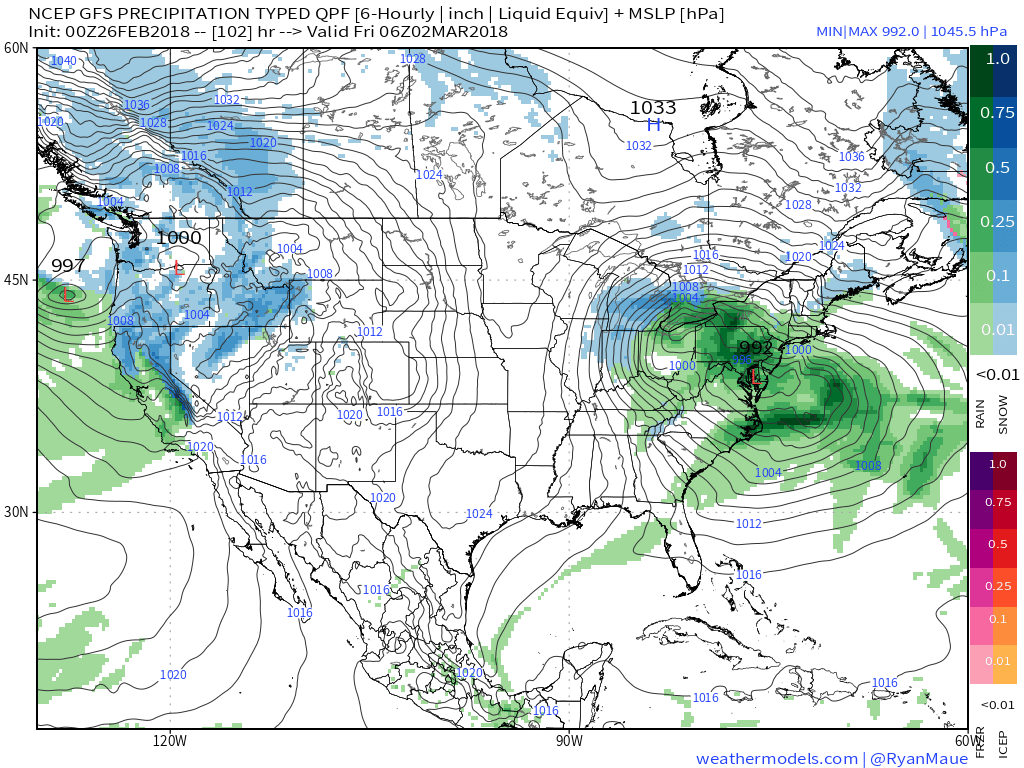 IV. High pressure returns for the weekend and with it will come a return of sunny skies. Though the mornings will be frosty, afternoon temperatures will “warm” to pleasant levels, especially with the increasingly strong early-March sun angle.
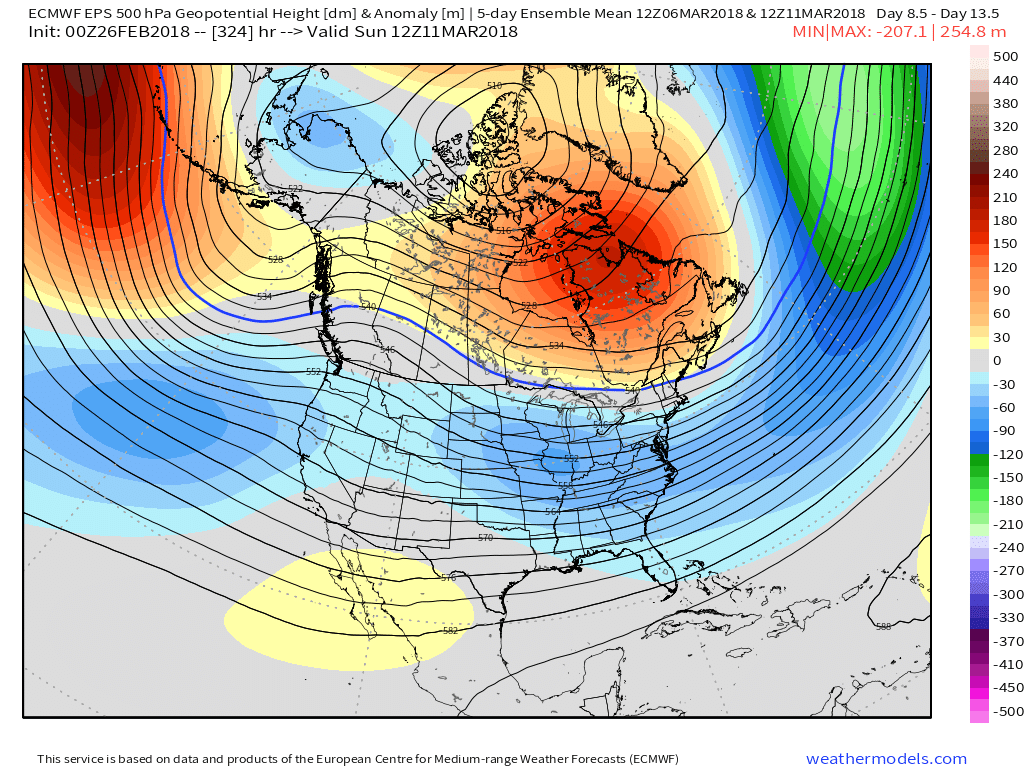
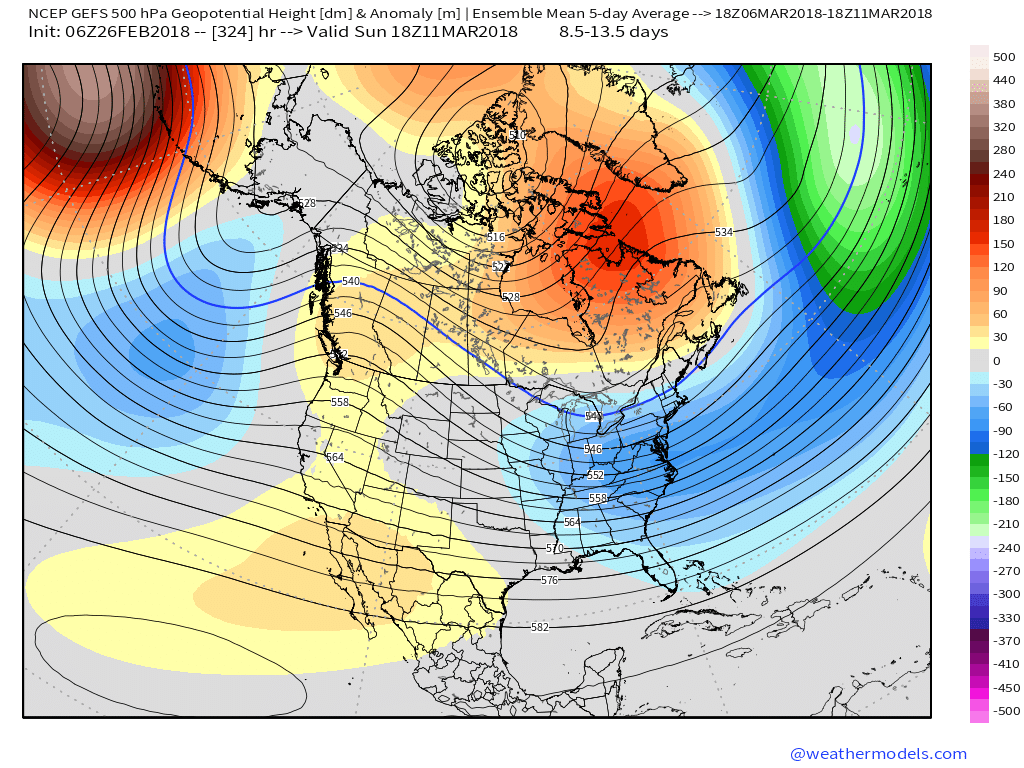
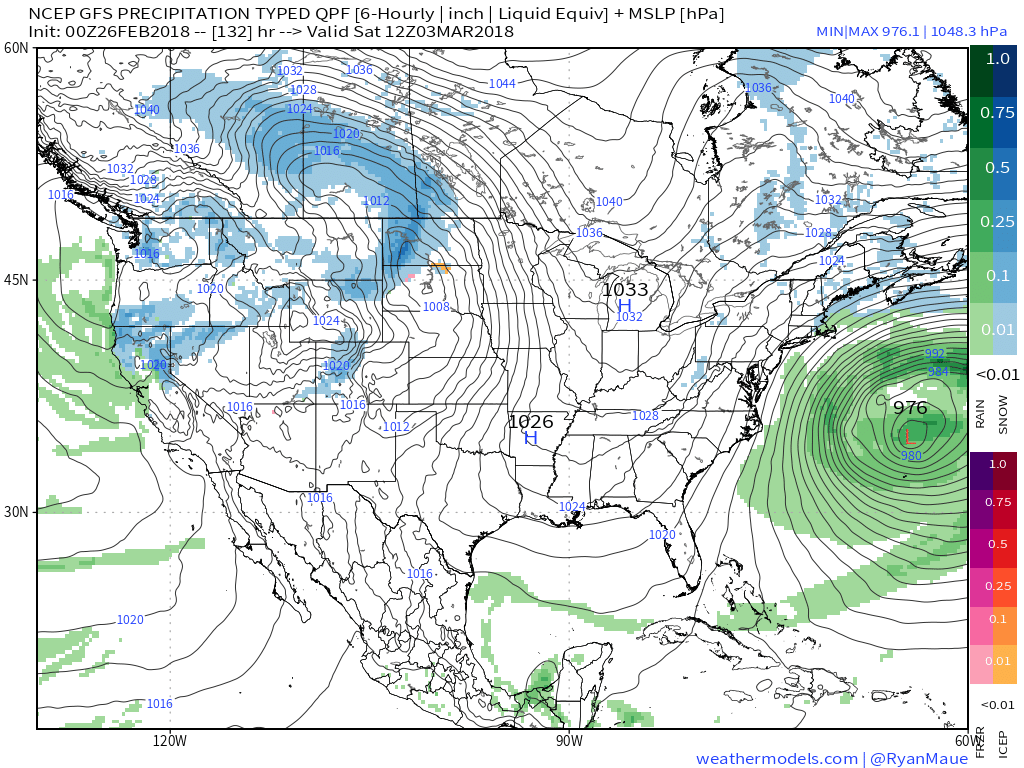 V. Looking ahead, let’s keep a close eye on the second week of March. Potential is present for a stormy period to emerge under the block. We note the GEFS and EPS (respective ensembles of the GFS and European models) are in relative agreement on a stormy, cold look during this time frame. While far too early for specifics, the potential is there for a rather widespread wintry event from the Plains into the Northeast.
You must be logged in to view this content. Click Here to become a member of IndyWX.com for full access. Already a member of IndyWx.com All-Access? Log-in here.
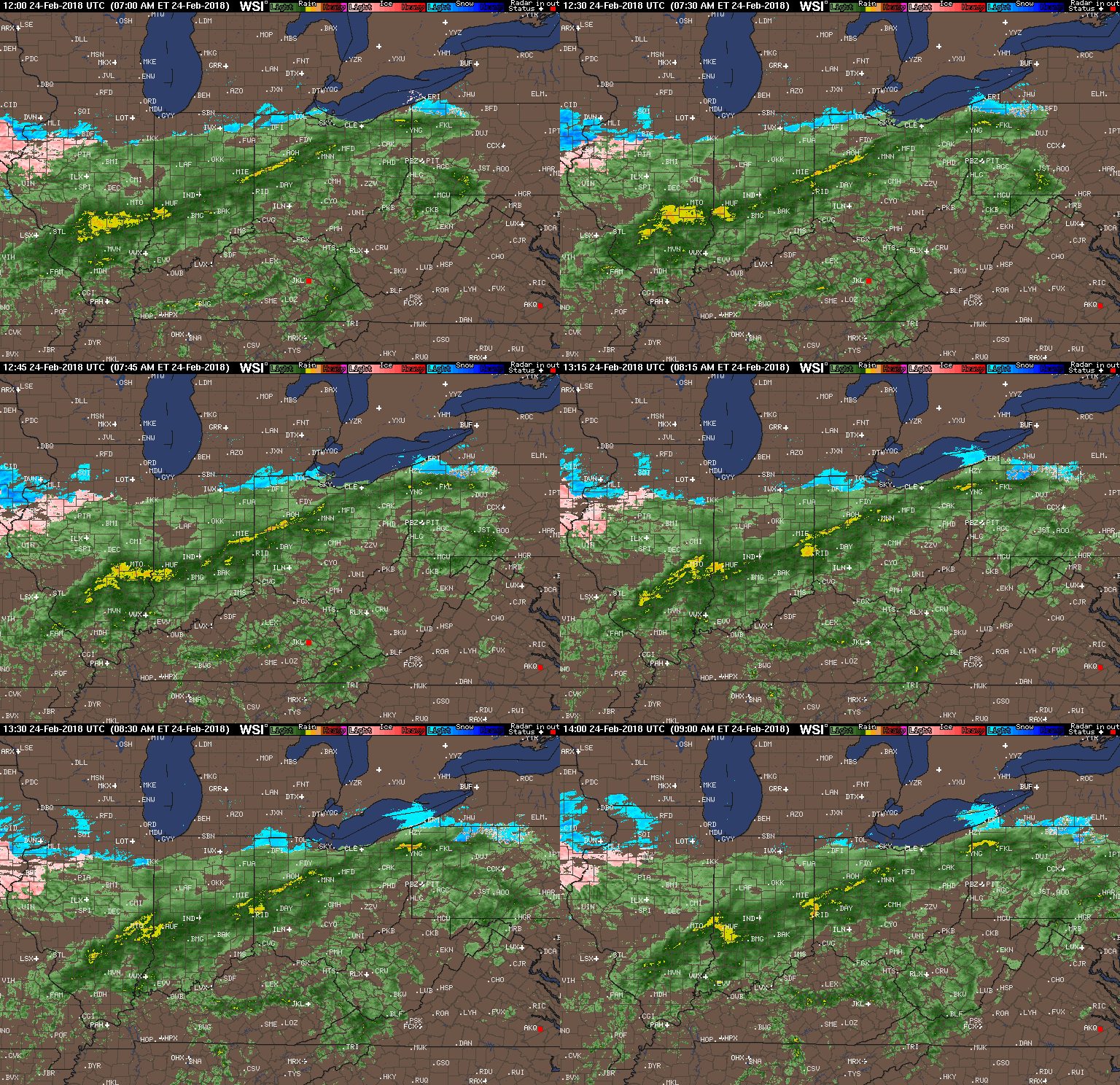 Our Saturday morning will be dominated by soaking rains as moisture continues to stream across the Midwest and Ohio Valley, including central Indiana. Add in temperatures in the lower to middle 40s and you have our official approval to sleep in this morning. 🙂
Steady rain will give way to briefly drier conditions early to mid afternoon. While scattered showers will still be present, widespread moderate to heavy rain will diminish. Here’s a look at the forecast radar at 3p:
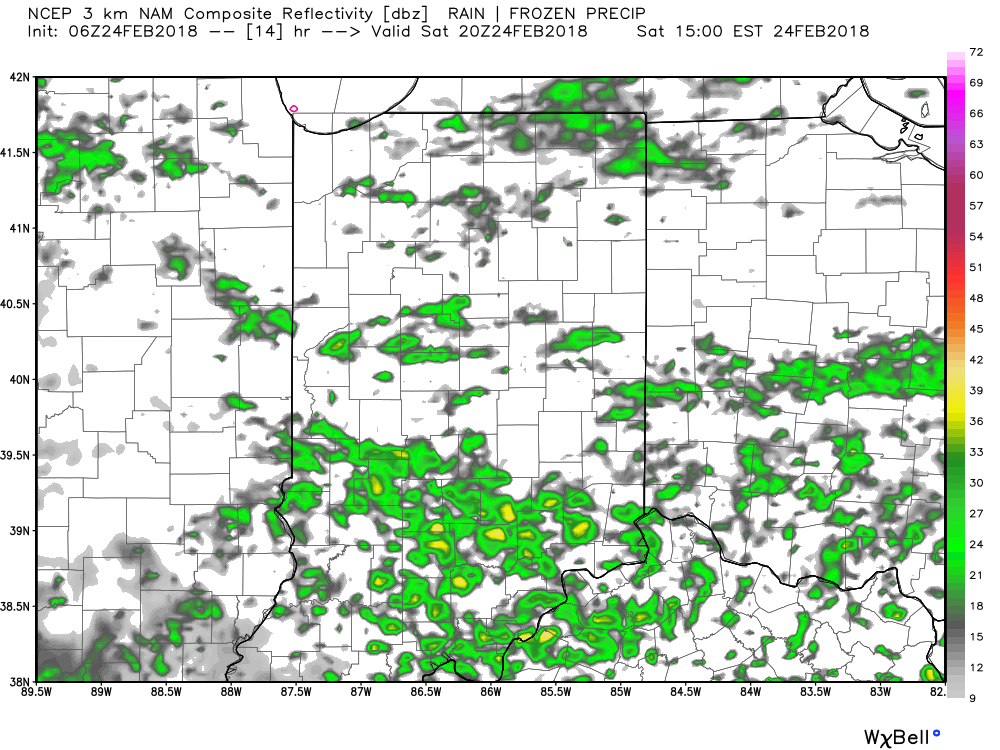 Widespread rain and embedded thunderstorms will return by evening, and forecast radar products at 8p and 2a Sunday show the stormy times well:
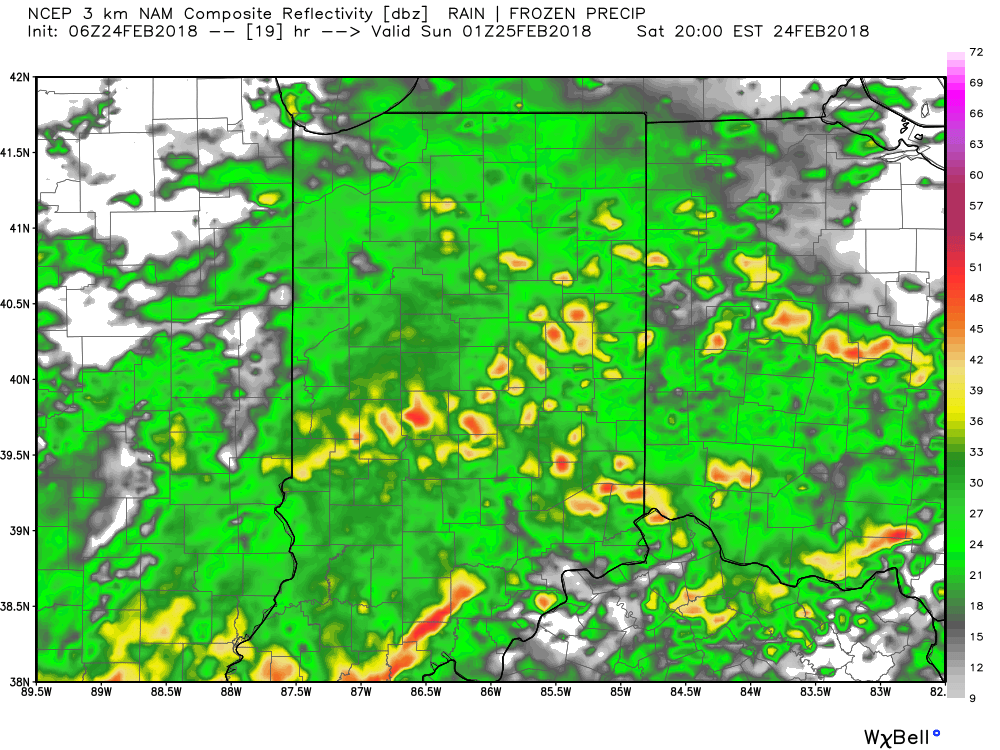
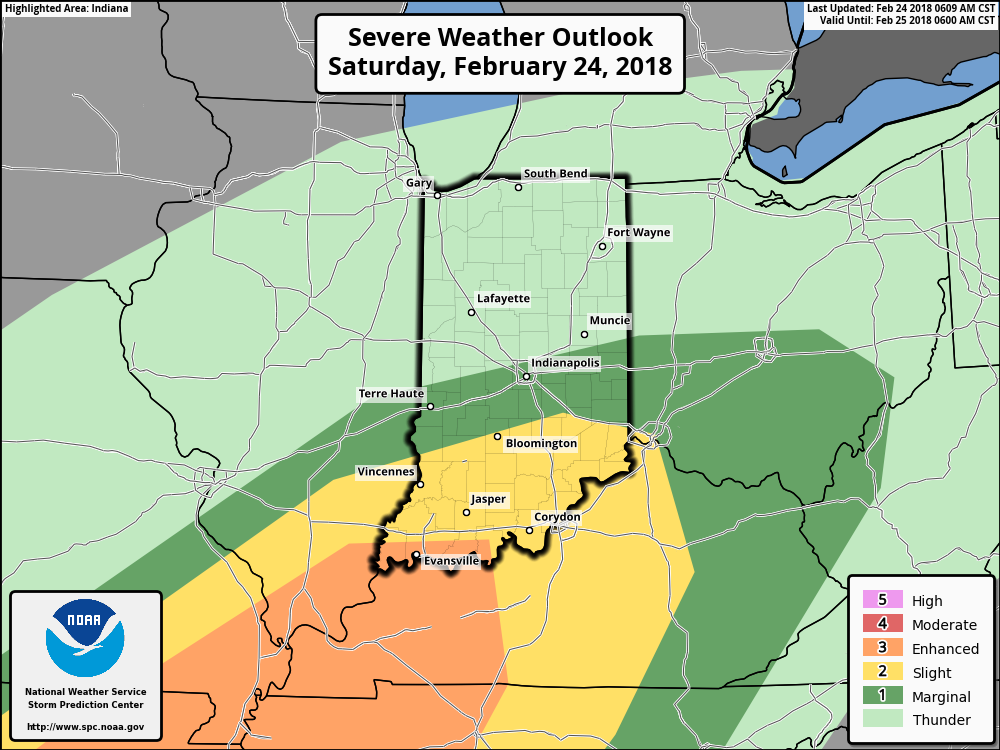
 A couple of storms may become strong to severe (especially downstate). Accordingly, the Storm Prediction Center has expanded the threat of severe weather to encompass more of the state.
We’re most concerned for the potential of stronger storms to produce damaging winds, but an isolated tornado can’t be ruled out tonight. Additionally, we’ll also have to be on guard for potential of flash flooding as storms will be capable of torrential rainfall. Heavy rain falling on already saturated soils may lead to problems in spots tonight into early Sunday.
 After early morning storms head east Sunday, high pressure will build in with drier conditions and increasing sunshine Sunday. It’ll be a very nice close to the weekend, and calm, pleasant conditions will continue as we progress through the early portions of the new work week.
Today will feature a continuation of gloomy conditions, including areas of fog and drizzle- especially this morning.
Thankfully, most of central Indiana will get a break from significant rainfall through the majority of our Friday, but a new batch of steady to occasionally heavy rain will build in overnight into the day Saturday.
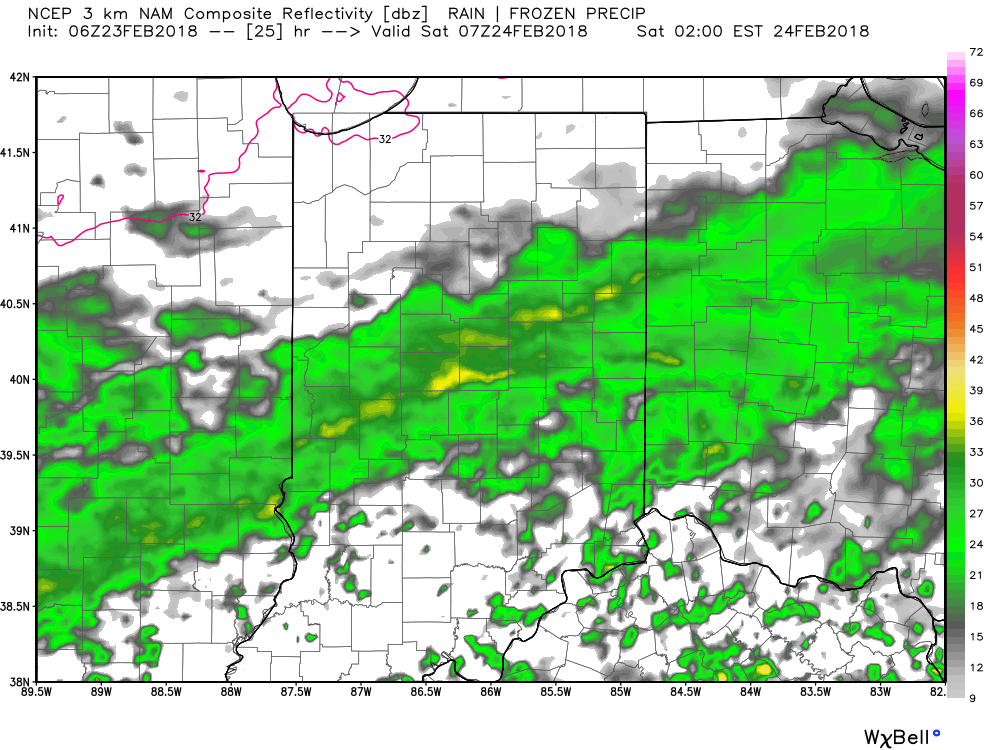
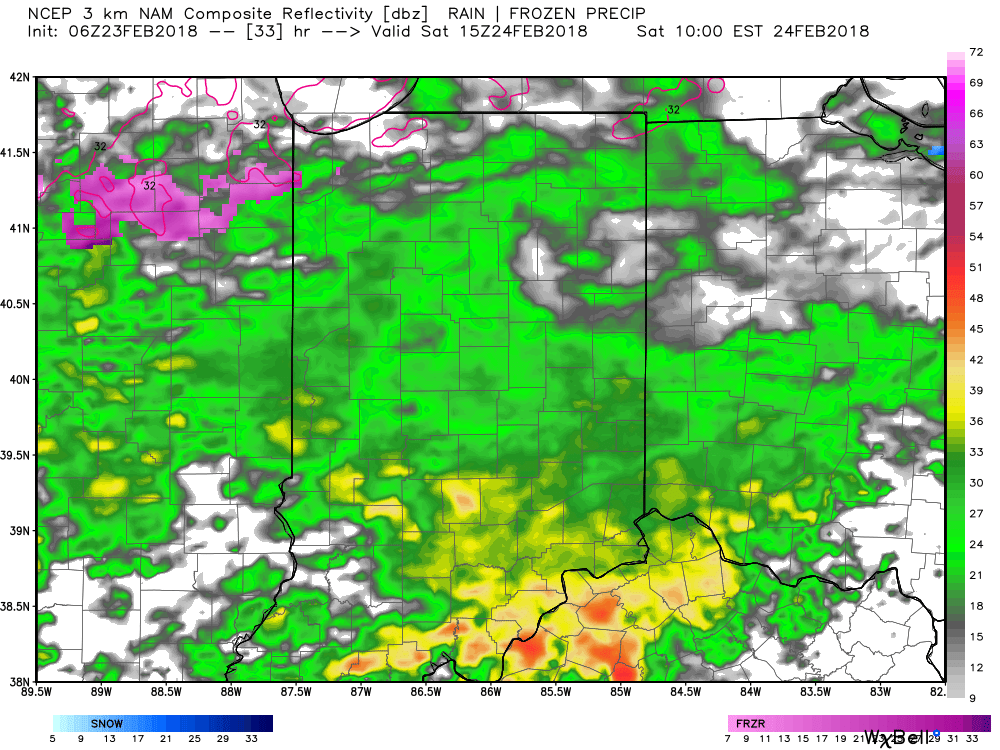
We’ll add thunderstorms into the forecast Saturday night into the predawn hours Sunday as a deepening surface low tracks into the Great Lakes and sweeps a cold front through the state Sunday morning. A couple of these storms could become strong across central Indiana and even severe downstate. As such, the Storm Prediction Center (SPC) has included the southern half of Indiana in a “marginal” risk of severe during this time period. We’ll keep a close eye on models over the next 24 hours as it’s possible this marginal and slight risk may need to be expanded further north.
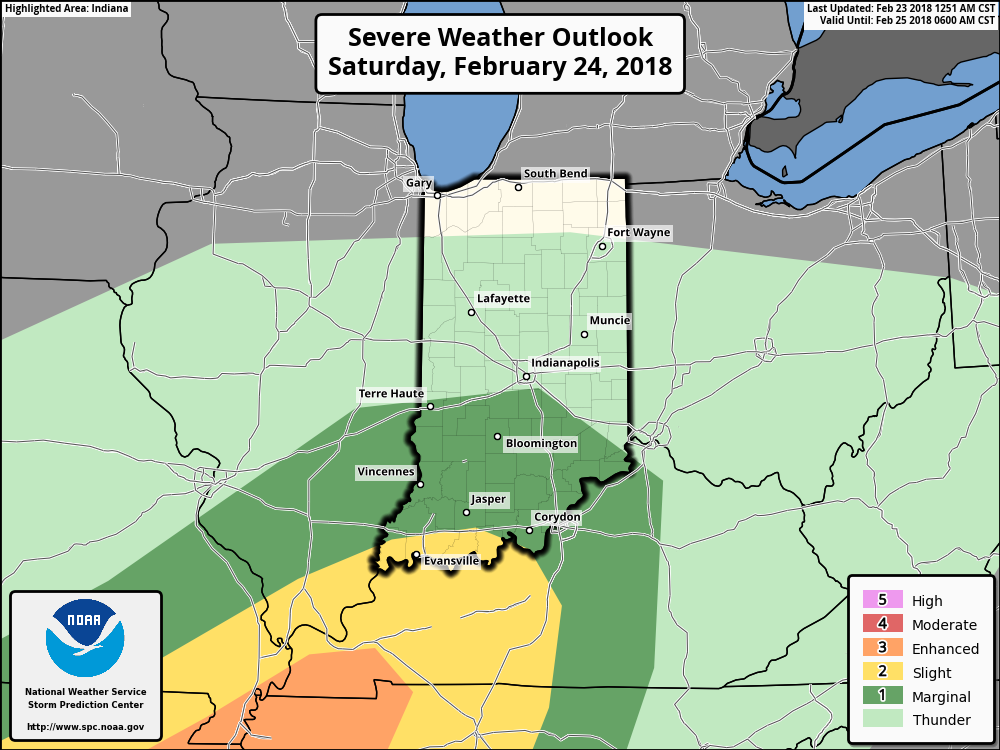
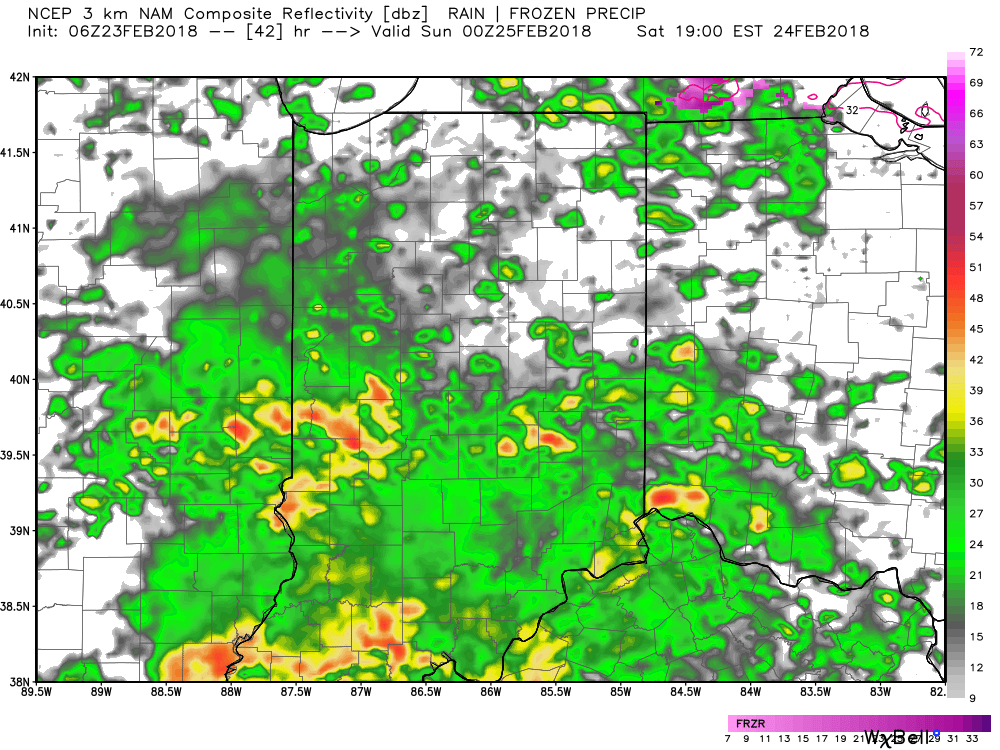
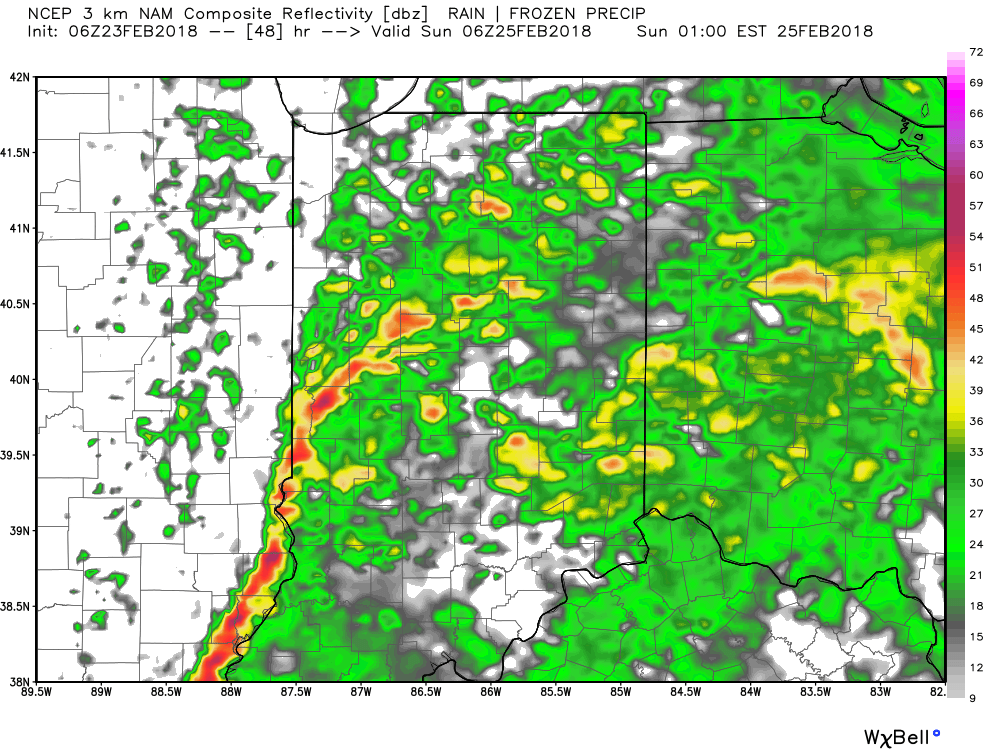
Thankfully, drier air will quickly sweep into the state Sunday afternoon and this should allow sunshine to return as we close the weekend. Beforehand, additional rainfall of 1″ to 2″ will be widespread across central Indiana with locally heavier totals.
High pressure will settle overhead to open the new work week, allowing for a quieter time of things before a new active period develops by the middle of the week…
