Updated 12.06.25 @ 9:20a Average for 12/6: 28.6°; 43.2°
You must be logged in to view this content. Click Here to become a member of IndyWX.com for full access. Already a member of IndyWx.com All-Access? Log-in here.
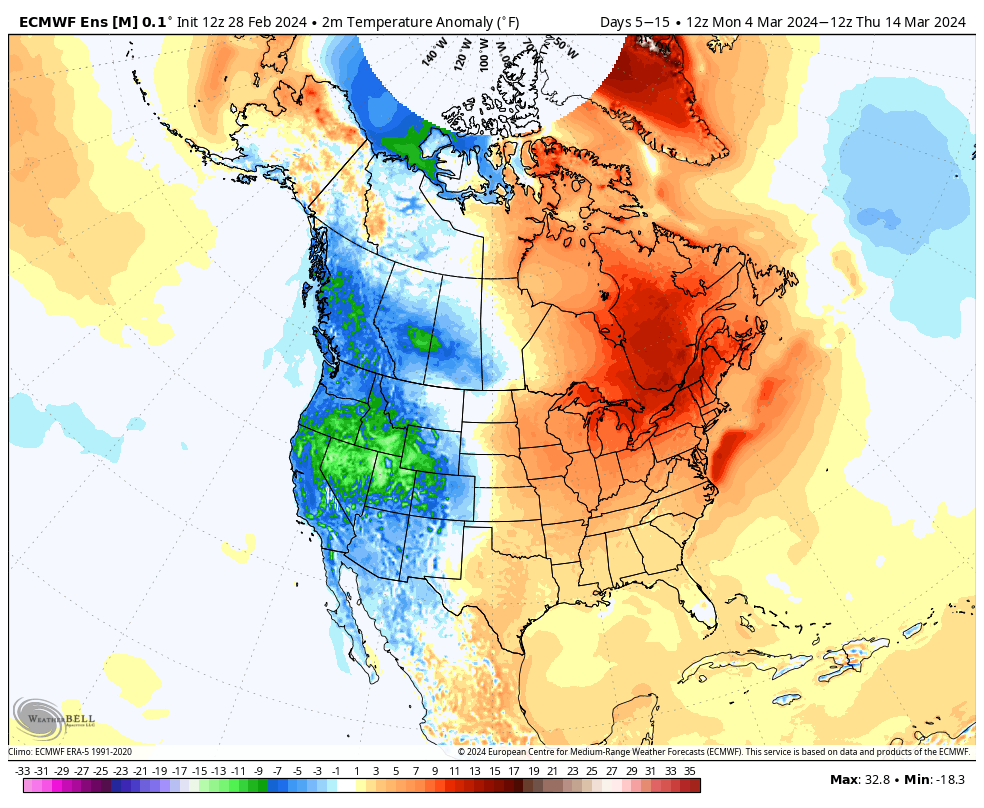
Tomorrow we’ll welcome in meteorological spring and the first couple weeks of March appear to continue the unseasonably warm trend. At times, additional warm records will likely fall.
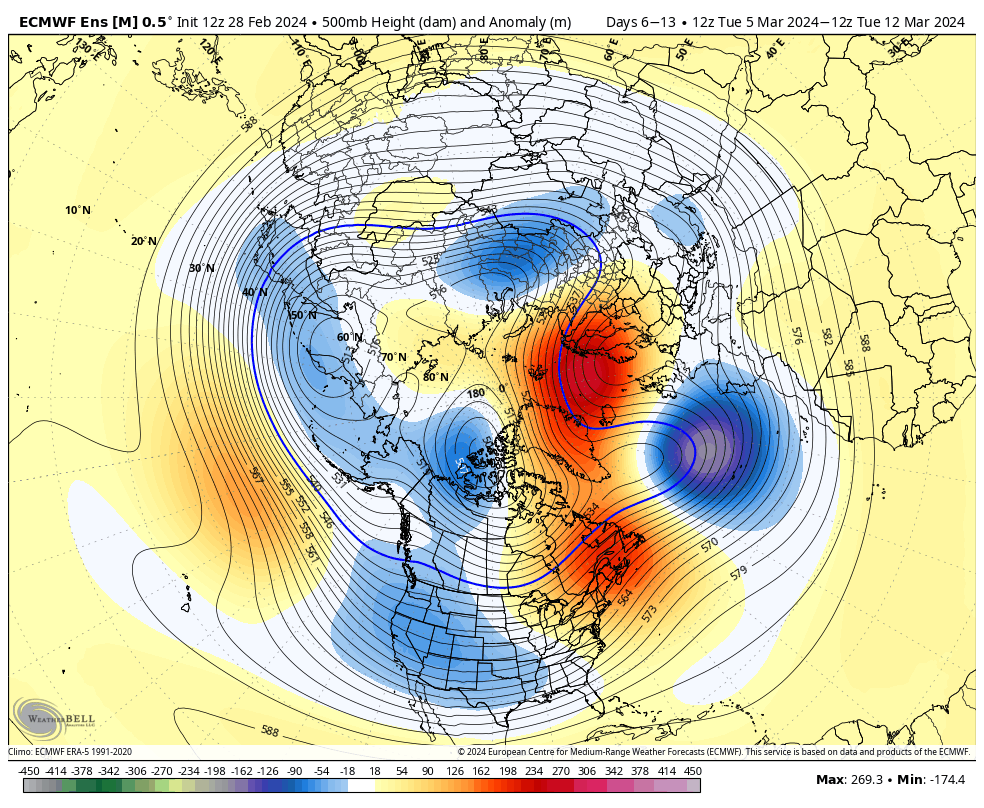
A ‘mean’ eastern ridge (and strong western trough) will dominate the 1st half of March.Well above average temperatures are expected through the 1st half of March.
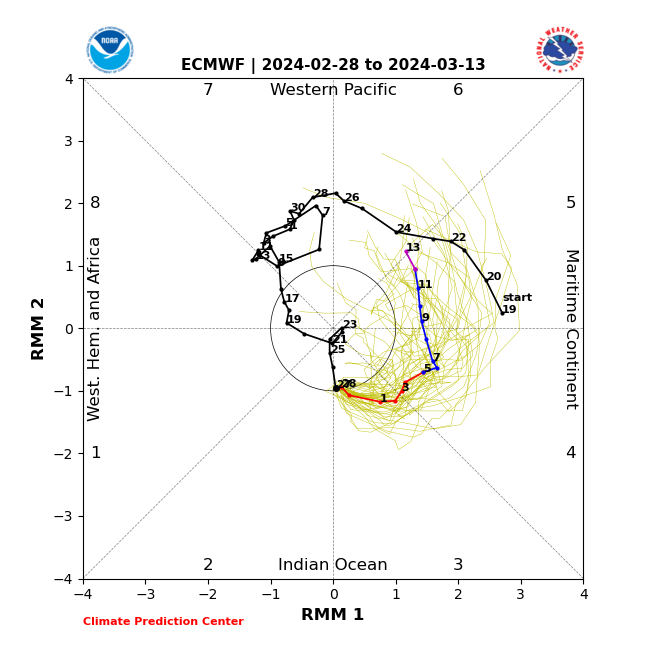
This is strongly correlated with the Madden-Julian Oscillation highly amplified in the classic warm phases this time of year. (You can absolutely say goodbye to any sort of sustained cold prospects this time of year with the MJO in phases 4, 5, and especially 6). Now, down the road, we’ll want to watch and see if we can maintain this amplitude and rumble into the transitional colder Phase 7 before a potential opportunity to see cold grow more impressive should we *finally get into Phase 8 late month. Remember that we made an attempt at that back in mid-February before things instead collapsed into the neutral phase. Moral of the story for folks longing for one more bout of sustained cold prior to the warmer months ahead, “don’t hold your breath.” The trend certainly isn’t your friend.
Back to the present. No matter what the teleconnections say, an amplified MJO will always win out. And the current MJO forecast to roll through the phases listed above screams that our recent warm times will “keep on keepin’ on” as we navigate the 1st half of March.
MJO forecast through March 13th
The Phase 5 and Phase 6 composite analogs at 500mb (upper air pattern) for an El Niño March:
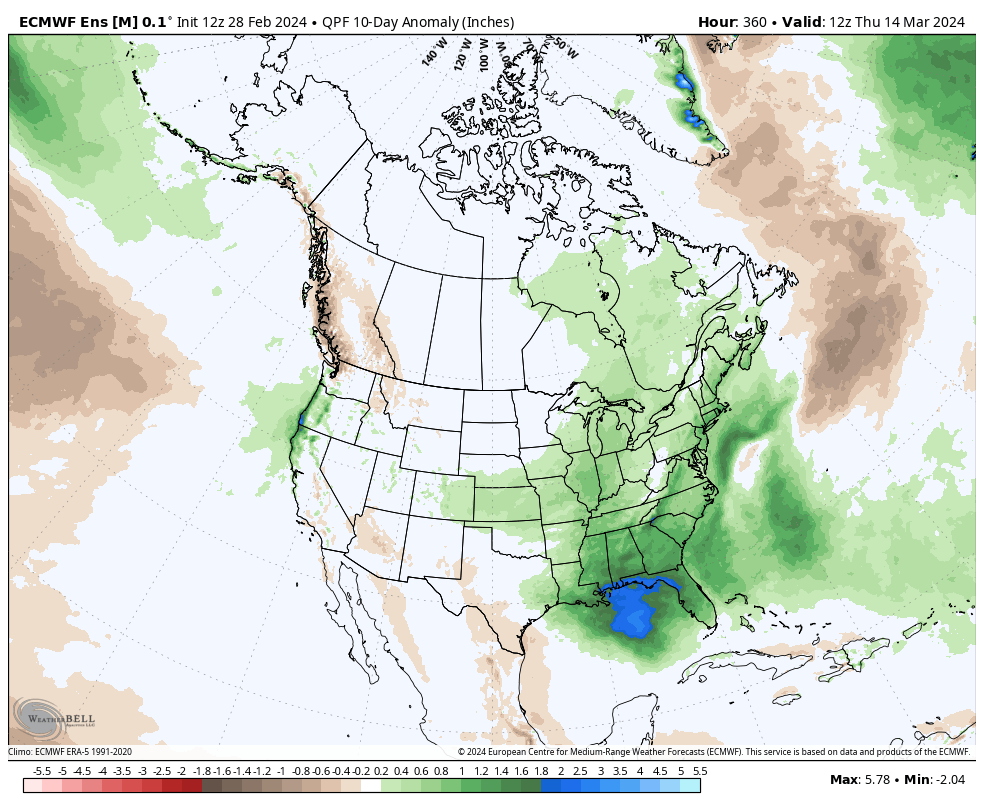
What this should also result in is an active first half of the month, including above normal rainfall and likely at least another early season strong to severe weather event before we get to mid month.
It’s a classic pattern that should feature low pressure systems ejecting out of the Southwest and South-central into the Plains and western Great Lakes region. That puts our neck of the woods on the warm/ wet (and at times stormy) side of the equation.
As we move into late-March and early April, we’ll have our eyes focused on the MJO and whether or not we can, indeed, get into those traditionally colder phases. Stay tuned.
Though we still have a few weeks left of meteorological winter, spring and the #Plant24 season will be here before we know it! The headlines that we anticipate to claim the coming months include the following:
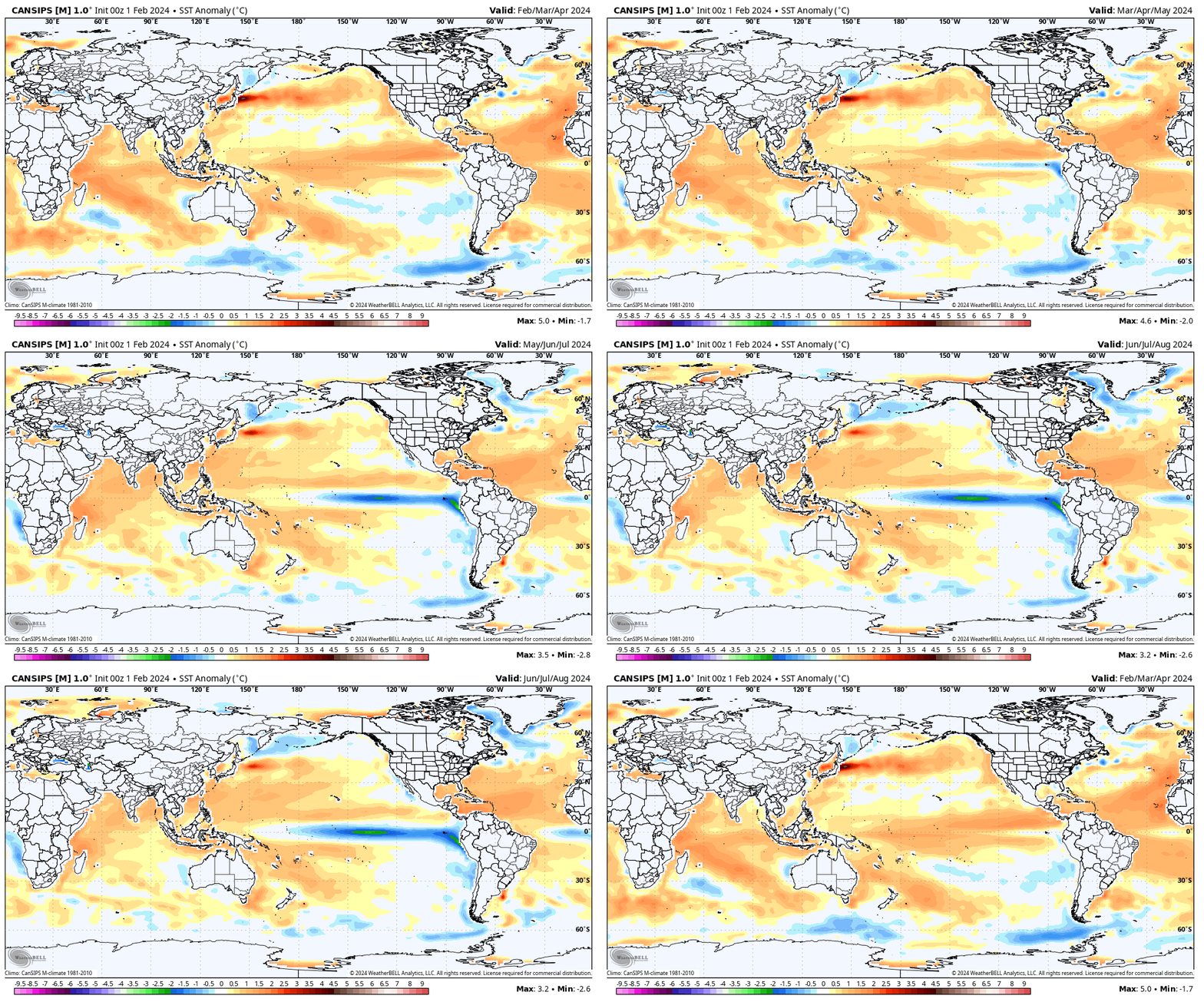
El Niño likely continues to collapse; La Niña state by late spring/ early summer
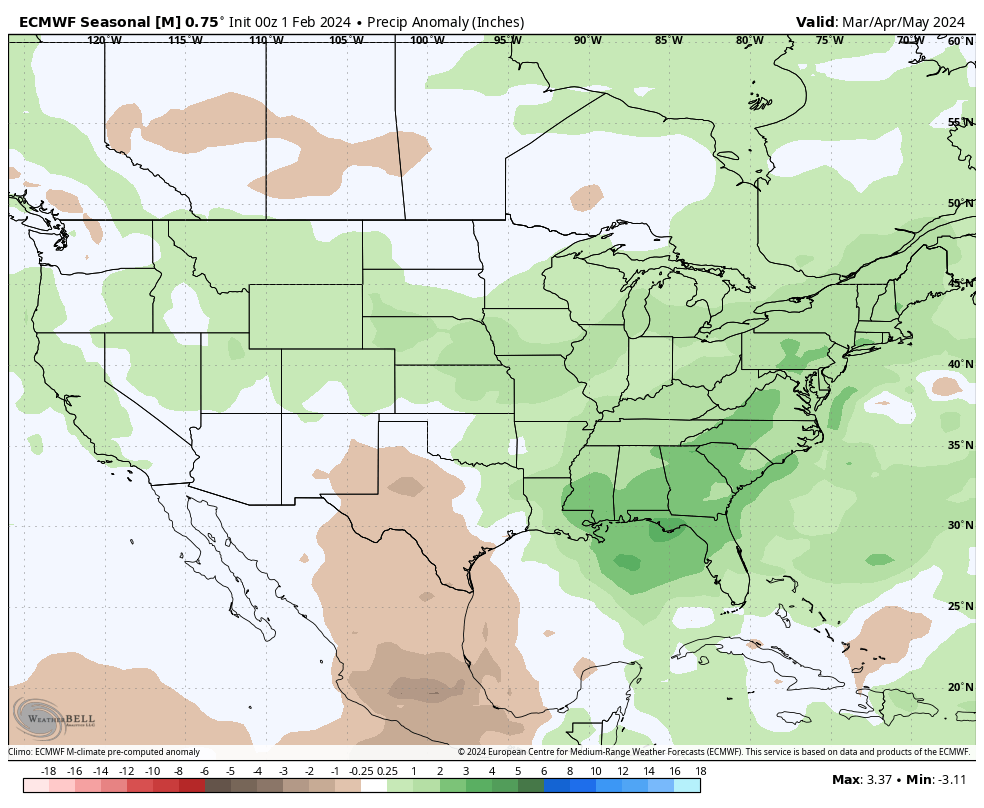
Widespread wetter than average conditions anticipated for a large chunk of the country, including central Indiana. Opportunity for above average severe weather episodes during the March through May (meteorological spring) time period.
Time to prep for a hyper active hurricane season along the Gulf and Southeast US coastlines.
Long range, seasonal forecast models, continue to show the current El Niño collapsing and moving swiftly towards a La Niña late spring and early summer.
This transition will certainly have impacts on the anticipated precipitation and potential of a busier severe weather season this spring. We forecast a rather swift Nino collapse and subsequent onset of La Niña, which ups the ante for a wet spring, not only locally, but across a widespread chunk of the country. Undoubtedly, this could lead to plant24 impacts (delays) at times.
Seasonal products see the above average rain expected for spring 24.
European Seasonal Precipitation Anomalies March through MayJMA Precipitation Anomalies March through May
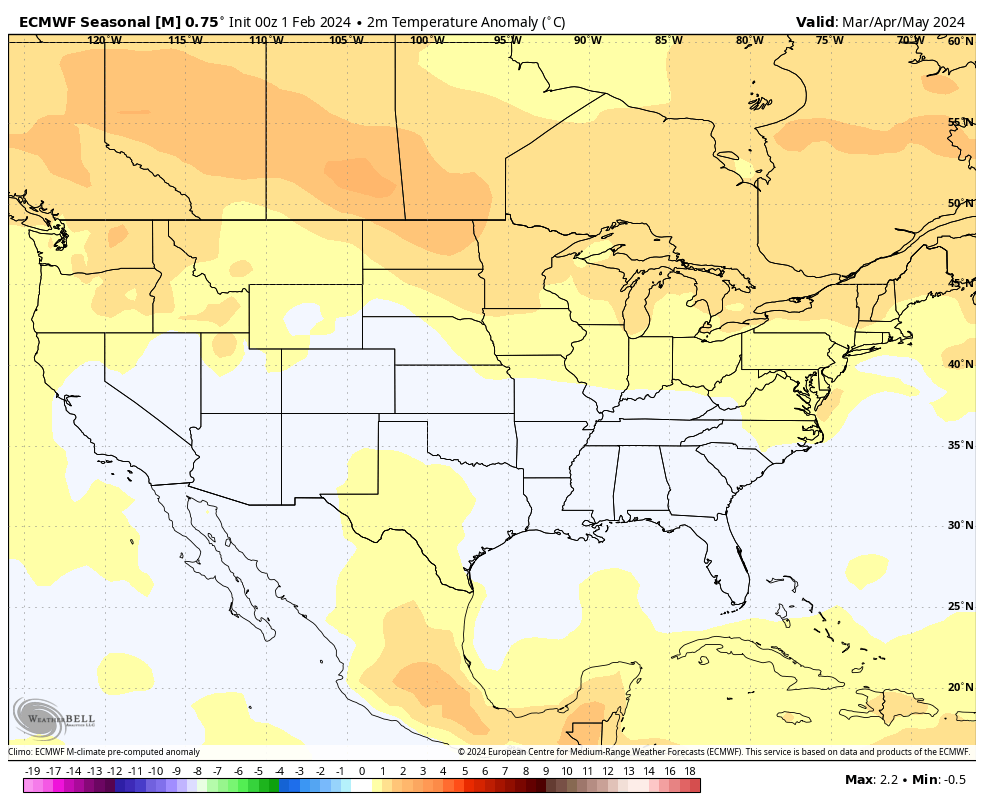
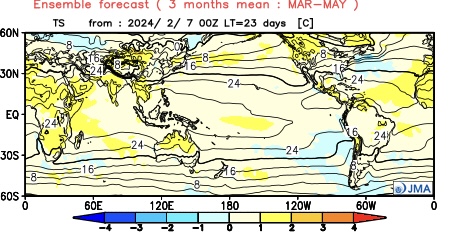
From a temperature perspective, we forecast widespread milder than normal temperatures as a whole for the season across the northern tier, including central Indiana. We caution though that the way we get to slightly (1° to 2° above normal on the season) milder overall may include wild swings through the season. For example, we forecast a colder than normal 1st half of March, the potential of a significant flip to warmer the 2nd half and a cooler pattern to return for the bulk of April.
European seasonal temperature anomalies March through MayJMA temperature anomalies March through May
IndyWx.com Spring/ #Plant24 Outlook for central Indiana:
Temperatures that average 1° to 2° above normal overall for the March-May period.
Precipitation that runs 125% to 130% of normal during meteorological spring.
Wishing the best of luck and positive vibes to all in the months ahead, especially our #AGwx partners. Happy spring!
Updated 02.05.24 @ 6p Potential is on the increase for a period of notable cold during late-February. We look into this along with the staying power, and early thoughts on…
You must be logged in to view this content. Click Here to become a member of IndyWX.com for full access. Already a member of IndyWx.com All-Access? Log-in here.
You must be logged in to view this content. Click Here to become a member of IndyWX.com for full access. Already a member of IndyWx.com All-Access? Log-in here.