
As part of some exciting and significant enhancements that we’re looking forward to announcing later this fall, we’re going to be including more content that’s typically only been going out to private clients. Some of that content includes our ‘medium range notes’ that go out each evening, included in the sample below.
As we look at the medium range period, or the 6-10 day time frame, the pattern flip to a cooler and more active regime is clear. Both the respective GFS and European ensemble members (below) see the significant changes that will be with us as we put a wrap on July and look ahead to welcoming August. Note the upper ridge retrograding west.

Image source: Tropicaltidbits.com
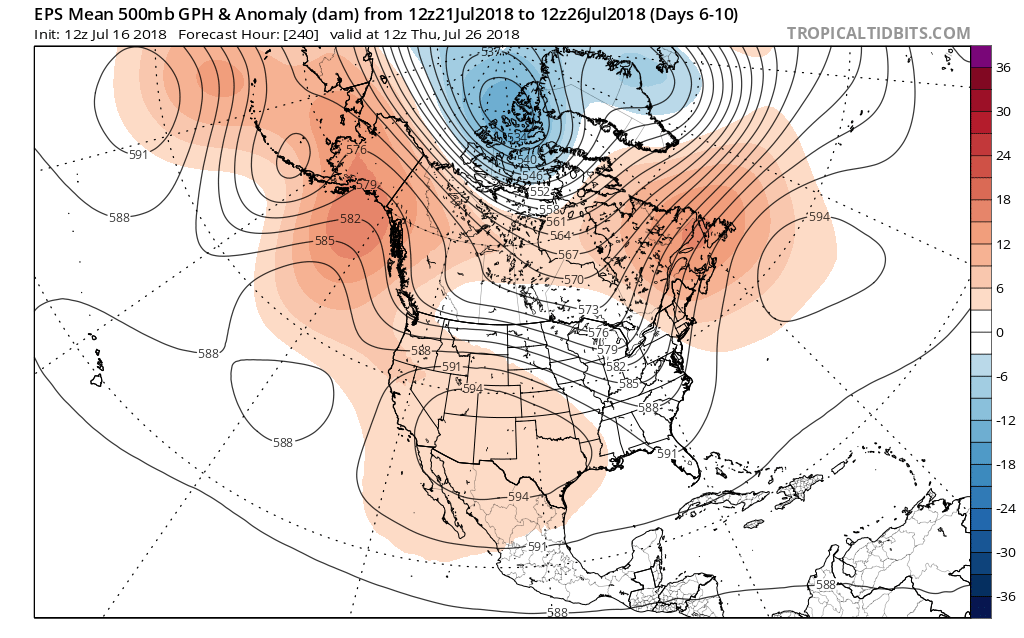
Image source: Tropicaltidbits.com
Not only will this help drive a significantly cooler pattern, but a wetter one to boot. We note data reflecting wetter than average times returning for the upper Mid West, Great Lakes, and Ohio Valley during the upcoming 6-10 day period. It appears as if much-needed moisture will be returning to central Indiana.

Image source: Tropicaltidbits.com
Also note the dramatic flip to cooler times.
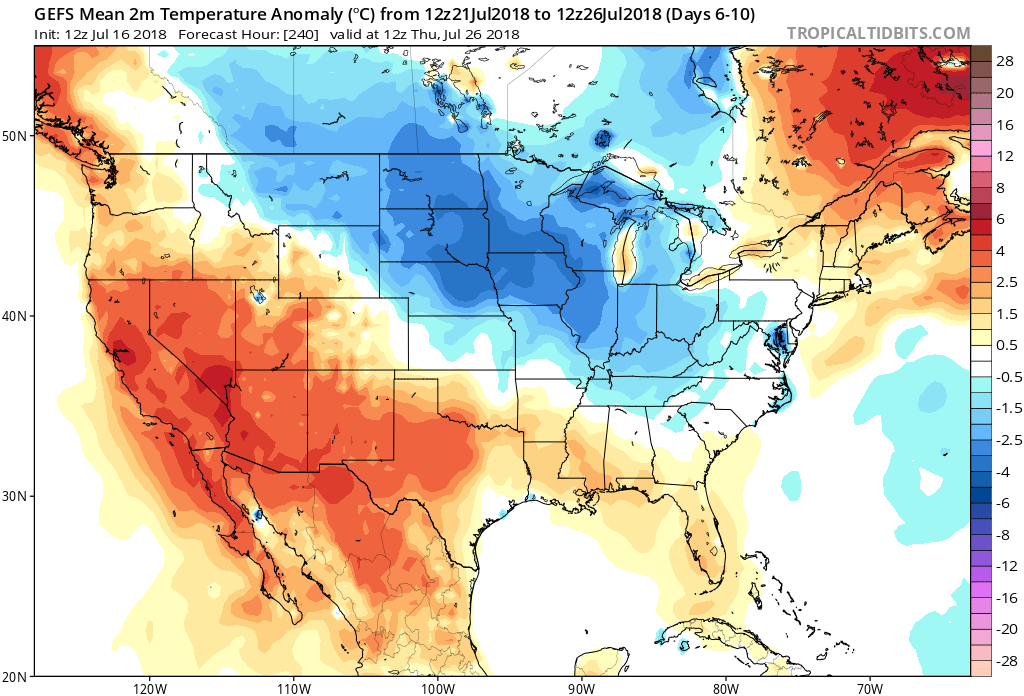
Image source: Tropicaltidbits.com
Storms Of Significance:
Of note during the period, we’re targeting a storm system that will likely deliver unsettled weather to central Indiana over the upcoming weekend, continuing into the Days 6-7 time period. This is followed by another storm system that will deliver unsettled conditions Days 9-10, including reinforcing cooler than average temperatures.
As always, IndyWx.com features daily blog and video updates that include details around the short-term period.
Forecaster: BM
 After a chilly work week (relative to average), 60s will return this weekend and temperatures will zip into the lower and middle 70s early next week, before approaching 80° by the middle of next week.
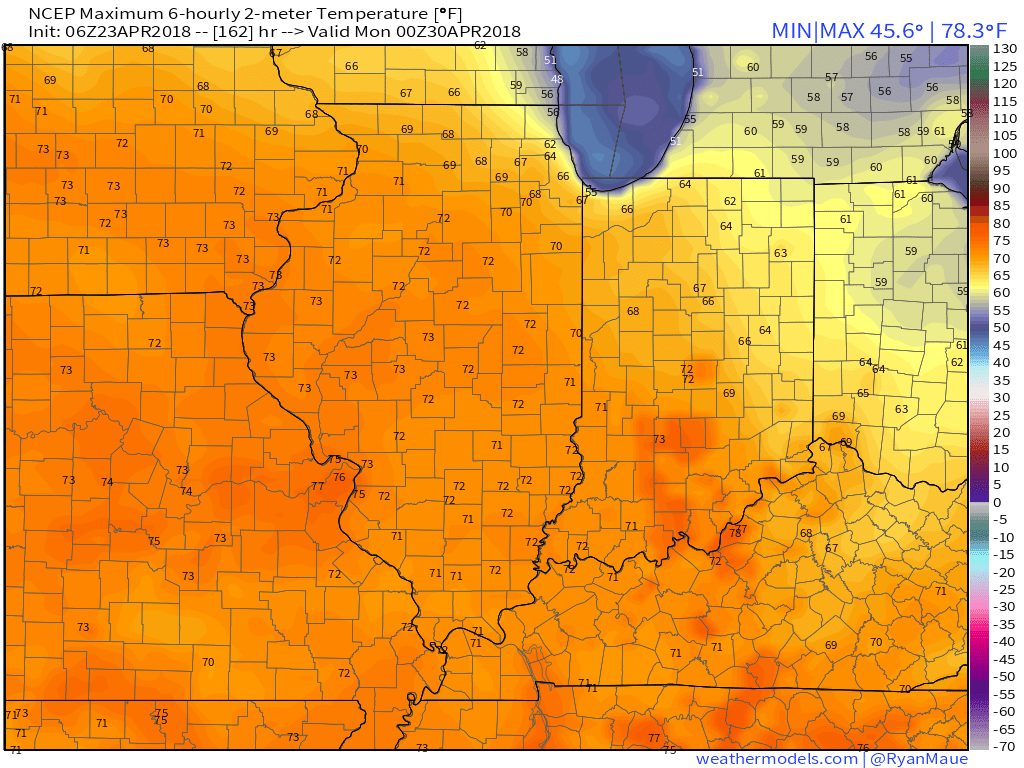 Despite the showers that will impact central Indiana today, it’s mostly a dry pattern over the upcoming 10-day period. Additional rain chances will continue Tuesday (scattered, nuisance-level) and with a frontal passage Friday. With that said, 10-day rainfall will only run between one half and three quarters of an inch for most of the region.
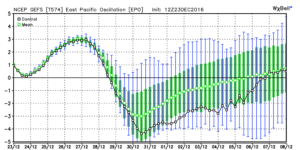
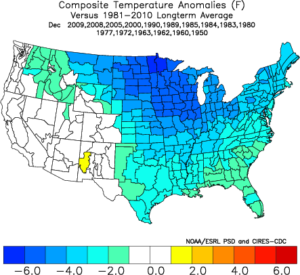 We note ensemble data is suggesting high latitude blocking tries to develop towards Day 10. Recall this was the missing ingredient in the bitterly cold blasts of air that occurred during the first few weeks of December. Both the GEFS and EPS agree on the increasingly blocky look to the pattern by Day 10. This would help drive a cold, stormy pattern by early January. Instead of storms cutting, we would see more suppression. With a “stubborn” southeast ridge, things could get interesting across the Ohio Valley from a wintry perspective….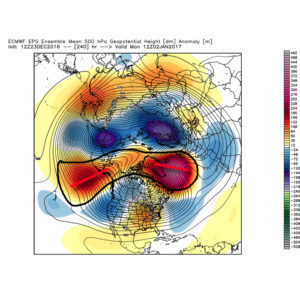
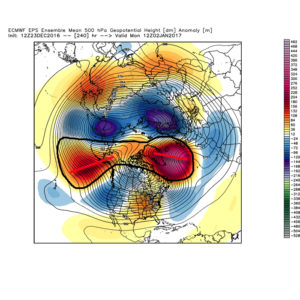 We don’t want to jump the gun, but it the positives can “hook up” over the pole, we stand the chance of locking into a rather lengthy cold, snowy regime as we rumble deeper into the heart of winter.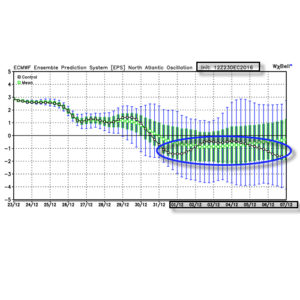
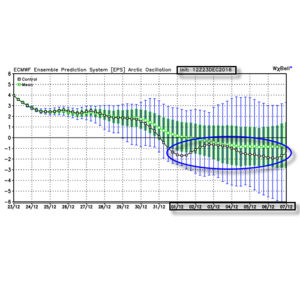 Summary: A rather mild regime remains as we rumble through Christmas before trending more seasonable next week. From a wintry perspective we need to continue to keep an eye on the period around New Year’s Eve/ Day. Confidence continues to increase on the potential of a return of arctic air come early January.
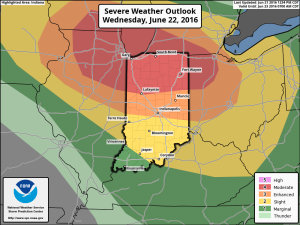 We won’t bore you with the meteorological ingredients/ lingo that are coming together to lead to an active Wednesday with this post, but please know that nearly all severe weather parameters point to the threat, and even likelihood, of an active day.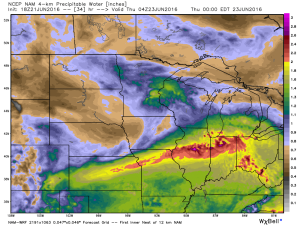
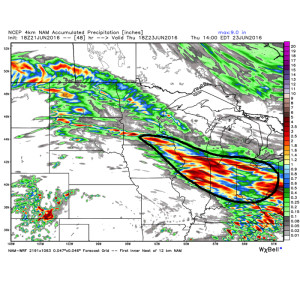 The first of multiple storm clusters will likely be moving into central IN Wednesday morning. Here’s an idea of what the radar may look like around 7a.
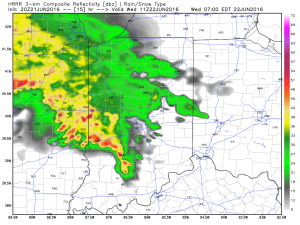 We think we undergo a “lull” in the action Wednesday afternoon before a potentially more serious complex of storms blows into town during the evening hours. We caution that we’re not as confident on specific timing with the evening round of storms.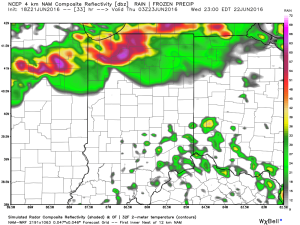
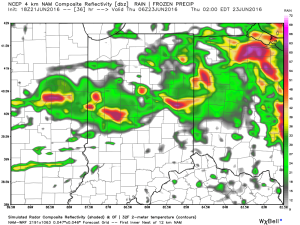 Current data would imply a tornado threat for areas from northern IL into northwestern IN with the afternoon/ evening convection before “morphing” into a more widespread damaging wind threat as the line propels southeast into the nighttime hours.