The period outlined is March 6th through March 20th. As the block continues to mature, we think this timeframe will produce at least one (if not a couple) opportunities for “meaningful” accumulating wintry precipitation across the Ohio Valley and features below normal temperatures.

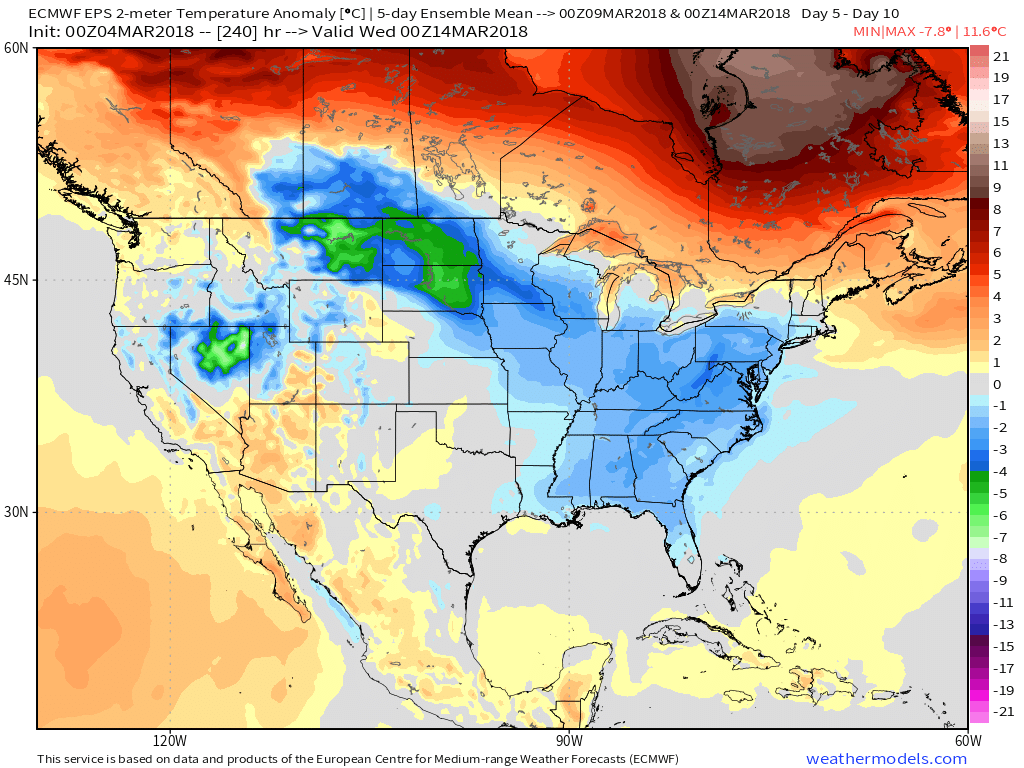 Model data continues to show this idea has merit and now we’ll have to handle the individual storms as they come. As we’d expect late in the winter, challenges abound, but this is a pattern that has potential. Can we turn potential into reality? That’s the question that will be answered over the next couple weeks.
During the upcoming week, snow showers will fly Wednesday, but this doesn’t appear to be a big deal. With vigorous upper level energy tracking across the region, it should be sufficient enough to generate scattered snow showers and potentially a couple more intense squalls (especially across eastern portions of the state) Wednesday.
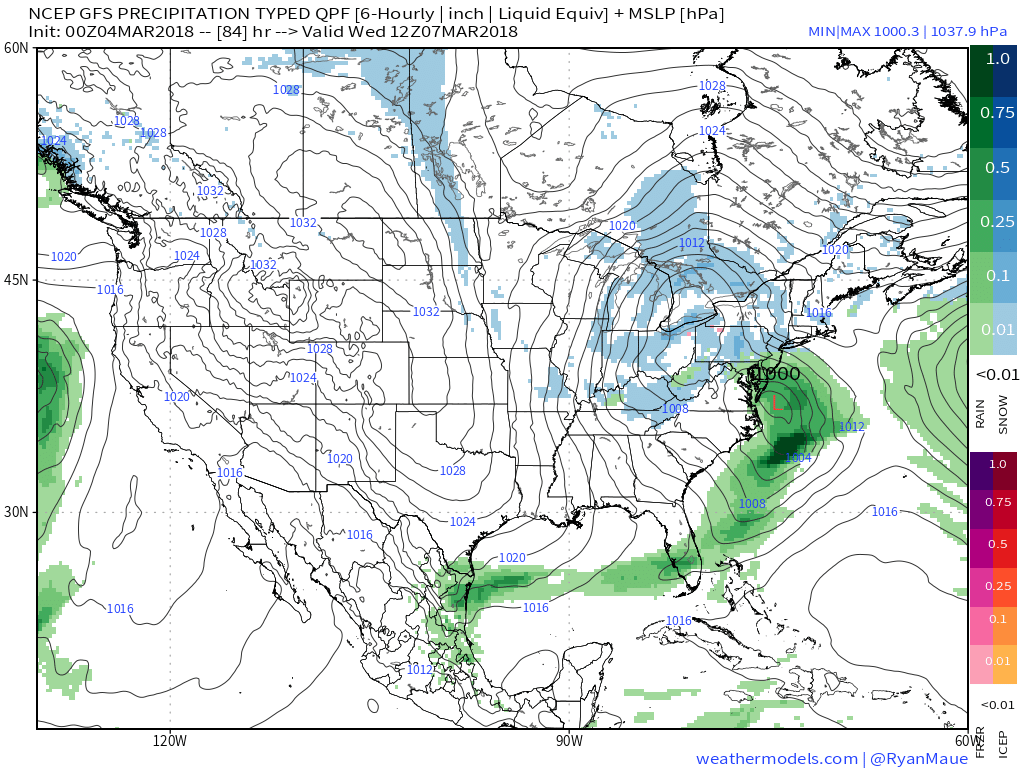 The next item on the agenda will arrive Friday afternoon into Friday night. It, too, should spread snow across a portion of the Ohio Valley. With this being in the Day 6 time period, expect fine tuning as we move through the upcoming week.
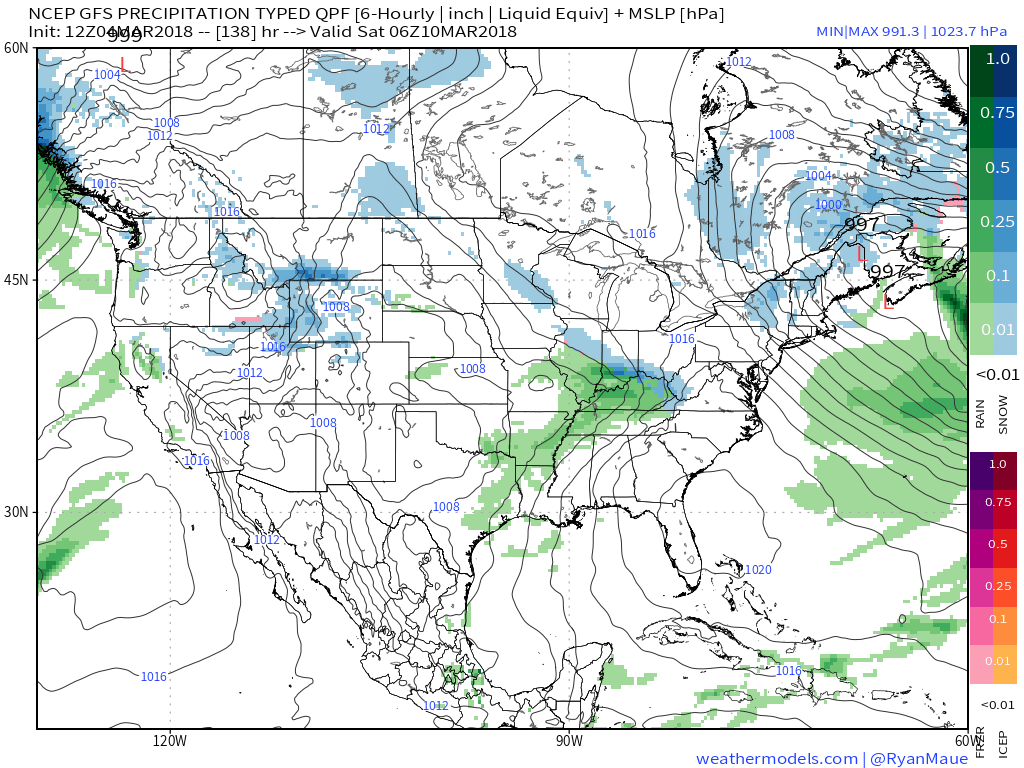 Finally, a third system will impact the area about this time next week, and it’s this system that appears to be the most significant of the group. Far too early to get detailed, but it certainly warrants our attention.
 The overall pattern we’ll “enjoy” over the next couple of weeks is one that’s been lacking for the better part of the past few winters. With blocking in place, storm systems trying to lift into the Great Lakes will be “forced” south and result in an active time of things around these parts- including the east coast, as well, over the better part of the upcoming 10-15 days.
Understanding that storms this time of year have to get several things to “line up” just right to result in an impactful event, it’s far too early to signal winter’s over…
 Our next storm system will arrive Monday. Clouds will increase overnight and showers (mostly light) will arrive on the scene during the day. Rainfall amounts aren’t expected to be significant this go around (in general, 0.25″ to 0.40″ for most). Winds will turn strong and gusty during the day Monday, continuing Tuesday and Wednesday.
 Colder air will get pulled into the Ohio Valley Tuesday evening and as upper level energy moves overhead, mixed rain and snow showers will develop Tuesday night through Thursday morning.
 By next Thursday morning, widespread lows in the 20s can be expected.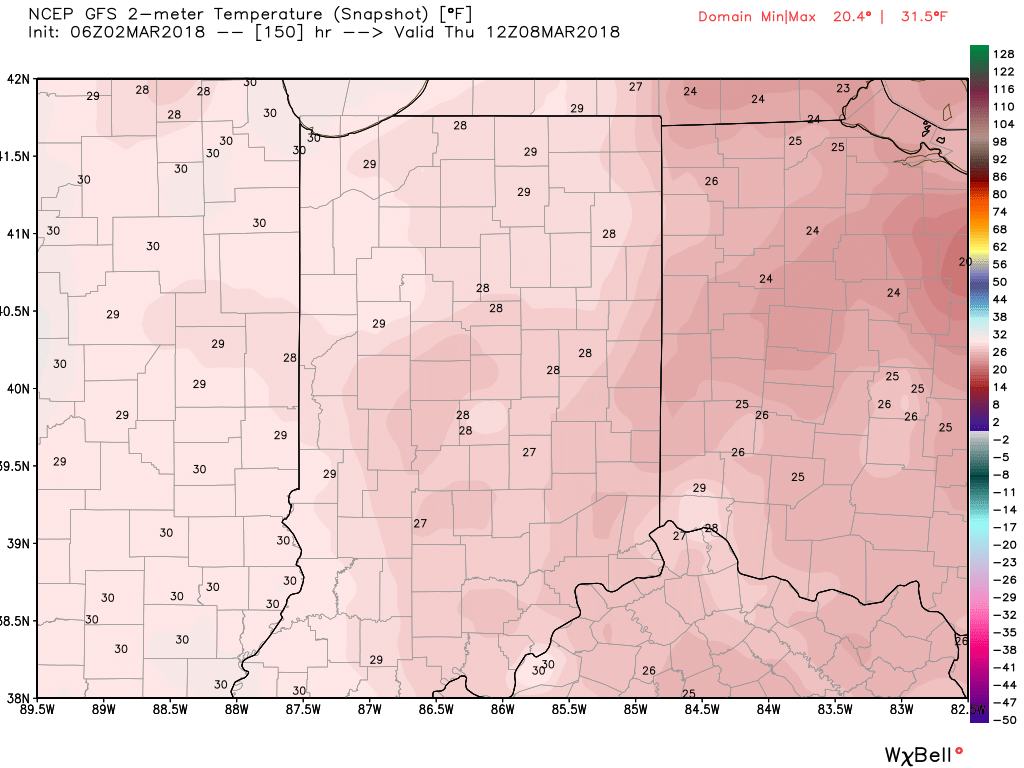
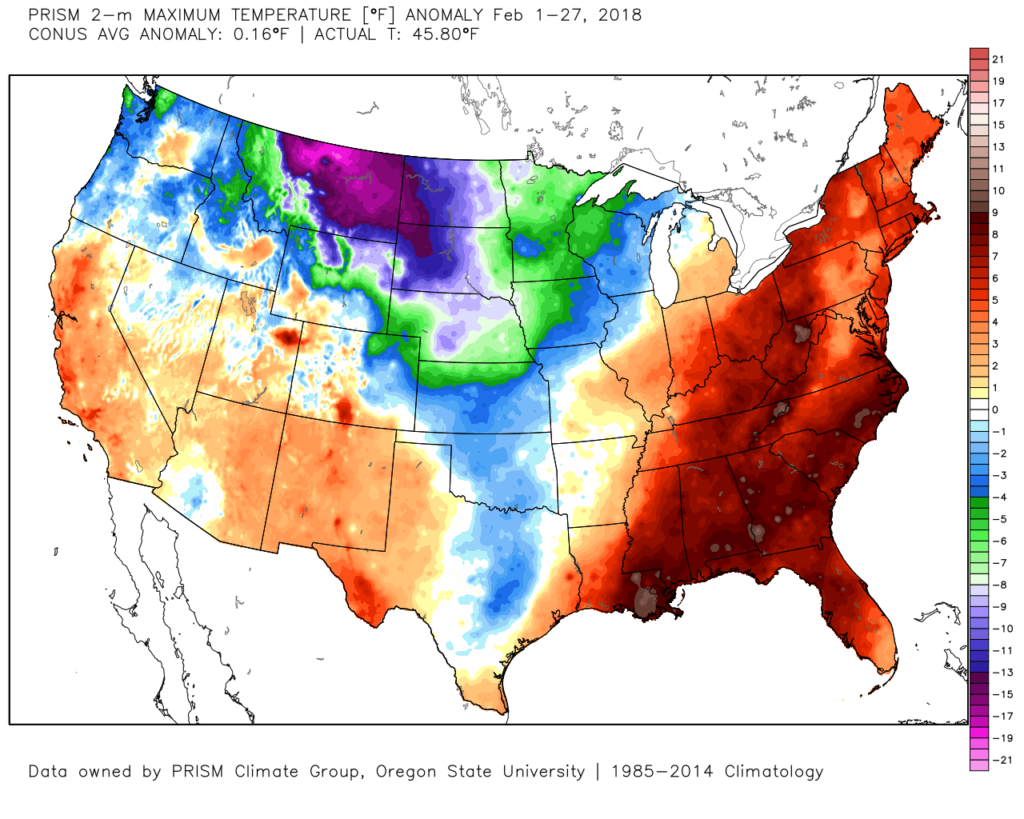 The early spring “fling” has lulled many into believing winter’s finished. While the worst of the winter is certainly behind us, we continue to think a dose of “reality” awaits as we progress through the better part of the first half of March. To be more specific, we feel the period March 6th through the 20th will offer up below average temperatures and an active pattern- capable of producing wintry threats.
 Sure enough, modeling is going to the pattern that will produce below normal temperatures (doesn’t appear to be anything particularly frigid, but colder than average, nonetheless) through mid-month.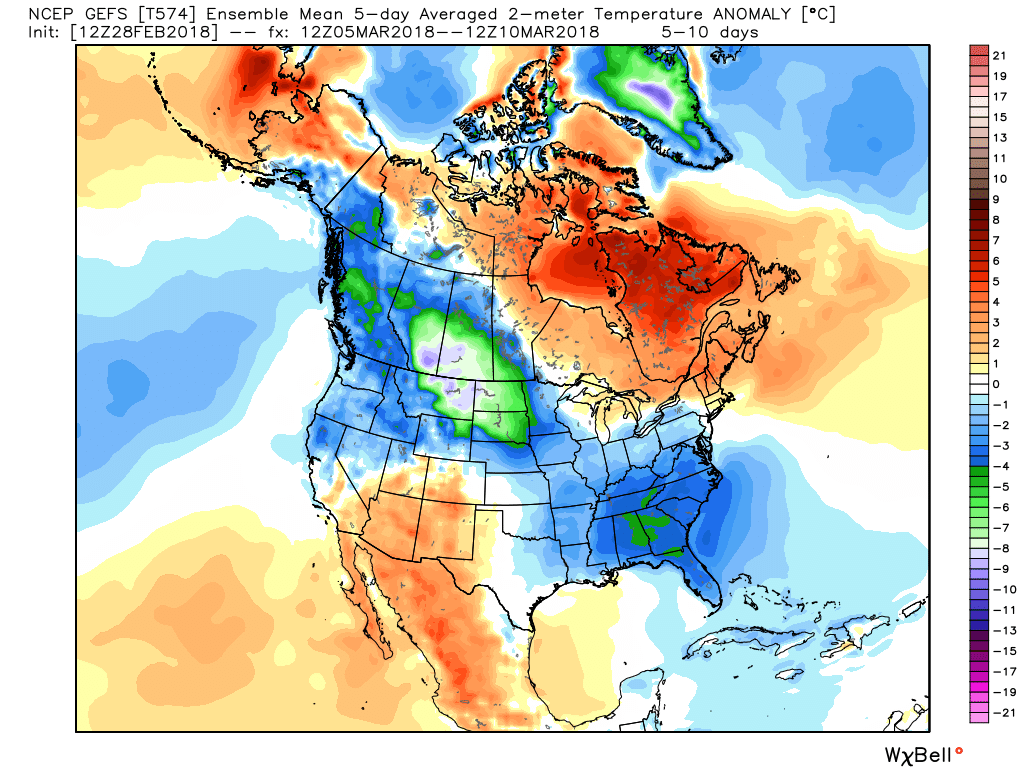
 With blocking in place, an undercutting jet will serve to deliver an active storm track.
 Keeping in mind March winter events need multiple items to come together to create impactful situations, it’s also important not to simply “buy in” to the idea that just because it’s been warm lately that winter is finished. March can be a wild month, as long-time Hoosiers are aware. The pattern we’re heading into over the next 10-14 days is one that’s been void most of the winter (high latitude blocking in place) and can serve as the player needed to flip a “nuisance” variety late-winter event to one that’s much more significant. We’ll need to remain on guard for the potential of one or two “more significant” wintry events as we move through the first couple weeks of the month.
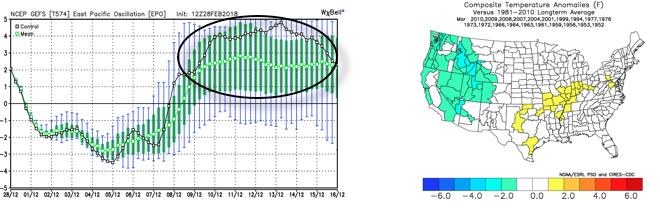 The end result is one that should promote colder than average times over the next couple weeks, overall, along with an active storm track. With blocking in place, the potential of one or two more significant late-winter events are on the table, and we’ll have to fine tune specifics as the individual storms come. While confidence is high that someone within the Ohio Valley region is likely to still deal with a big-hitter event, there’s no way to get specific until the individual players are on the field. Thereafter, the pattern should begin to transition to one more conducive for “stick and hold” spring conditions during the latter portion of the month.