The next couple days will be the last of temperatures in the upper 70s to lower 80s until next spring. The first of 2 cold fronts will settle into central Indiana tomorrow evening followed by a strong frontal passage Monday. If you rather go right to the punch line instead of reading through the rest of this post, trick or treaters will need the heavy cold gear this year.
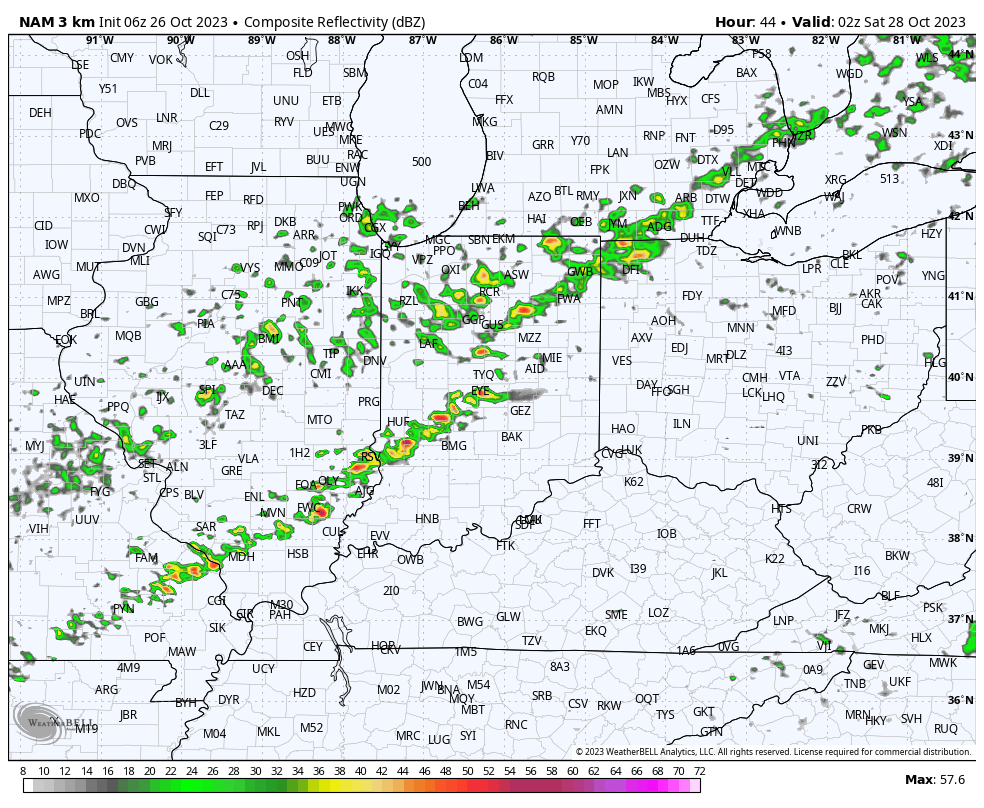
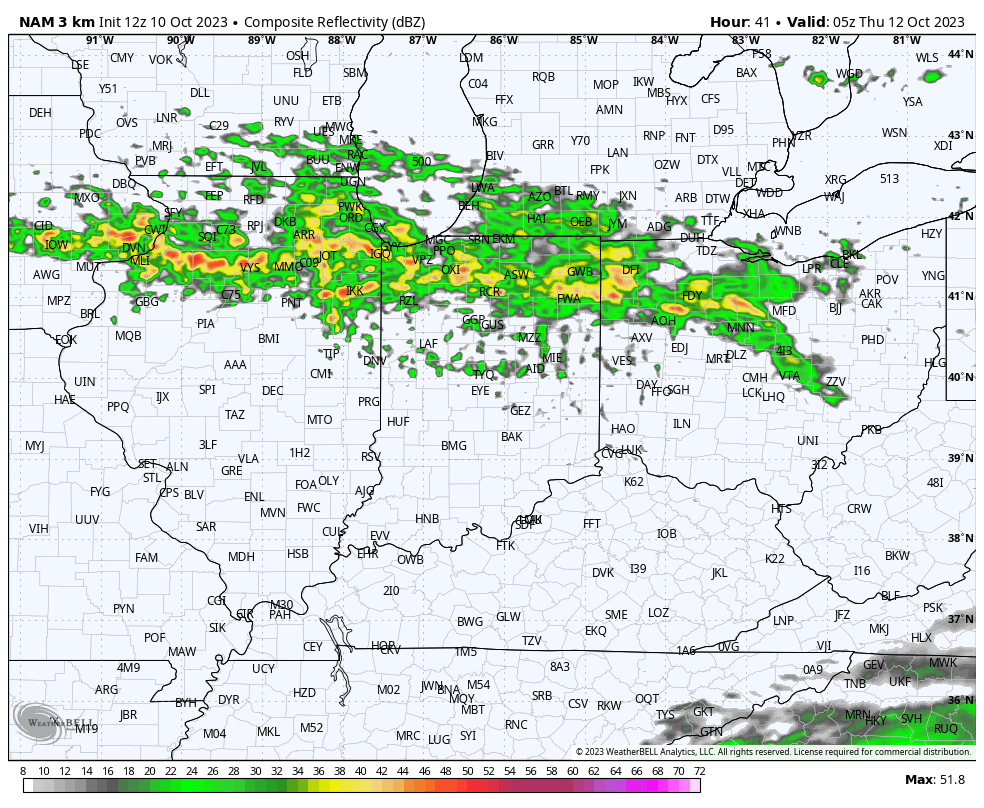
A few showers will skirt northern counties later this evening but the lions share of the next 36 hours will be rain-free. A line of showers and even thunderstorms will be associated with Friday evening’s cold front.
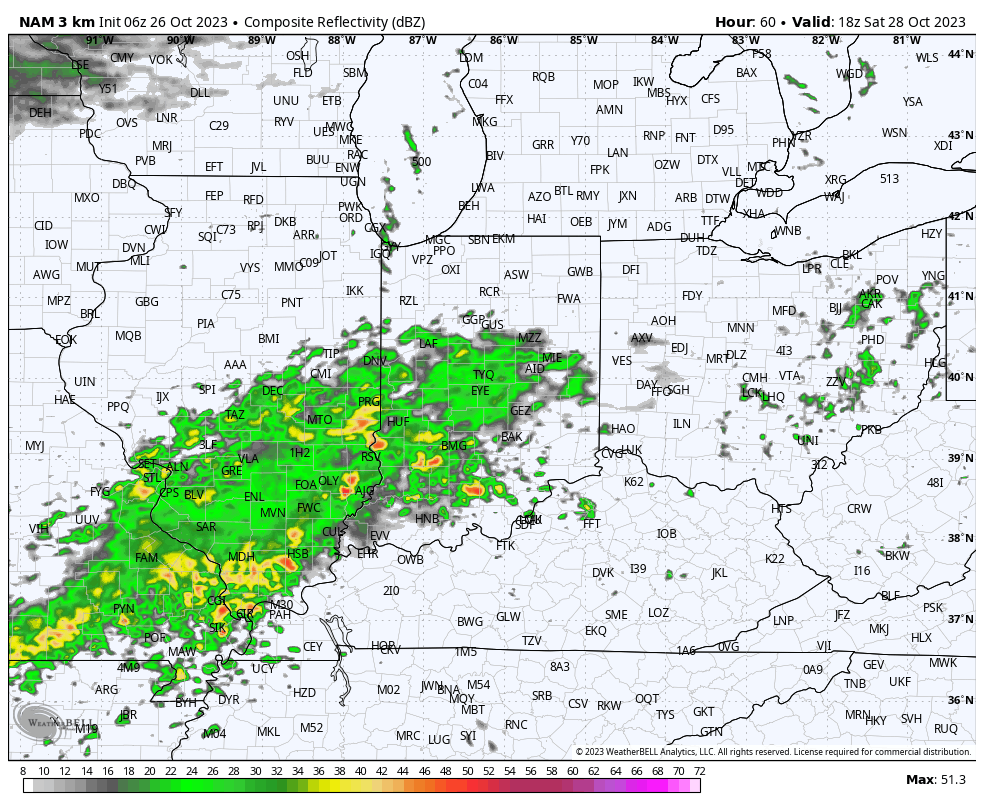
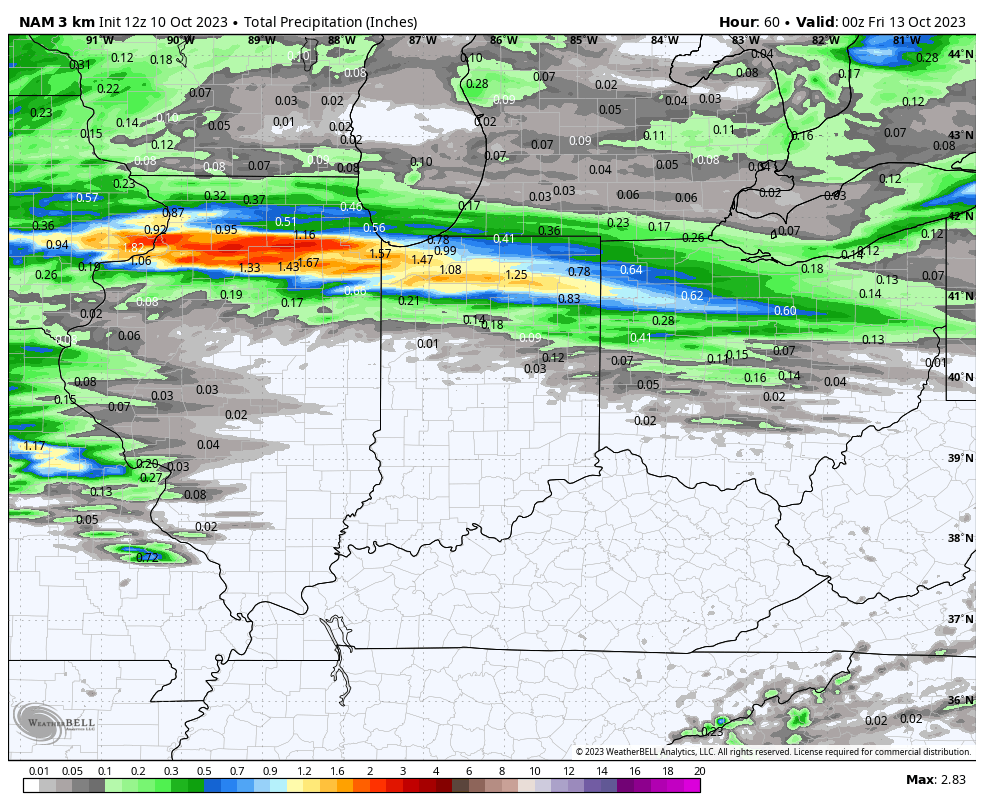
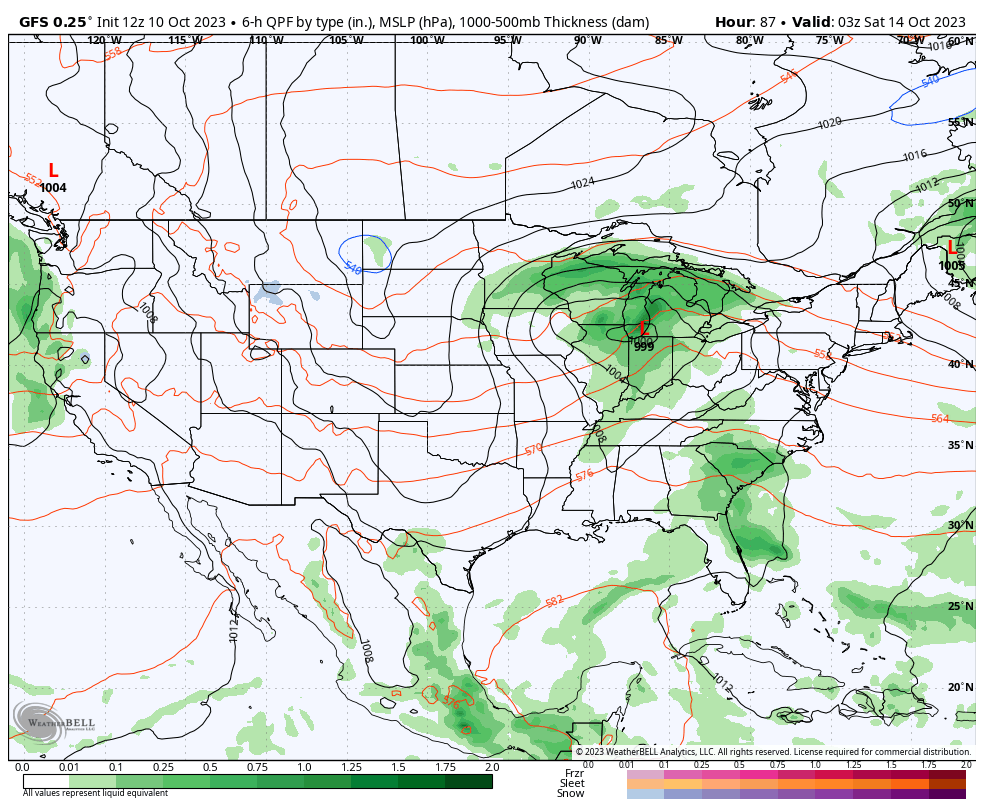
A much more widespread, heavier rain will build into central Indiana through our Saturday afternoon. It’s this period, continuing into Sunday where the bulk of our widespread 1”+ rain will come. A smaller axis of heavier totals (2”+) likely sets up shop south of the city, itself.
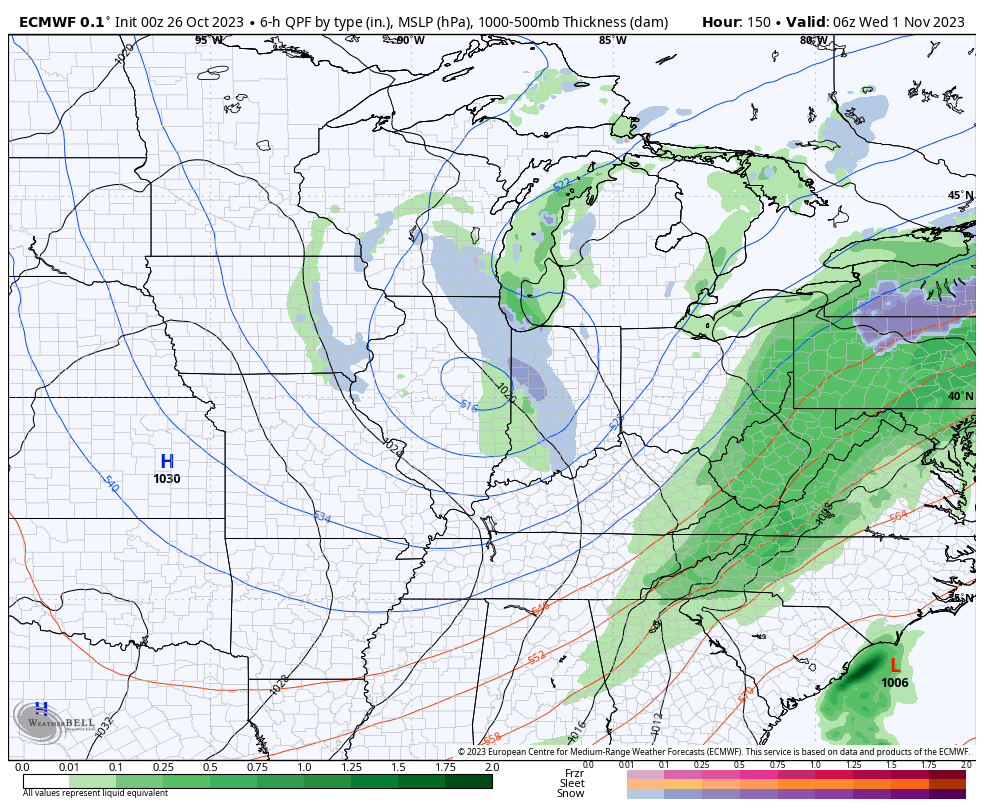
After a “step down” process to cooler air Friday into Saturday, the bottom will really fall out Monday. This will set us up for a downright cold Halloween (lows in the upper 20s with highs in the lower 40s). Add in winds and the “feels like” will be in the 10s and 20s into the 1st day of November.
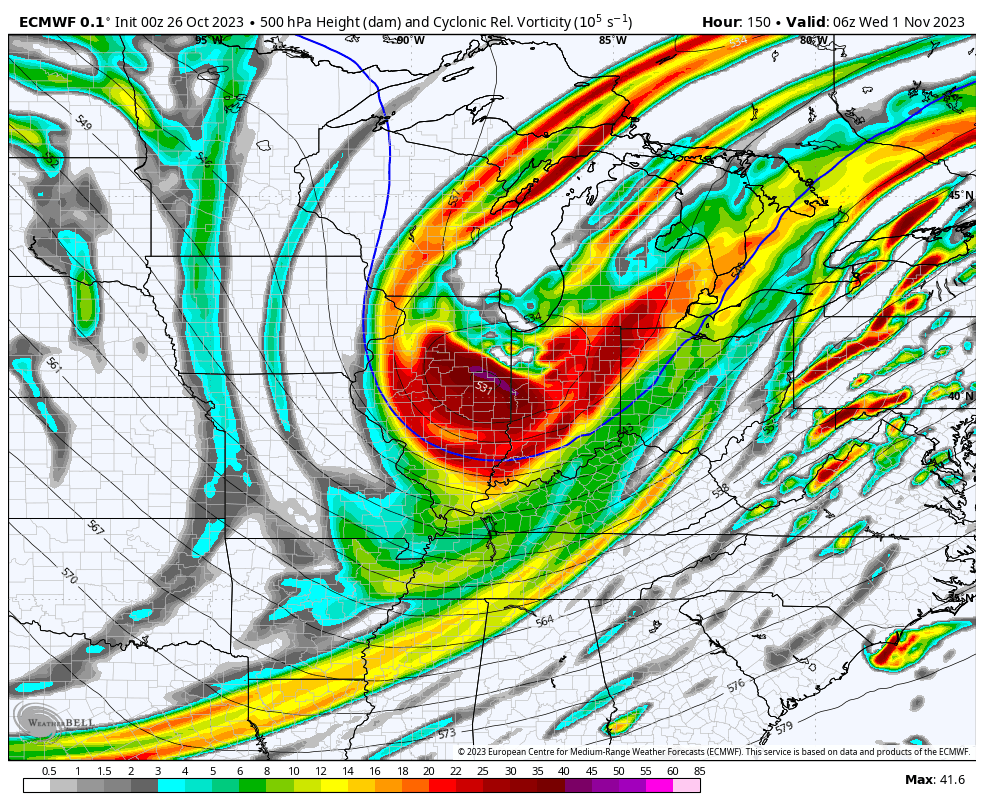
If that isn’t enough, trailing upper level energy will push into the area Halloween night and have enough moisture to generate snow showers late into Wednesday morning. A renewed push of gusty winds can also be expected during this time period.
Coldest mornings of this stretch will likely take place next Wednesday or Thursday with overnight lows into the middle to upper 20s.
I. A warm front will lift north through Indiana Wednesday. This will serve as a focal point for locally heavy rain across the northern tier of counties Wednesday night into Thursday morning. Most high resolution modeling keeps central Indiana out of the heavy rain axis but a passing shower is certainly possible.
II. A cold front and associated area of low pressure will rumble across the Ohio Valley Friday with more widespread rain (embedded thunder) impacting central Indiana Friday evening and Friday night.
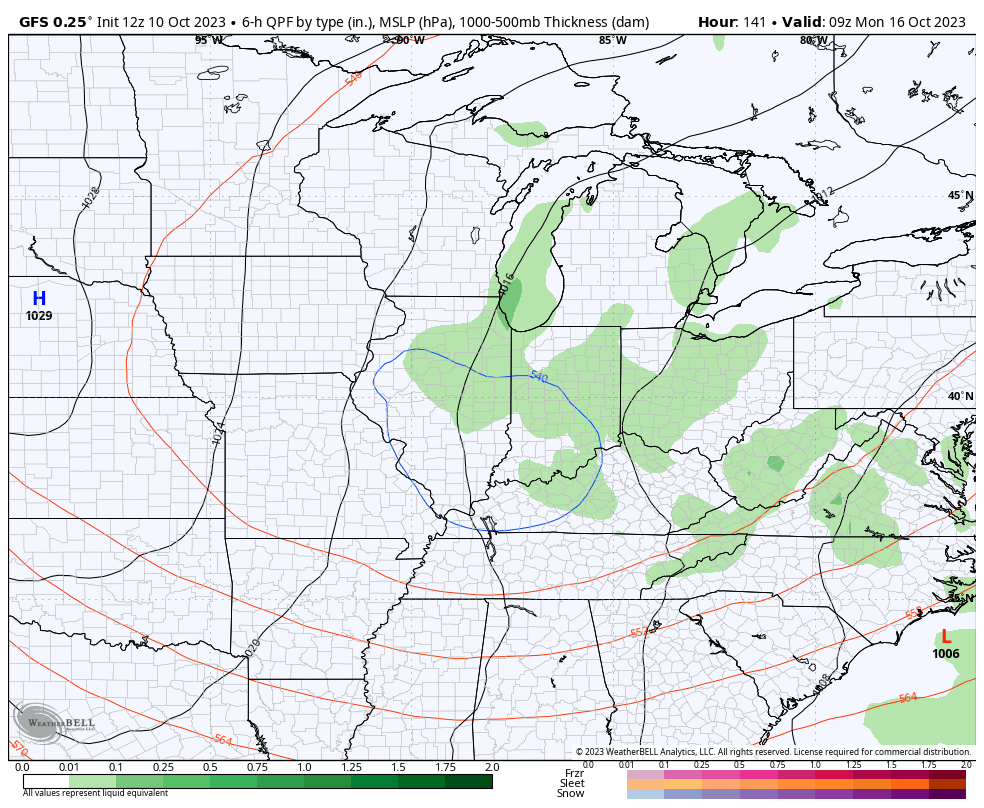
III. A cold core upper low will drop southeast Sunday into Monday. With the cold air aloft and just enough daytime heating, showers (potentially mixed with graupel) will develop. Otherwise, anticipate a “raw” close to the weekend and open to the new work week.
IV. Our recent chilly turn will only be reinforced that much further behind the passage of Friday’s cold front. Most of next week is looking below to well below normal. Time to start thinking about stocking up that wood pile. Long Range charts show another big blast of the coldest air so far this season the following week…
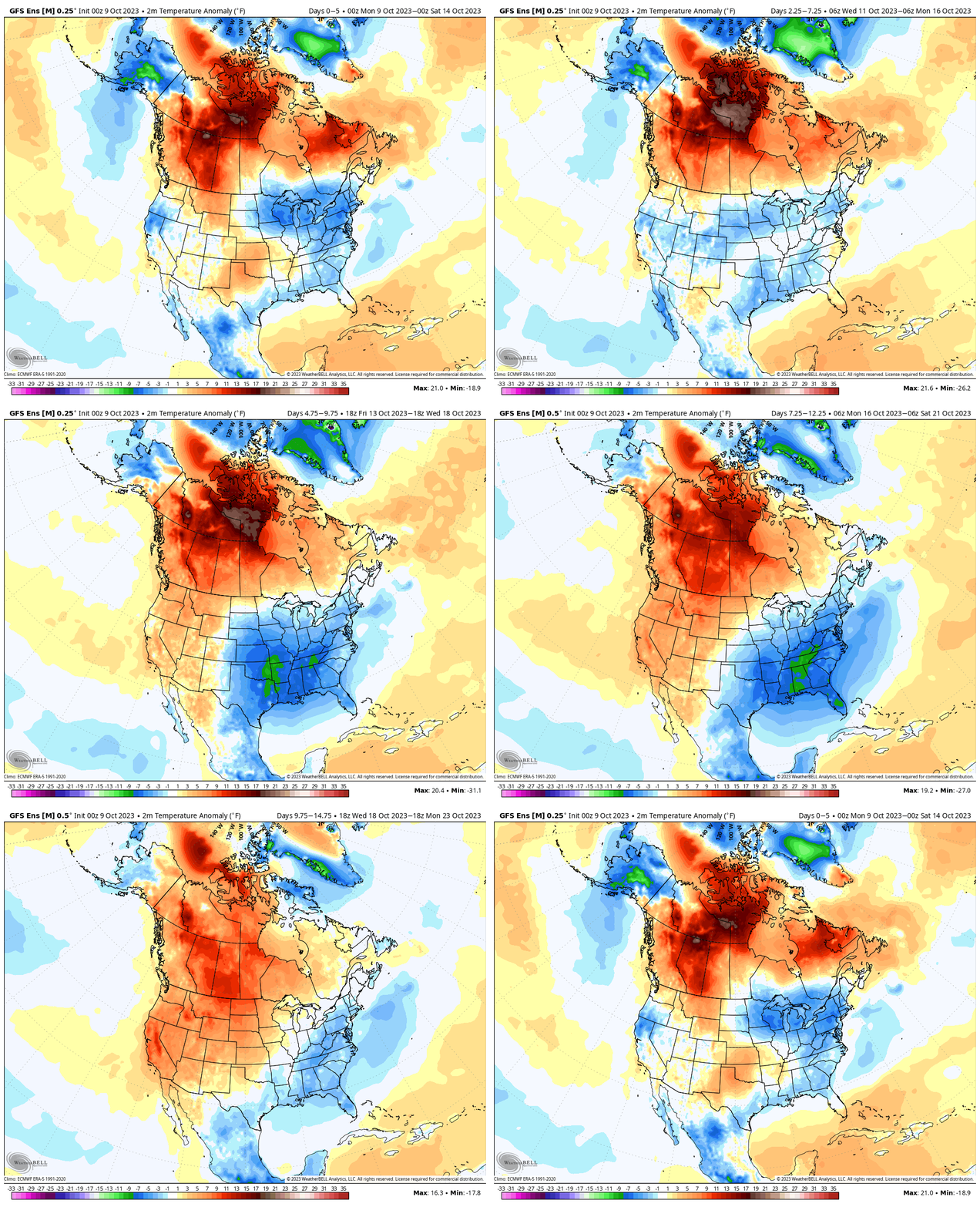
We’re opening the work week with a few scattered clouds and temperatures around the 40° mark. We’re in a pattern that will feature predominantly cooler to colder than normal temperatures over the next 10-14 days with a couple exceptions. We’ll call it a sea of cool with an island of warmth (Thursday and Friday). The relatively warmer temperatures come after the passage of a warm front and ahead of a cold front. The “in between” will feature another period of unsettled and stormy weather to close the work week.
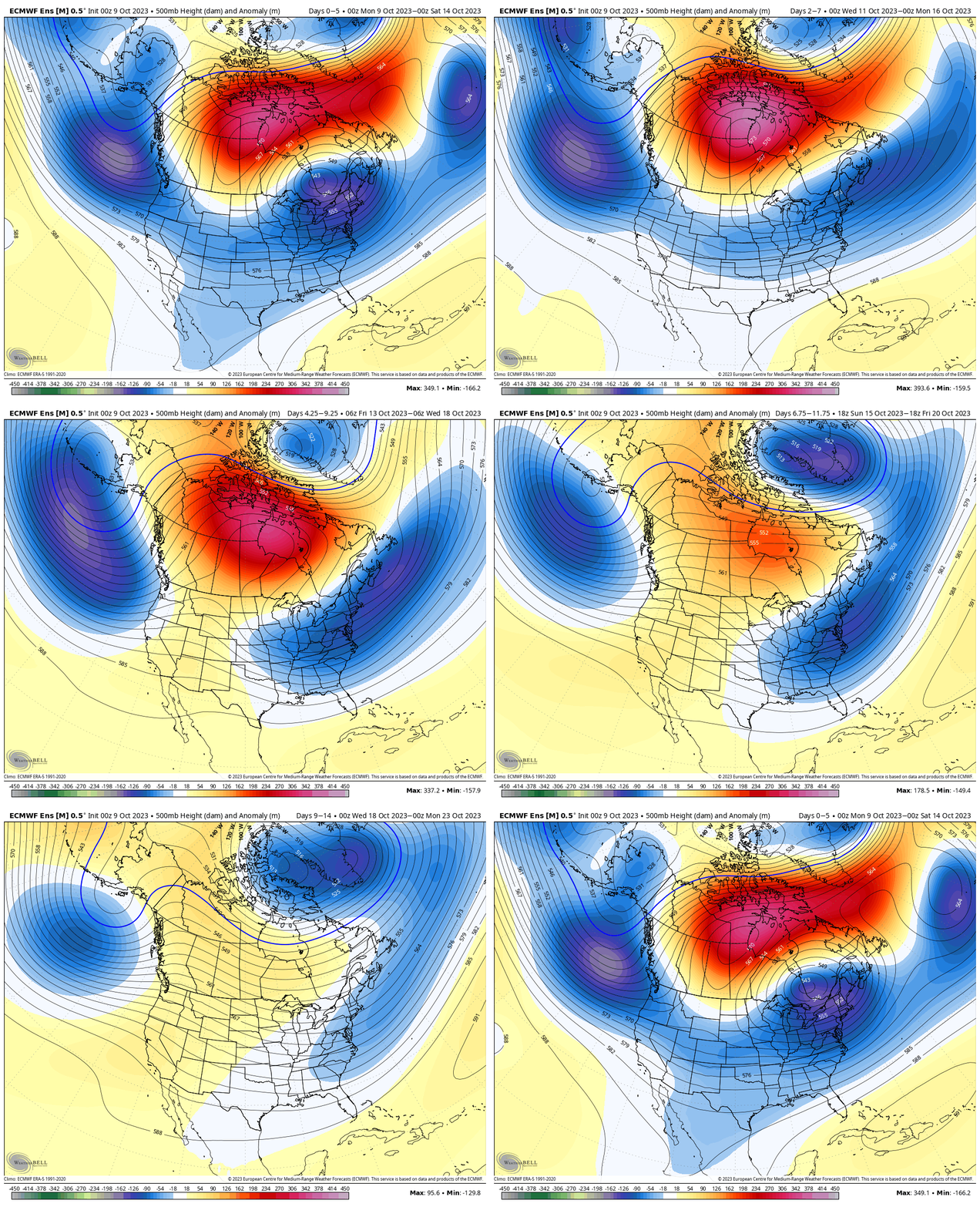
The overall upper air pattern shows that Hudson Bay blocking high and tendency for an eastern trough through the upcoming 2 week period. Another big cold shot will roll in here over the weekend and into the early Week 2 time period.
After a dry start to the week, rain chances will return late Wednesday and early Thursday (warm front) and again directly ahead of the cold front that will sweep through here Friday evening. Rainfall numbers with the passage of this system should check in between 0.25” and 0.75” for most of the region.
As we look ahead, a continued chilly pattern seems to be in store with additional storm dates that include:
10/19-10/20
10/23-10/24
Down the road, the strongly positive PNA and neutral to negative EPO should keep the chill flowing for the most part over the coming couple weeks. Eventually, these progressively colder shots will likely generate the 1st eastern flakes of the season, including for our friends in the beautiful high ground of those east TN and western NC mountains.
Though officially, we’re only a couple weeks into autumn, attention here has begun to shift towards the potential predominant pattern as we push into the holiday season.
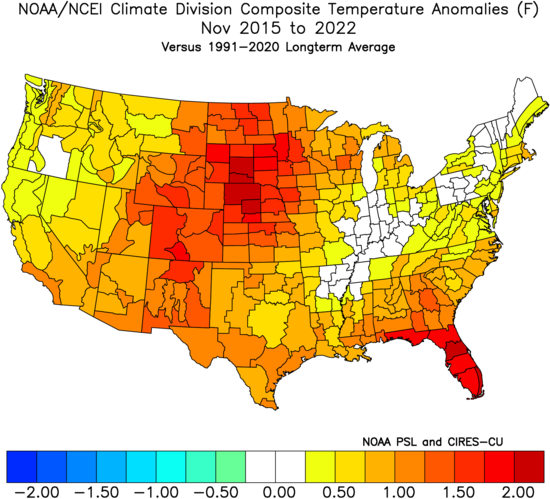
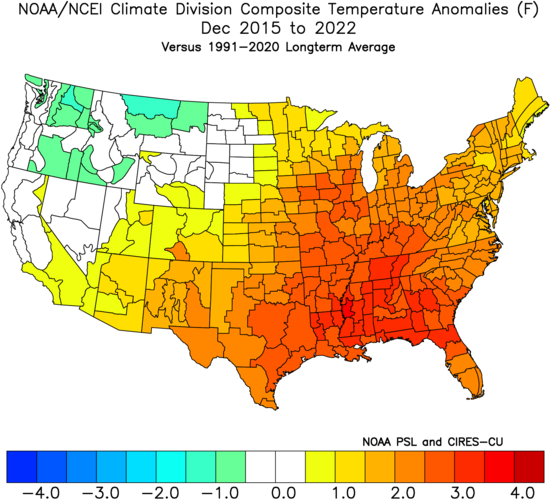
A quick, simple look back over the most recent November and December patterns is a sight that generates anxiety for most winter lovers. At a time when the majority of even non-winter lovers would like snow (i.e. the holidays), well above normal temperatures, and almost record warmth has become all too common over the years.
November 2015-2022
December 2015-2022
Is there reason to believe that could be different this year, especially with our base transition to El Nino? Simply put, not so fast my friend. El Nino winters are notorious for getting off to slower, warm starts. Our research shows that many times November can start cold but that the December pattern flips warmer around these parts. That’s, obviously, not to say it “has” to be that way. Many other factors contribute to the overall regime, but just that when you simply bundle all 1st year Nino events together, it’s more typical than not to find things play out such as illustrated above.
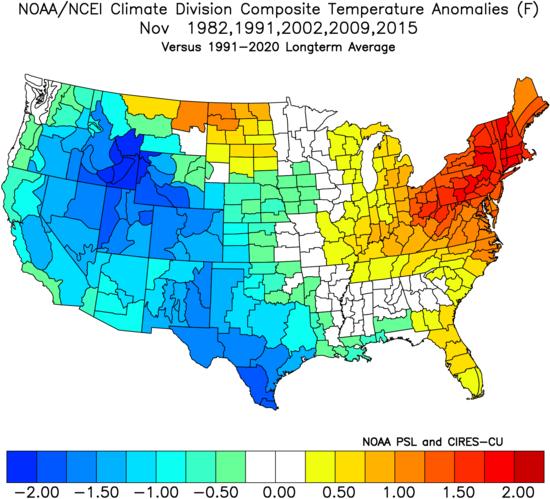
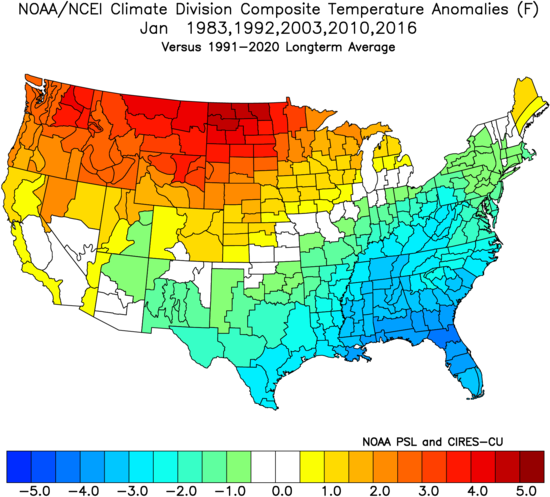
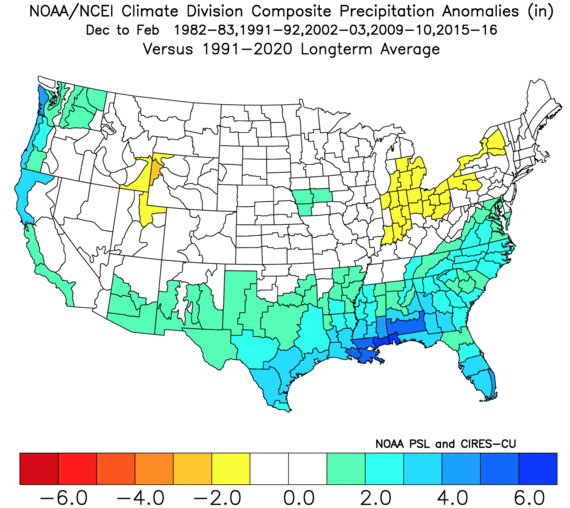
Let’s take a more specific look at our analog package (’82-’83, ’91-’92, ’02-’03, ’09-’10, and ’15-’16) and see what that suggests may be in store as we begin to set our eyes on the holidays.
November: Slightly above normal, locally. Unseasonably cold west and unseasonably warm New England are the headliners.
December: Greatest warm anomalies are centered over the Ohio Valley, in what otherwise is a large-scale warmer than normal regime from the Plains east.
January: The pattern begins to really flip around with cold bleeding southeast as the northern Plains and Northwest turn warmer than normal.
What does this all mean to me? While there’s only one that knows the future, if I was a betting man, I’d lean towards another holiday season that features above normal temperatures and most likely a greater than normal chance of below average December snowfall. I’d anticipate a few cold shots in November and the possibility of one or 2 accumulating snow events that gives way to the overall warmer idea in December. There’s always the chance the pattern begins to shift that last week of December for the colder January look… That’s the hope we’ll leave you with in this post in what otherwise will likely be a warmer than normal month as a whole.
We do it every year around this time and while some years have certainly been tougher than others, there’s always something special about this time on the calendar. Perhaps it’s the cooler days, the longer nights, the return of football season, or better yet the thoughts (at least to this winter lover) of the first flakes of the season that loom in the not too distant future. However you view this time of year, I hope you can find a way to enjoy the upcoming winter season.
Like most years, there will likely be a little something for everyone, and before diving in too far, we always like to remind folks that long range forecasting is always a challenge, albeit a welcome one at that. While there’s simply no way to be certain about specifics 2-5 months in advance, more times than not, we can at least provide an idea of the overall upper pattern that should generate predominant precipitation and temperature regimes in the colder months ahead.
Without further ado, lets dive in…
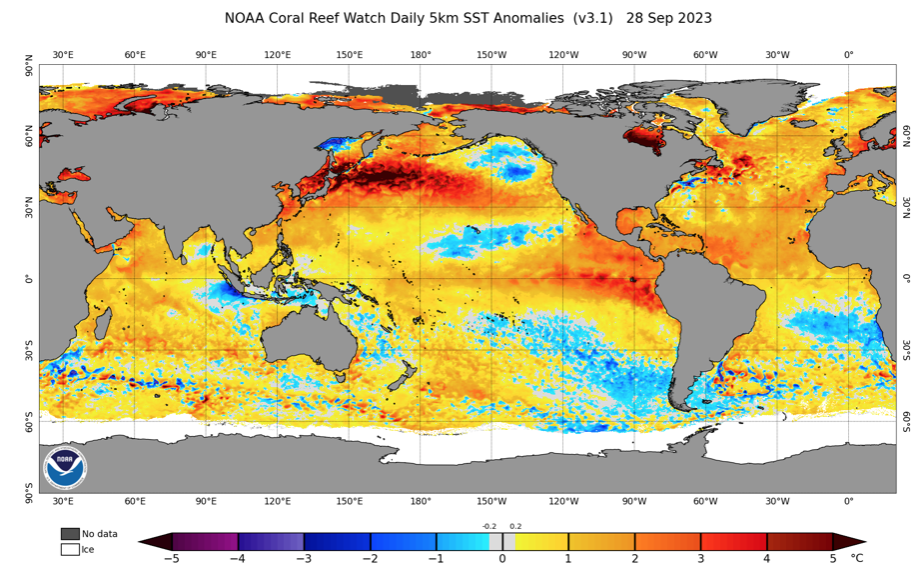
We’re in uncharted territory, at least compared to the past (3) years. After a rare triple dip Nina event, a strong El Nino is here and anticipated to stick around, at least in a moderate fashion, through the winter.
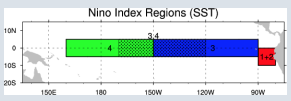
It’s important to note that not one Nino event is identical to another. What’s of particular interest with this year’s event is that a lot of the longer range model guidance begins to weaken the Nino as we get into the middle and latter part of the winter, while migrating the warmest anomalies west (more into the central region: region 3 and region 3.4). By the way, here’s an interesting article that sheds more light on the various regions and indices.
Ultimately, that is the golden ticket to what this winter becomes in my opinion. While far from etched in stone, it’s my belief that when you have a Nino event coming off it’s peak during the winter, there’s a better opportunity to get the warmest anomalies more into the central regions as the weakening takes place. Should this happen then we’re talking about increasing prospects of cold and snow. Meanwhile, if the warmest SST anomalies remain tucked into 1+2, it’ll likely be another ugly winter for snow and cold lovers.
On that note, the past 5 winters have only produced an average 14.1″ of snow in Indianapolis. Only ’20-’21 was close to average at 22.2″. To add salt to the wound, if you take out the record snowiest ’13-’14 (whopping 52.2″), our 10 year snow average is 12.6″.
Lets take a look at some of the various modeling for the upcoming meteorological winter (December through February).
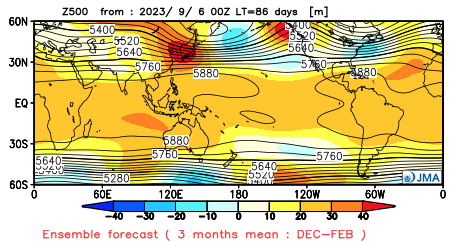
JMA Seasonal
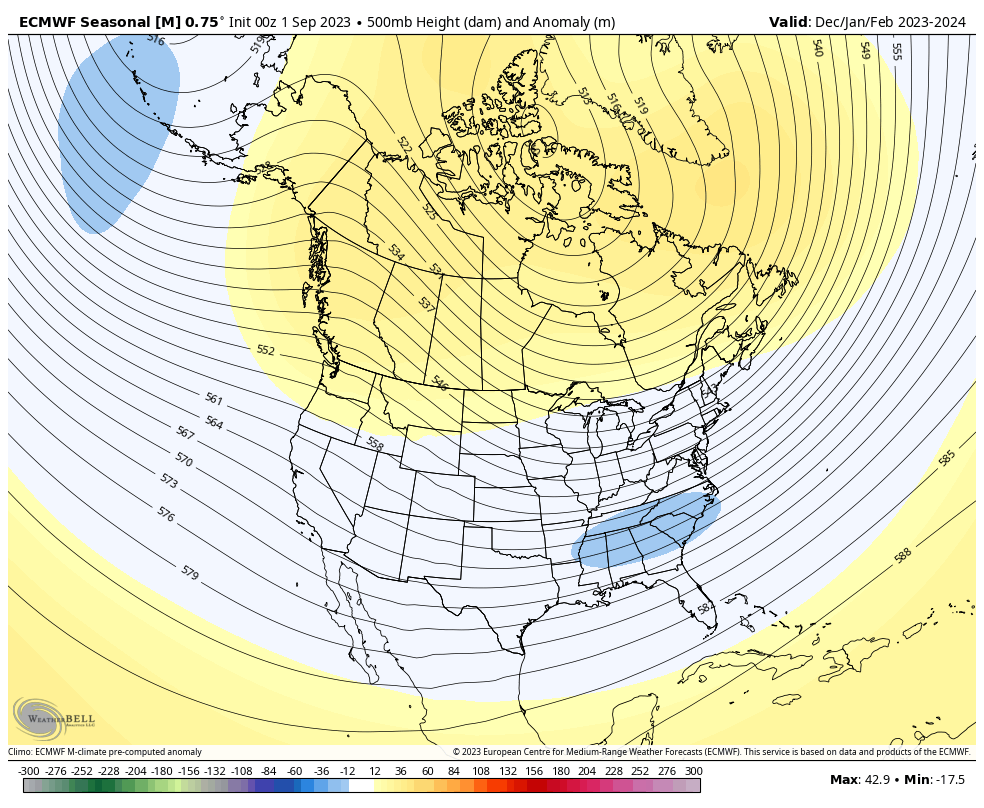
European Seasonal
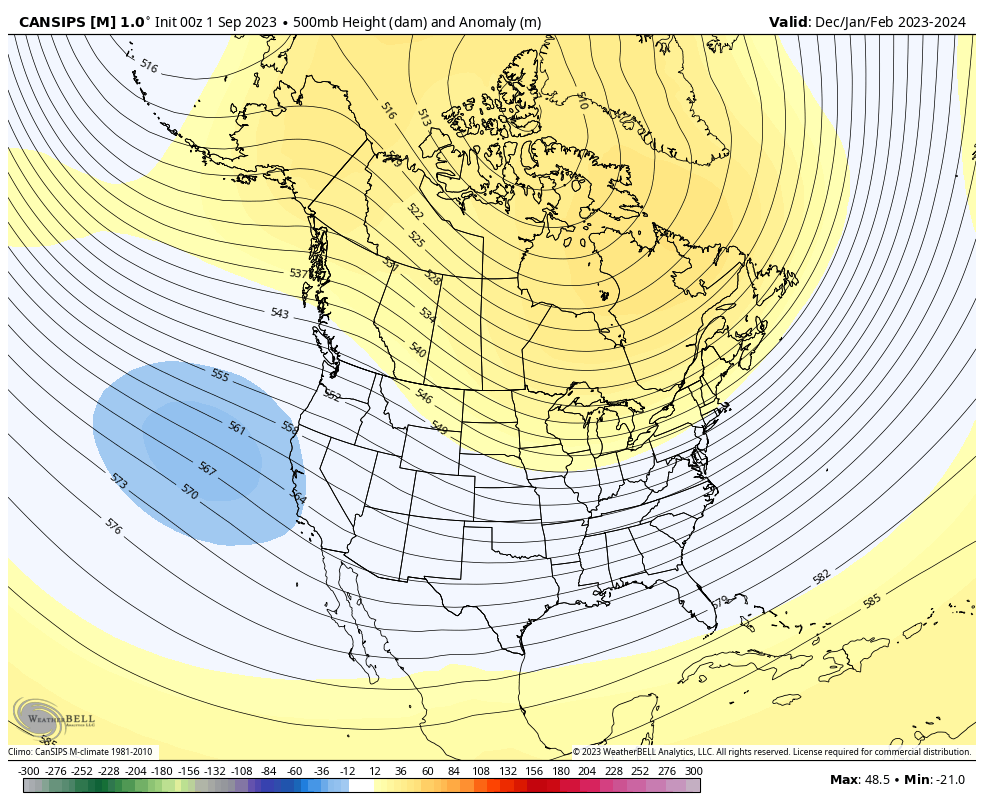
Canadian Seasonal
The seasonal guidance shown above is the most aggressive, collectively, I can recall for quite some time from this distance. Note each of the models above indicate the opportunity for blocking with the active southern stream underneath that we come to expect in an El Nino.
We built our analog set (first shared with Clients on 9/3) with the baseline including 1st year moderate to strong Ninos.
1957-1958
1972-1973
1991-1992
2002-2003
2009-2010
1982-1983
2015-2016
In addition, we’re also looking at critical SST configuration in the NPAC and northwest Atlantic. Out of the list above, heaviest focus centers on ’82-’83, ’91-’92, ’02-’03, ’09-’10, and ’15-’16.
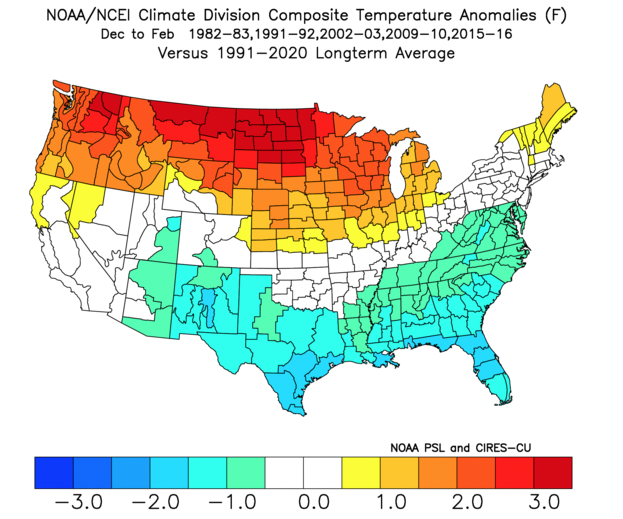
A blend of those years gives us the following temperature and precipitation pattern for meteorological winter:
Temperatures
Precipitation
What does this all mean to me: Central Indiana
Last year we thought the winter would get off to a much quicker, harsher start than years past. While November didn’t disappoint from a snowfall perspective (2.8″ compared to an average of 0.8″), it was still a slightly warmer than normal month. The cold came in December, but it was a “dry” cold with below normal snowfall (1.6″ compared to an average of 6.4″).
The more I look at trends for this winter, the more I like the idea of increased high latitude blocking compared to years past along with the evolving, more central based Nino event. With that said, recent trends have me a bit hesitant to go “all in” on the potential of this winter. We’ll lean slightly warmer than normal with slightly below normal snowfall for the winter as a whole. That said, local perception will be interesting as I envision a snowier winter compared to the past couple years. While the primary storm track should be suppressed this year with below normal precipitation, thanks to the El Nino, that doesn’t necessarily mean we’re in for a snowless winter.
The numbers please…
Temperatures: December through February averaging 0.5° to 1° above normal as a whole
Precipitation: Below normal precipitation is expected through the 3 month winter period (75% of normal is our call) with slightly below normal snowfall. We forecast 20″ of snow (1st flake to last flake).
Whatever the winter provides, I hope you and your family enjoy and stay safe!