VIDEO: Looking Ahead To The Upcoming Week And March…
You must be logged in to view this content. Click Here to become a member of IndyWX.com for full access. Already a member of IndyWx.com All-Access? Log-in here.
You must be logged in to view this content. Click Here to become a member of IndyWX.com for full access. Already a member of IndyWx.com All-Access? Log-in here.
While “nuisance” type showers are possible through the daytime hours, most of Thursday will provide a break from significant rainfall. Unfortunately, additional periods of moderate to heavy rain will return as we wrap up the work week and head into the weekend. In particular, we’re targeting the following for additional heavy rainfall:
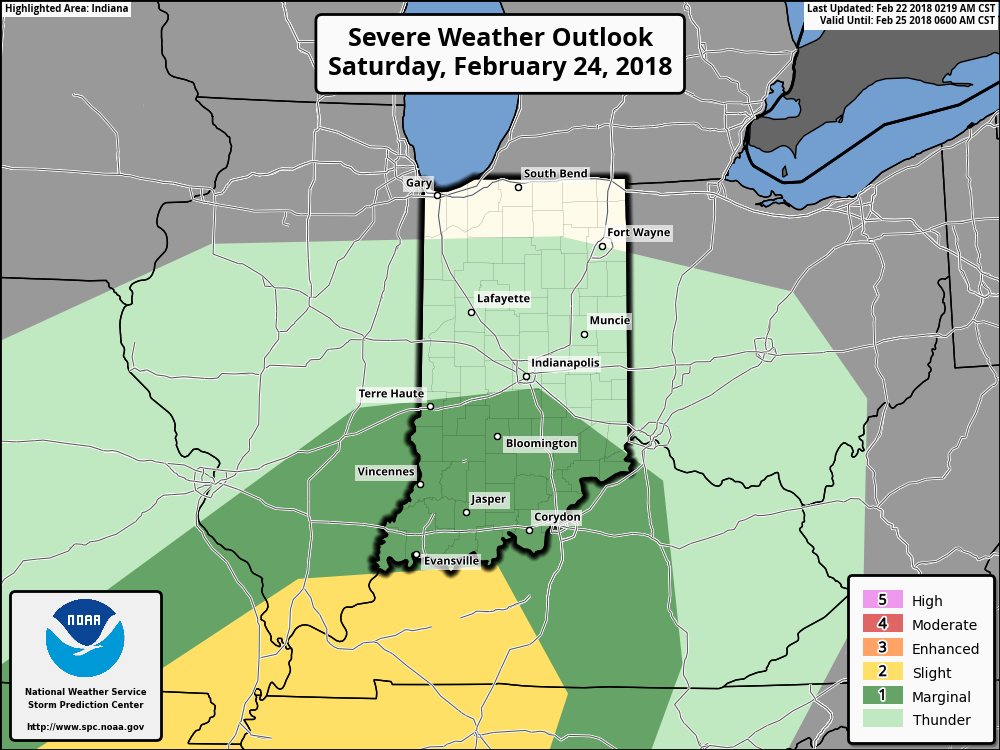
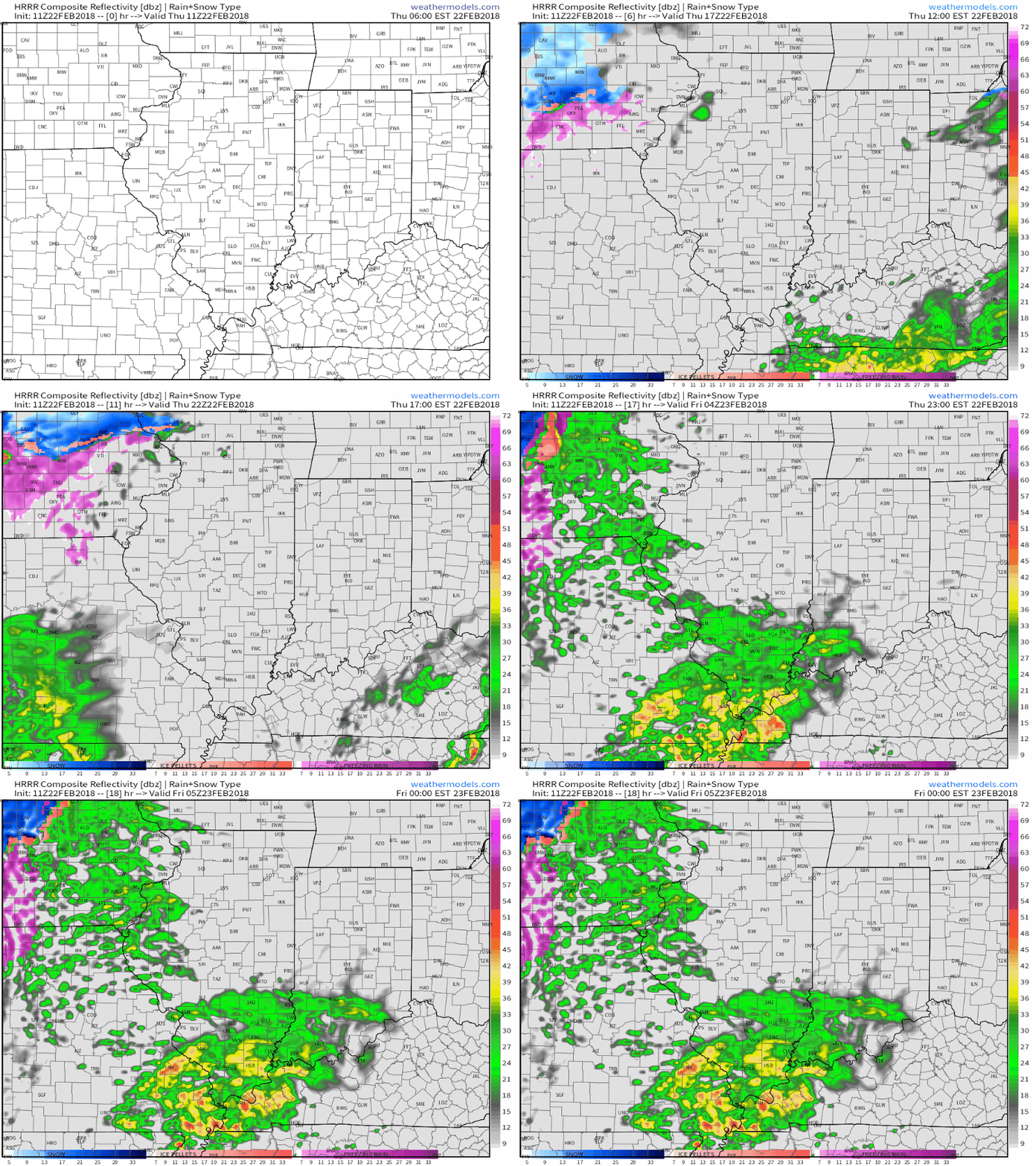 Embedded thunderstorms may target southern Indiana late tonight and Friday morning before more widespread thunderstorms (a couple could become strong) Saturday. The Storm Prediction Center (SPC) has included the southern half of the state in a “marginal risk” of severe thunderstorms Saturday.
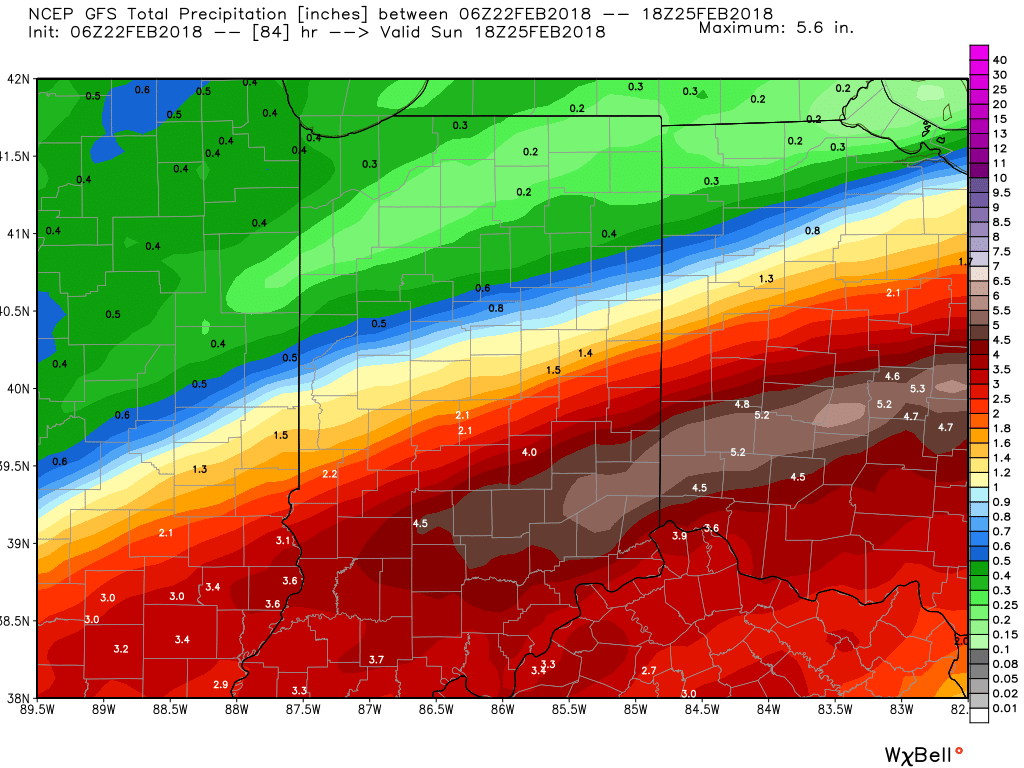
 All total, additional rainfall between now and Sunday morning should reach 2″ to 3″ across a widespread portion of the southern half of Indiana with locally heavier amounts.
 We’ll finally dry things out as we close the weekend and head into early next week as high pressure settles overhead.
 Next week will begin a pattern transition from the unseasonably warm weather we’ve enjoyed as of late to a colder regime for the first half of March. We note models continue to tank the NAO and AO.
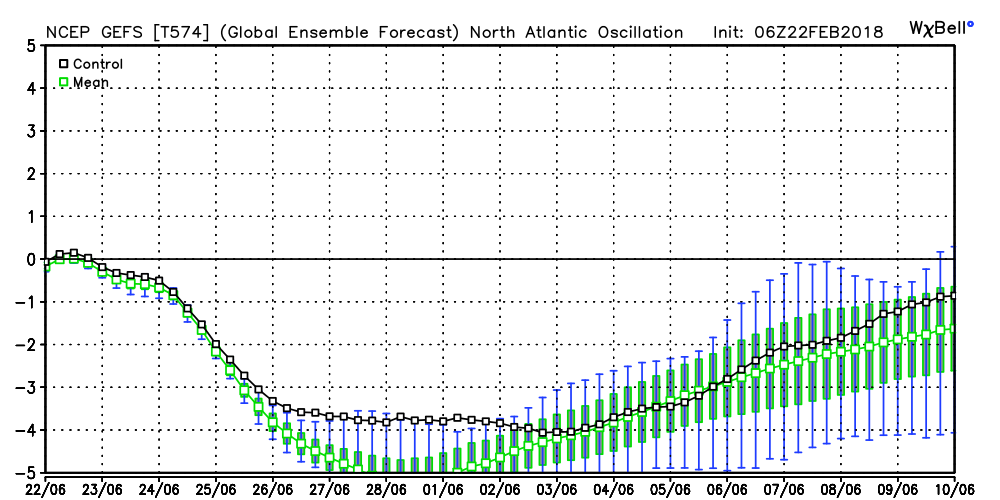
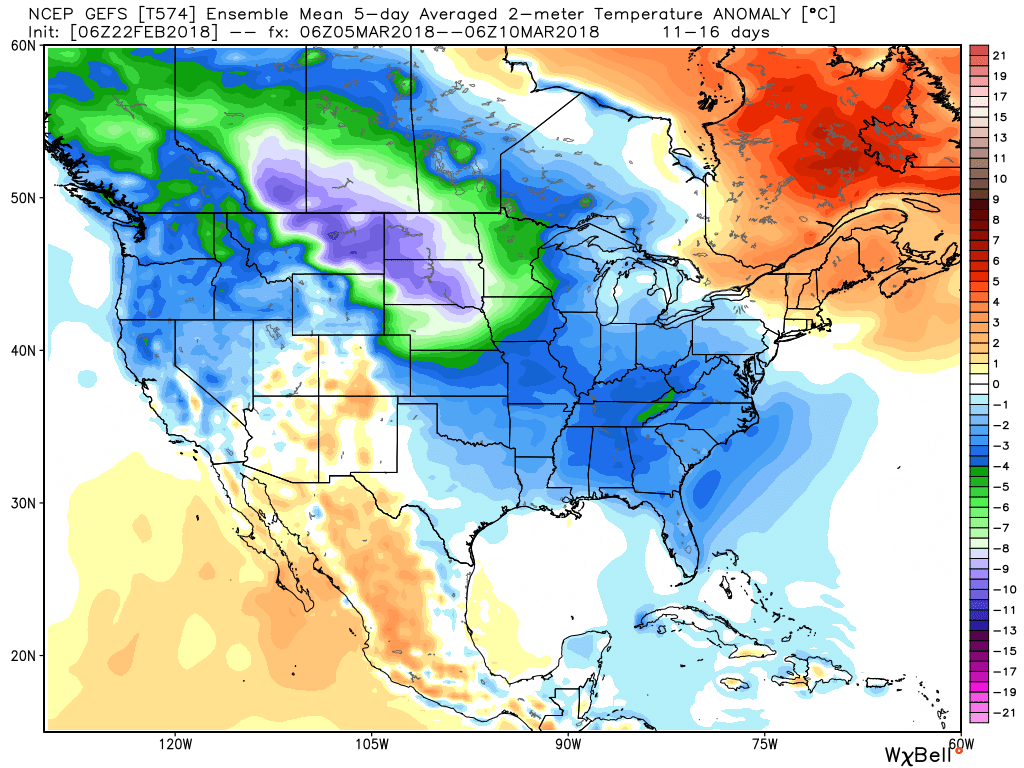
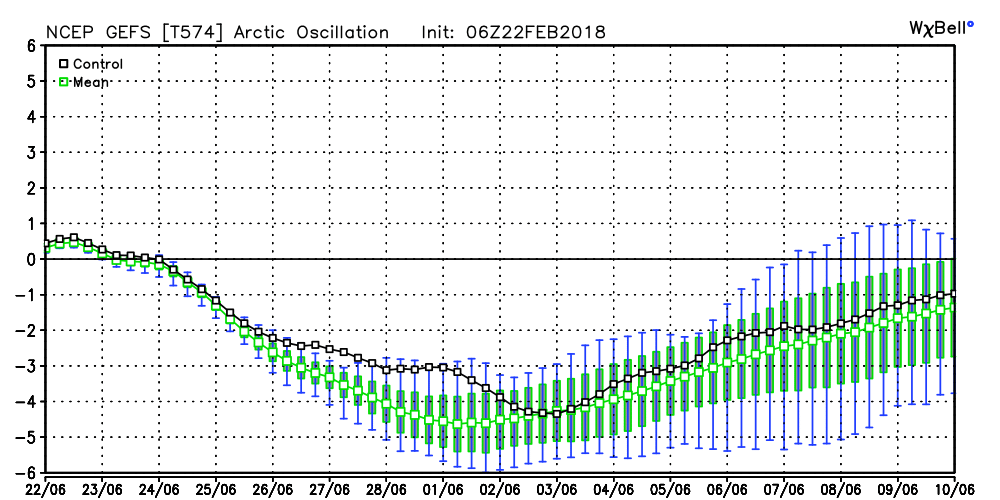 Accordingly, the models are seeing the trough and associated colder than average pattern returning to the eastern half of the country as we rumble through the first half of March. With such a strong block in place, this can turn into an active pattern for a couple weeks to go along with the cold. Both the GEFS and EPS agree on the overall look.
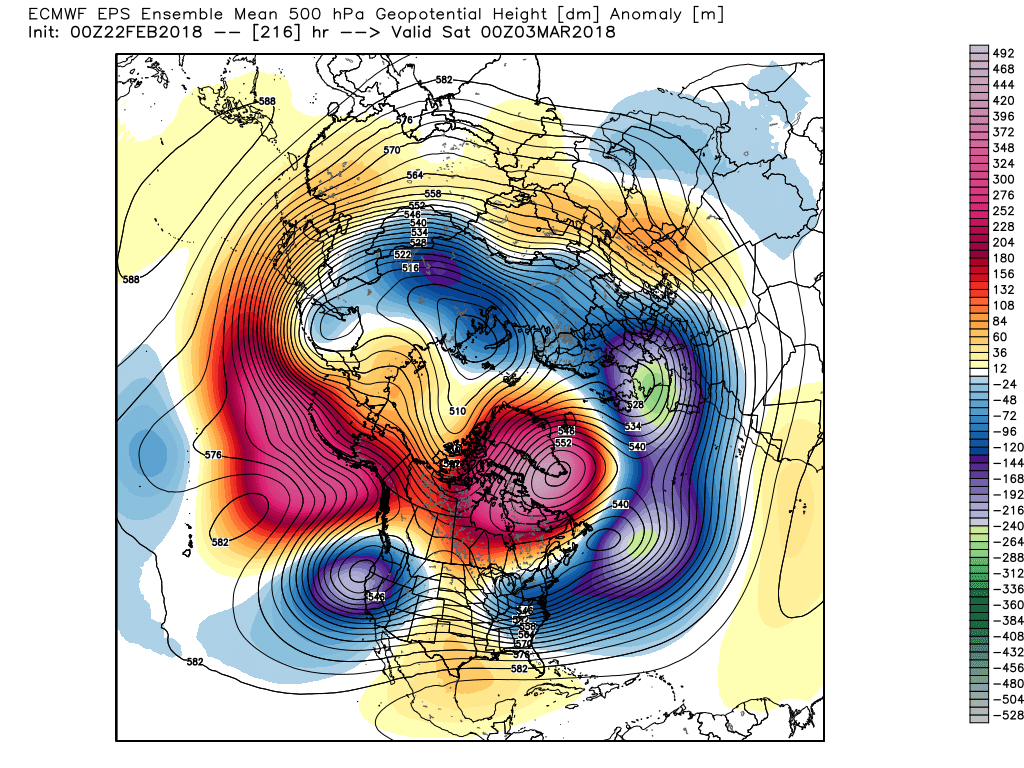
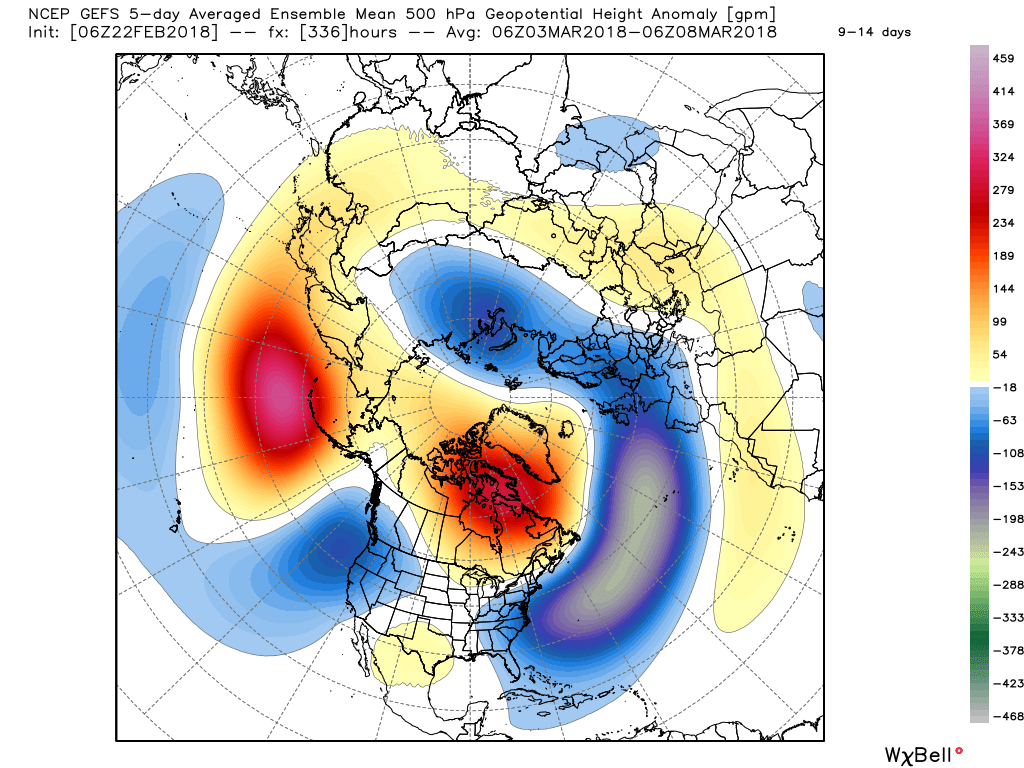 While there’s no way to get specific on the individual storm threats that will eventually come with this pattern, the potential is present for a few storms to “bowl” underneath the block through the first 10-15 days of the month. Each storm will have the capability of delivering wintry precipitation, but this can also be a tricky time of year where most, if not all, ingredients need to come together to create significant wintry events. In a winter that’s been frustrating to central Indiana snow lovers (frigid, but dry first half and milder, wetter second half), perhaps it would be fitting to get a couple good snow dumps in March (when most are wanting and ready for spring)…
You must be logged in to view this content. Click Here to become a member of IndyWX.com for full access. Already a member of IndyWx.com All-Access? Log-in here.
You must be logged in to view this content. Click Here to become a member of IndyWX.com for full access. Already a member of IndyWx.com All-Access? Log-in here.
“Dumpster fire” is defined by Urban Dictionary 🙂 as a complete disaster. Simple. Right to the point, and sums up our forecast period of Feb. 1st through March 6th perfectly.
Long time followers of IndyWx know that I’m not one to usually wad up a forecast and throw it in the trash until the end of the given forecast period, but there occasionally (thankfully, few and far between) are times that call for it, and this is one of them.
While this certainly isn’t a “winter’s over” post, it is one to set the record straight on calling our forecast for the aforementioned time period a bad one…very bad. When we first published our expectations for the Feb. 1st through March 6th period of 15″-20″ and at least (1) night of double-digit below zero lows, I honestly thought that was conservative. There’s no reason to rehash all of our thinking behind those numbers (you can read those for yourself at the link included above). While places like Chicago and Detroit have cashed in on winter’s return after our January thaw, Indianapolis has watched one storm after another pass by just to the north. On February 12th we sit here with 1.4″ at IND and temperatures that are running 5° below average.
The primary reason for waving the white flag has to do with the MJO and it’s reluctancy to rumble out of Phase 7. As of late January, models projected the MJO to be entering Phase 8 now.
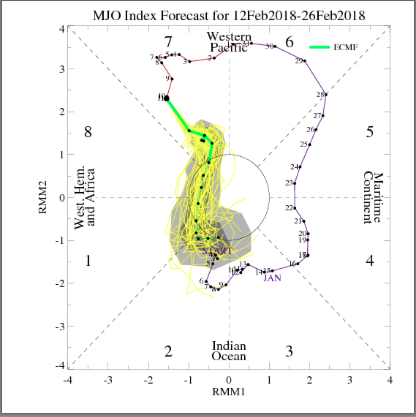
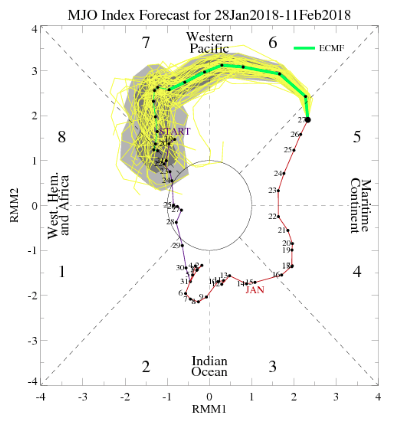 As we look at today’s MJO plot note how we’ve meandered about Phase 7 much longer than initially expected. Also (still) note the attempt to move into the colder phases towards the end of the period, which we’ll talk about here in a bit.
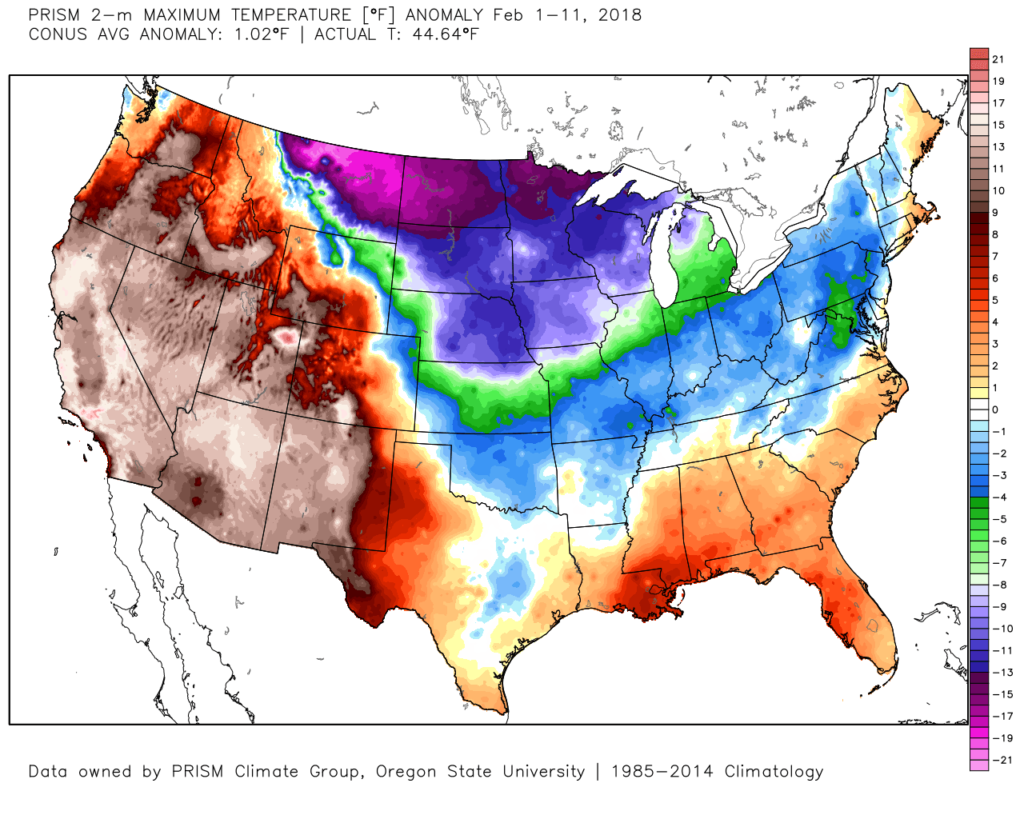
 The result has been a cold north-central that has “bled” into the Ohio Valley, while the immediate eastern seaboard and especially southeast has already gotten off to a warm to blow torch start to the month.
 Looking ahead, there’s no denying the overall warm pattern (relatively speaking) over the upcoming couple weeks. Phase 7 will continue to do work on the pattern.
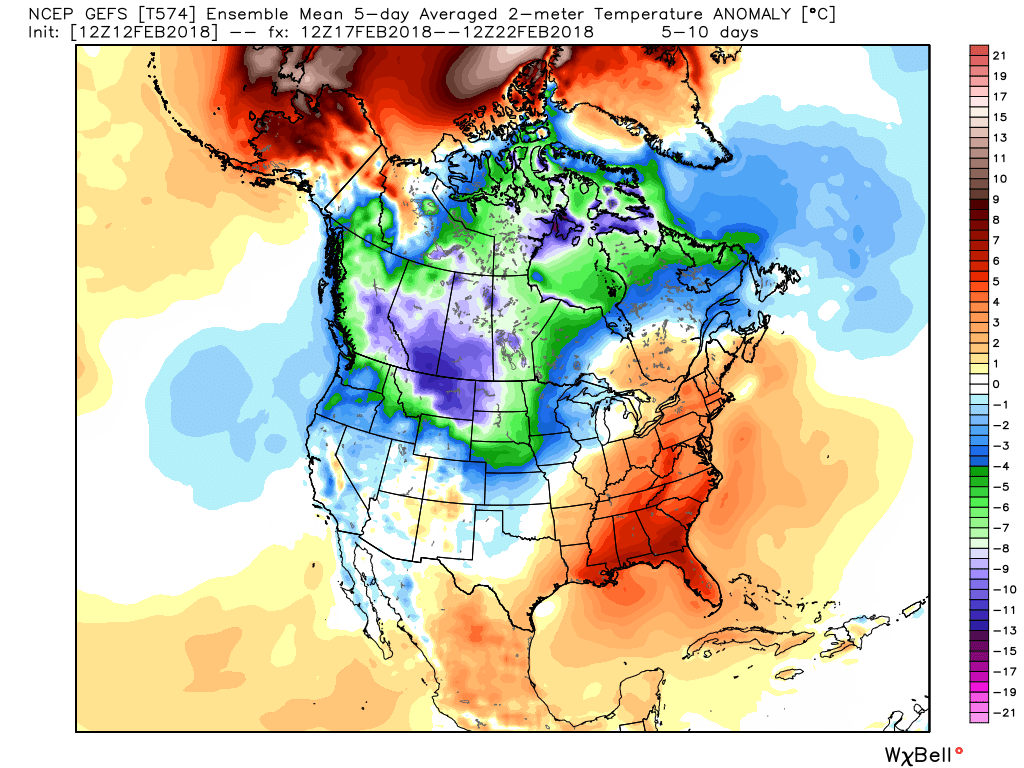
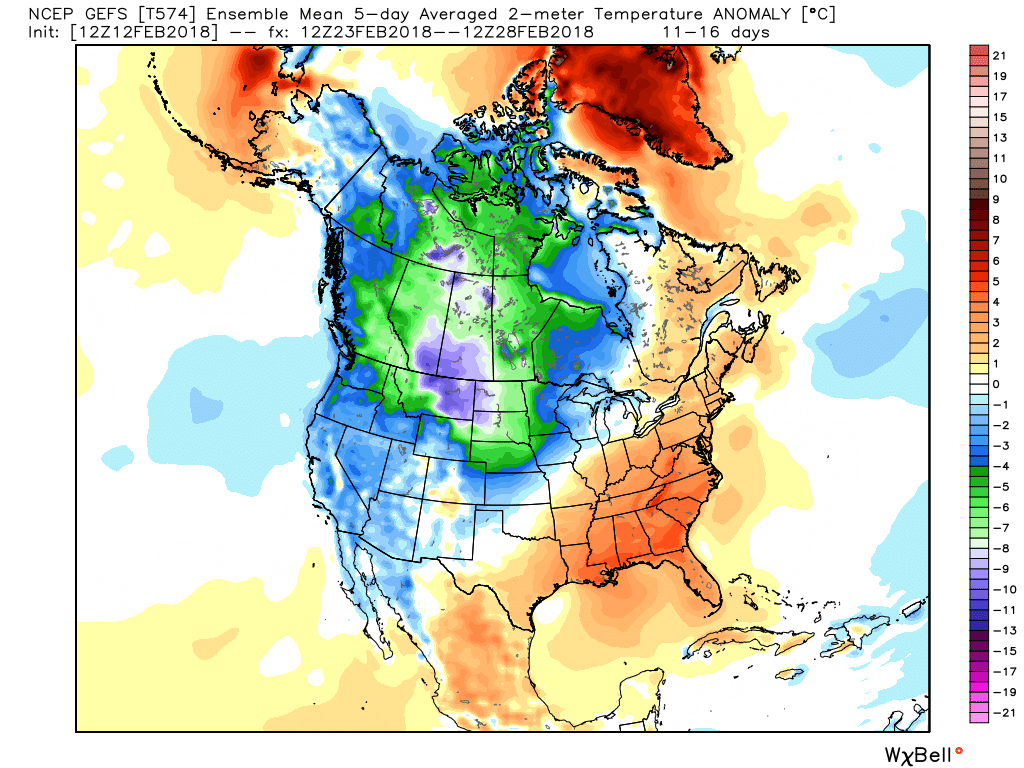 Obviously this is right in the heart of when we thought the colder MJO phases would combine with favorably cold teleconnection signals to produce a period of frigid weather. Instead, cold shots will be fleeting and any sort of winter weather threats of significance will be few and far between over the next 10-14 days. In short, Phase 7 will overrule the colder teleconnection signals that will evolve over the period.
Does this mean winter is over? Not so fast. While we’re going to be much slower to bite on the MJO swinging into the colder phases, there are indications it will at least attempt to do so once again as we close out February and head into March. Additionally, the large majority of teleconnections remain bullish for cold as we head into early March, locally. Perhaps fittingly, some of the data (will be interesting to see what the European Weeklies say later tonight) is trending colder as we open March. Maybe it’s a “delayed, but not denied” situation that will evolve, but considering we’re heading into March, the potential of severe wintry conditions to the magnitude we outlined in late January will be greatly reduced.