Long Range Video Update: Changeable Pattern For The 2nd Half Of March Into April…
You must be logged in to view this content. Click Here to become a member of IndyWX.com for full access. Already a member of IndyWx.com All-Access? Log-in here.
You must be logged in to view this content. Click Here to become a member of IndyWX.com for full access. Already a member of IndyWx.com All-Access? Log-in here.
Here’s our latest thinking around this weekend’s winter storm and a long range update through the month of March…
You must be logged in to view this content. Click Here to become a member of IndyWX.com for full access. Already a member of IndyWx.com All-Access? Log-in here.
Discussing the reasons behind the frigid open to March and the mid-month changes that await…
You must be logged in to view this content. Click Here to become a member of IndyWX.com for full access. Already a member of IndyWx.com All-Access? Log-in here.
Average temperatures through the 1st (5) days of the month include highs of 46 F and a low of 29 F at Indianapolis. Instead, a frigid pattern will grip the region as we move through early March, including highs that will likely only top out in the lower to middle 20s and lows in the upper single digits to lower 10s as we move through the first week of the month (coldest centered on Sunday through next Wednesday).
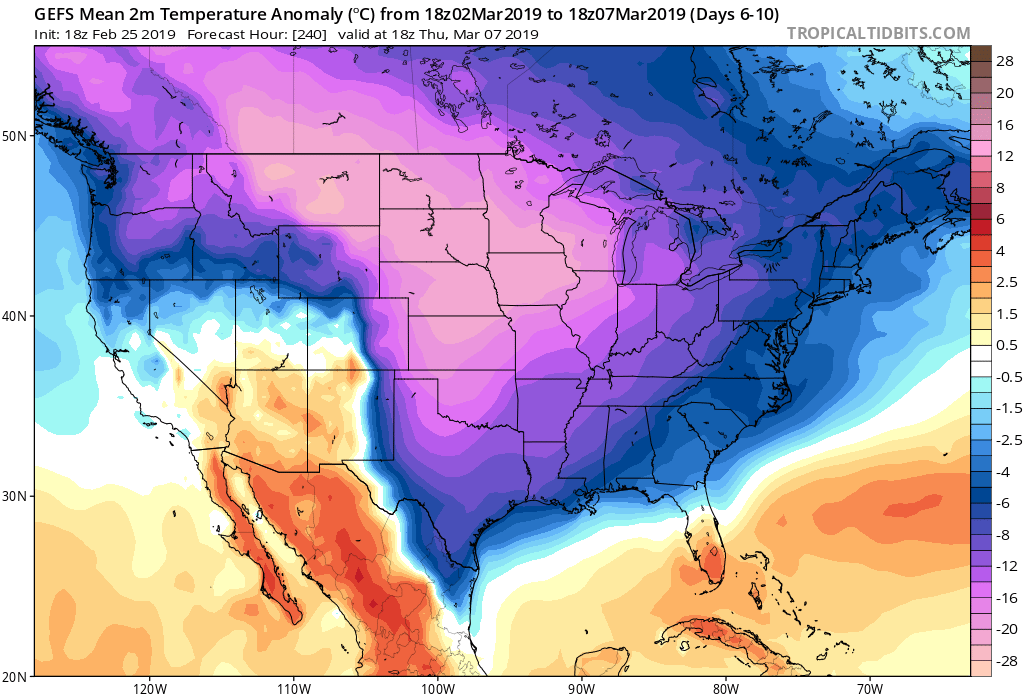
Should we get any sort of snow down during the period (still up for debate as of this evening), lows will likely approach 0 F. The best opportunity for accumulating snow over the upcoming week would come Friday night into Saturday, but confidence remains low. Thereafter, we prefer the “suppressed” ideas currently portrayed by modeling as more meaningful winter storm threats impact the lower Ohio/ TN Valley and southern Appalachian region- especially with such an anomalously cold pattern in place.
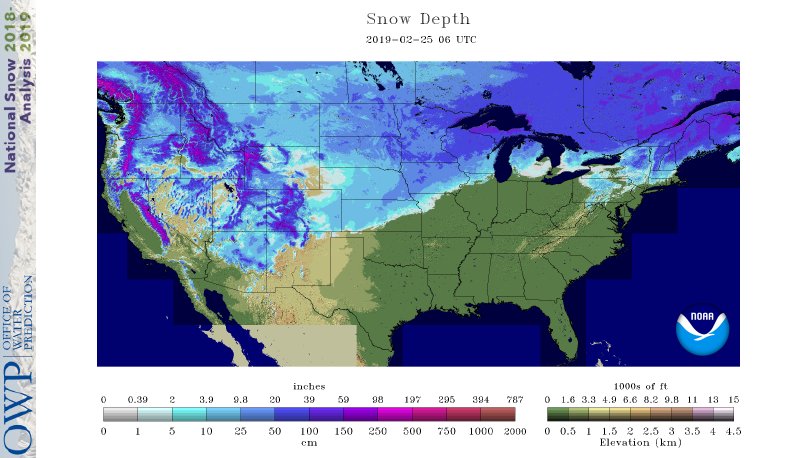
Speaking of cold, the deep and expansive snowpack across the central and northern Plains won’t allow the late season taste from the arctic to modify as much as it may otherwise. As the frigid air mass settles southeast, below zero wind chill values are a good bet early next week across the northern half of the state. “Tap the breaks” on meteorological winter kicking off March 1st…
With that said, the NAO and AO are expected to remain positive and while initially “trumped” by the significantly negative EPO, this will trend positive by mid-month. These all suggest the cold is limited and that there shouldn’t be any change to the idea that we really begin to feel more spring-like by the middle of March. This is backed up by the continued idea that the MJO rumbles into Phase 4 by mid-March, as well (again argues for warmth).
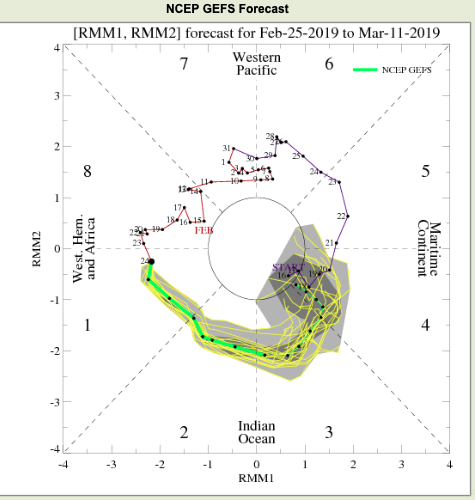
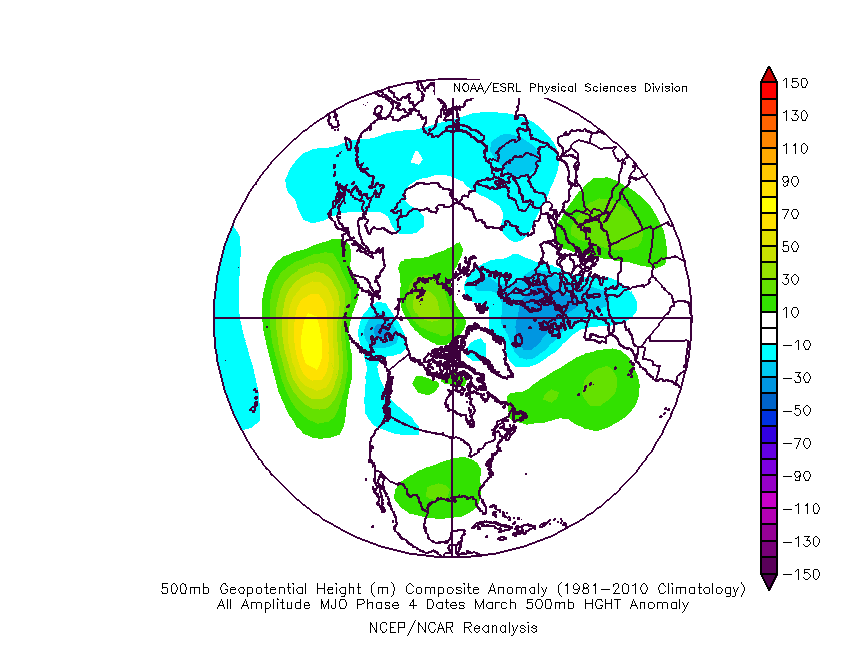
Sure enough, longer range models show the ridging and associated warmer times ahead:
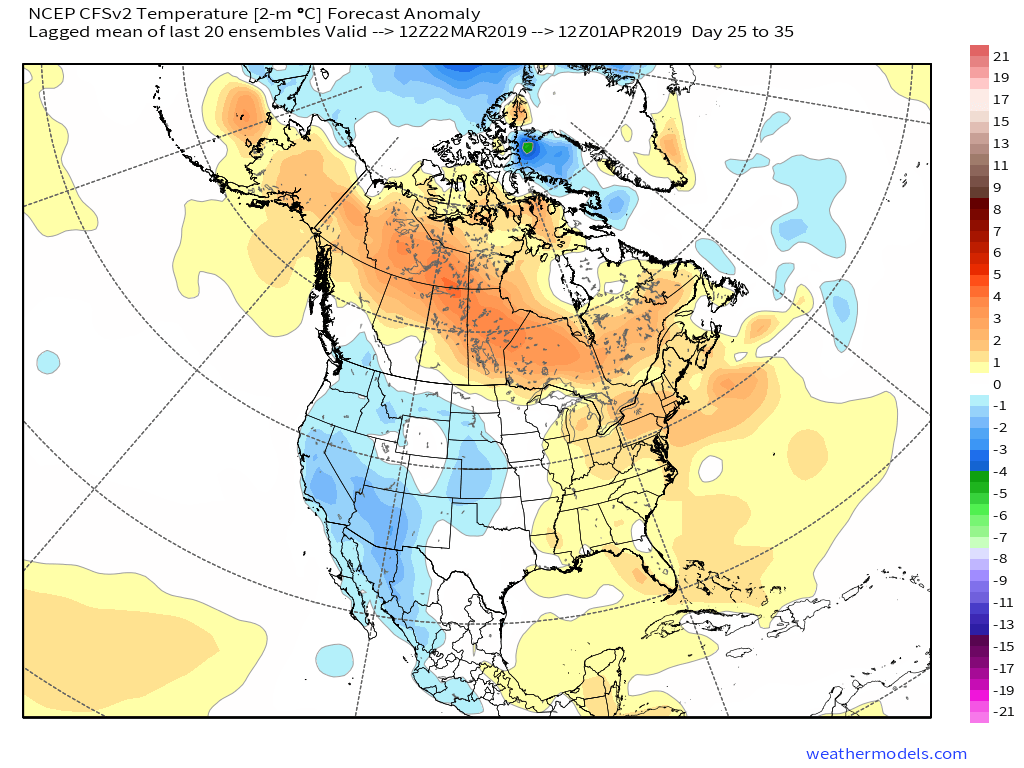
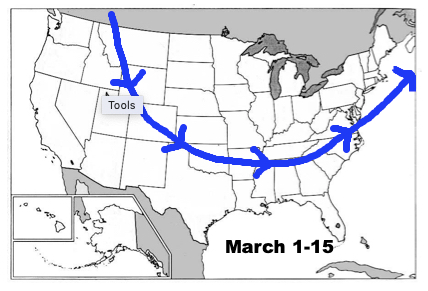
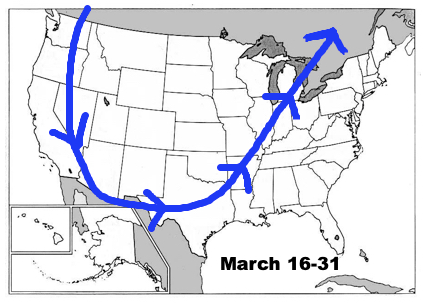
It should be noted that with the mean trough position taking up shop across the western portion of the country mid-March, not only should we moderate, but we should also see a return of wetter/ stormier times. With the GOM (Gulf of Mexico) running above normal, early season severe weather outbreaks will have to be closely monitored…
The new European Weeklies in this evening also back up the idea of an unseasonably cold 1st half of the month giving way to milder conditions by mid month. The model paints a drier than normal pattern over the Ohio Valley and Mid West over the next couple of weeks before wetter signals return by the middle of March.
Recently, a “transient” pattern has dominated. This has kept any sort of long-lasting cold at bay and resulted in above normal precipitation. As we get set to close out February and welcome in a new month, a pattern change is on the horizon.
This overall shift in the pattern will drive a more sustained and significantly colder than normal regime southeast. In short, cold is set to “overwhelm” the pattern through the first couple of weeks of March. In the most extreme case (especially if we can get snow down), we will be able to challenge records at some point during the 1st (10) days of the month.
In spite of a neutral to positive AO and NAO, a significantly negative EPO and MJO rumbling through the cold late Feb and early March phases look to trump the otherwise warm signals. We also can’t forget about the significant SOI crash. Let’s dig into some of the latest data:
CFSv2

Note the modeling spreading the cold out during the Weeks 2-3 time period before gradually modifying things as we move into the middle and latter portion of March. The mean storm track shifts to the east during the first couple of weeks of the month (pattern will likely be dominated by more snow vs. rain events during this time period) before wetter than normal conditions return for the 2nd half of the month.
JMA Weeklies
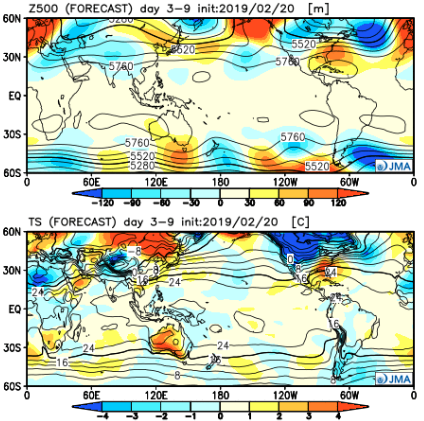
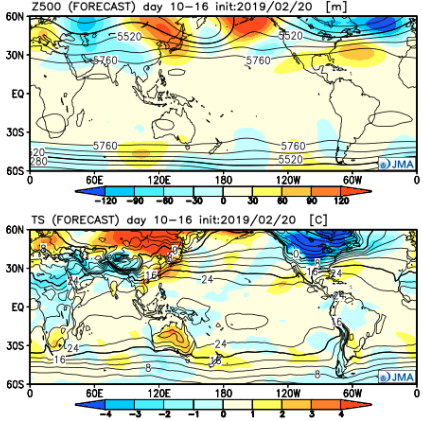
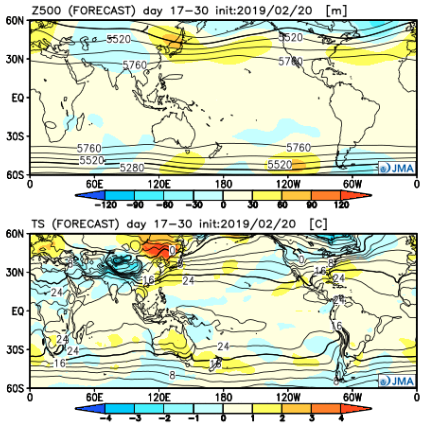
Like the CFSv2, the model overwhelms the pattern with cold during the Week 2 time period. Also similar to the CFSv2, the JMA Weeklies bring ridging back into the East and associated warmth by mid-month. While we haven’t included the precipitation anomalies in this post, the model does bring wetter than normal conditions back into the area by mid-March.
European Weeklies
The NEW European Weeklies remain consistent from Monday’s update (and data above) in delivering a very cold 1st half of March. The core of the cold looks to be centered over the upper Midwest and Northern Plains, but temperatures for the balance of the first couple weeks of the month will likely resemble what we’d expect in late January or early February vs. March. While precipitation will likely run below normal (thanks to the cold pattern), the model deliver above normal snowfall during the period. As we move into the 2nd half of the month, warmer (and wetter) conditions are shown to return.
Given all of the above, we expect the primary upper air pattern to feature a central and eastern trough through the 1st half of March before that trough settles into the West during the 2nd half of the month. This will open up the eastern portion of the country for not only warmer air, but a return of moisture-laden storm systems and the potential of strong-severe storms at times.