Time To “Buck The Trend” On The Dry Summer?
Summer has been dry, thus far, for central Indiana. With the last month of meteorological summer on the doorstep, will that continue?
Before we discuss further, let’s check-up on precipitation anomalies at IND (through July 28th).
- June: finished the month 0.26″ below average
- July: 2.69″ below average, month-to-date
- (This comes after a May that featured a 3.63″ deficit).
We have discussed the upcoming shift to a wetter regime that will develop Sunday into the first half of next week. A Saturday evening update continues to point towards increasing rain chances arriving as we rumble into Sunday evening. As expected, this morning’s high resolution NAM was likely a bit too excited on the initial wave of moisture and has come around to a “more realistic” idea in our opinion.
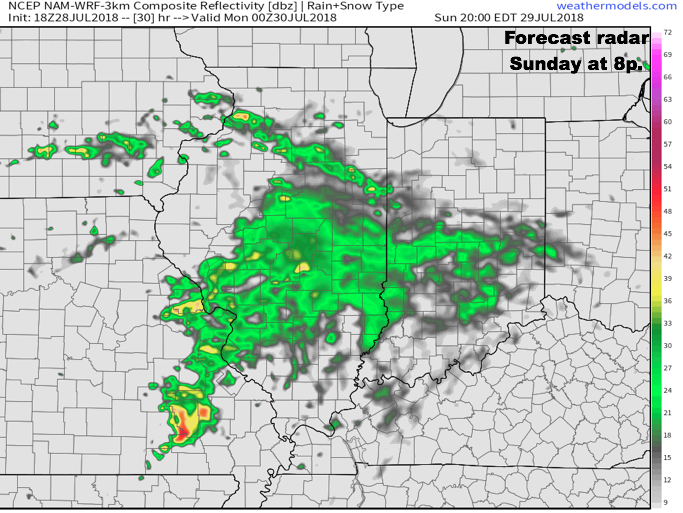 Rain and embedded thunder will likely be rather widespread early Monday, especially across the southern half of the state.
 Data continues to point towards the greatest coverage of rainfall arriving Monday night and Tuesday. We still expect a widespread 1″ to 2″ rain for central Indiana before things begin to wind down mid to late week. There will be locally heavier totals.
As we look ahead, we think the balance of the month of August will feature an upper ridge across the western portion of the country that will keep our immediate region in an active northwesterly flow aloft. Perhaps the GEFS is seeing this best at the moment (important to note the model has been consistent with respect to run-to-run updates as of late). This is a wet signal this time of year…
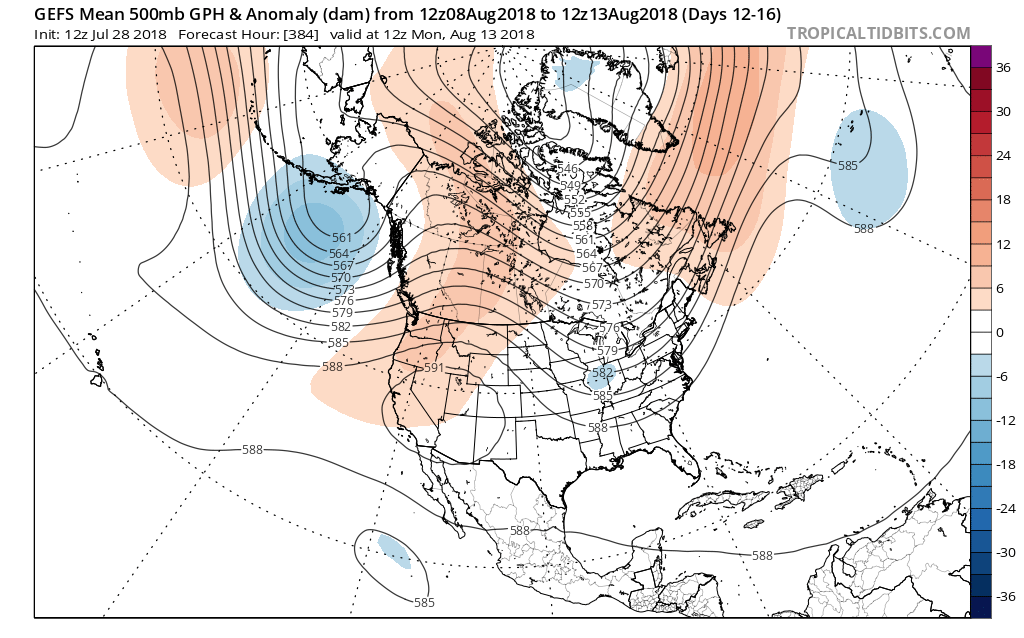
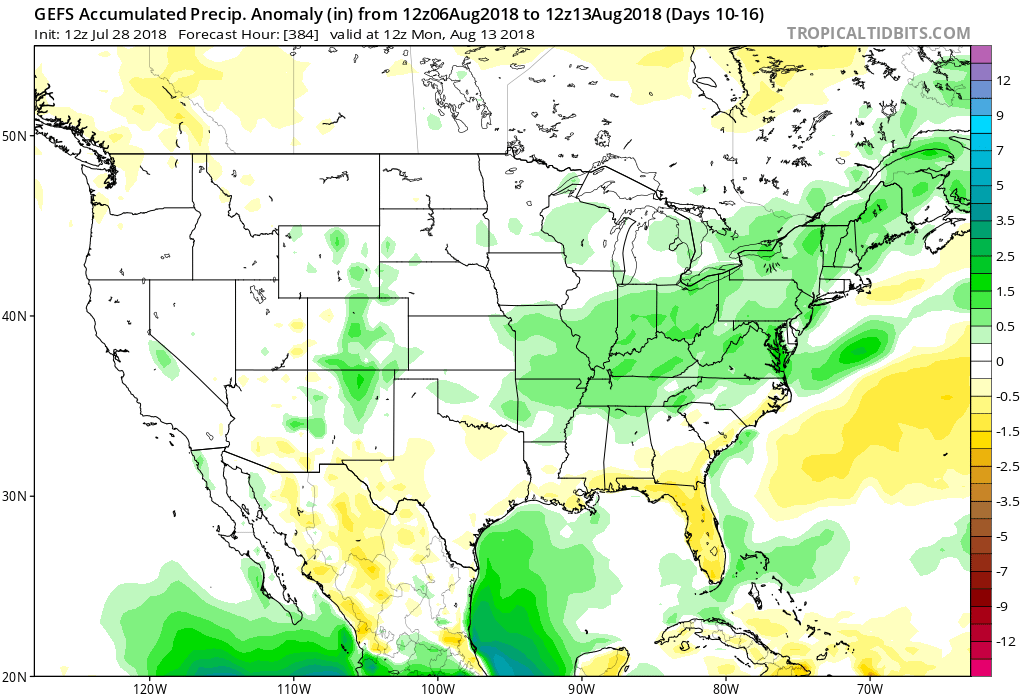 The model has support of a return to wetter times as noted from the latest JMA Weeklies, CFSv2, and European ensemble.
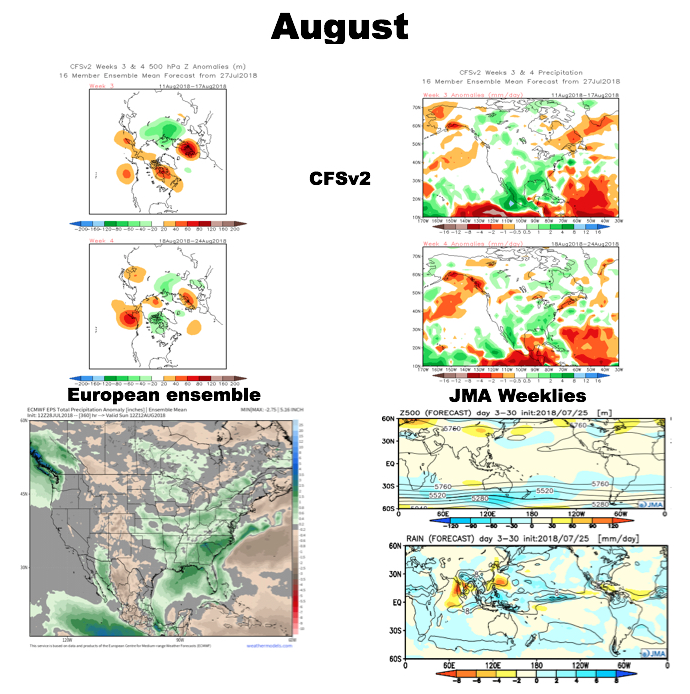 While the cool will relax as we rumble past the first couple days of the month (we’re in the “dog days” after all), I still think the worst of the heat is over for the summer and the headline for August will likely be a situation where we begin to make up for lost time in the precipitation department. That upper ridge centered to our west in the means will likely result in a continuation of rather active times from a precipitation perspective through the month and our idea is that we finish August with above normal precipitation across central Indiana for the first time since April…
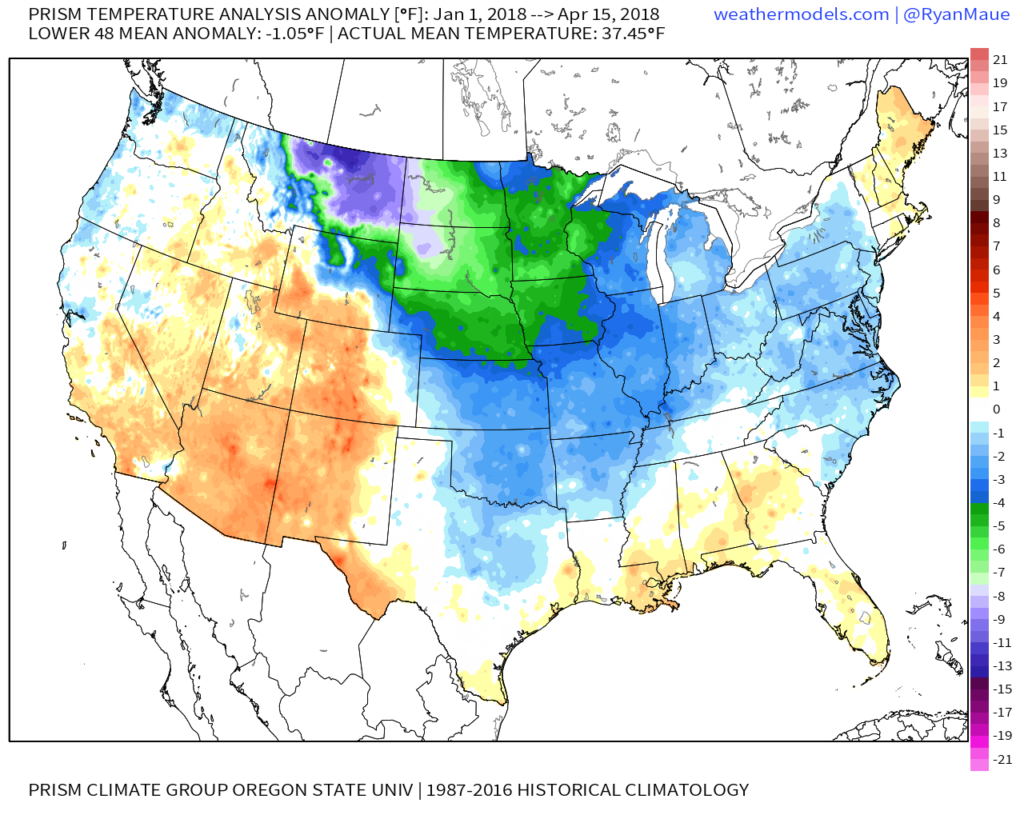 More specific to Indianapolis, here’s the monthly temperature breakdown so far for 2018:


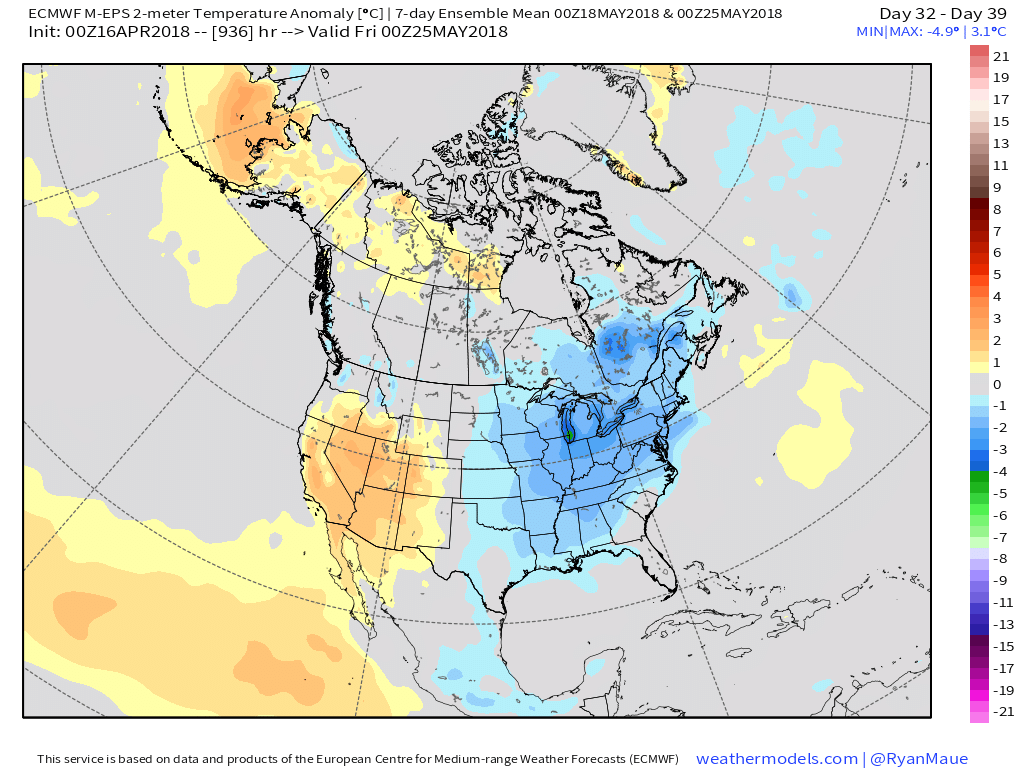 While we have conflicting temperature ideas, both suggest a drier than average month emerging:
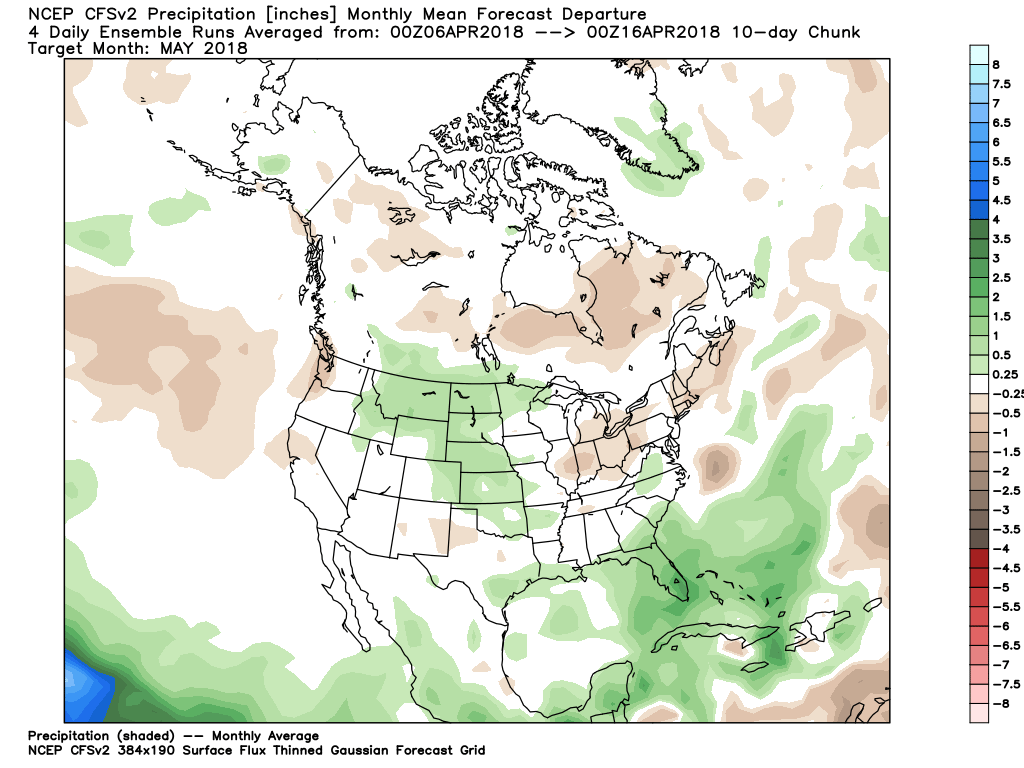
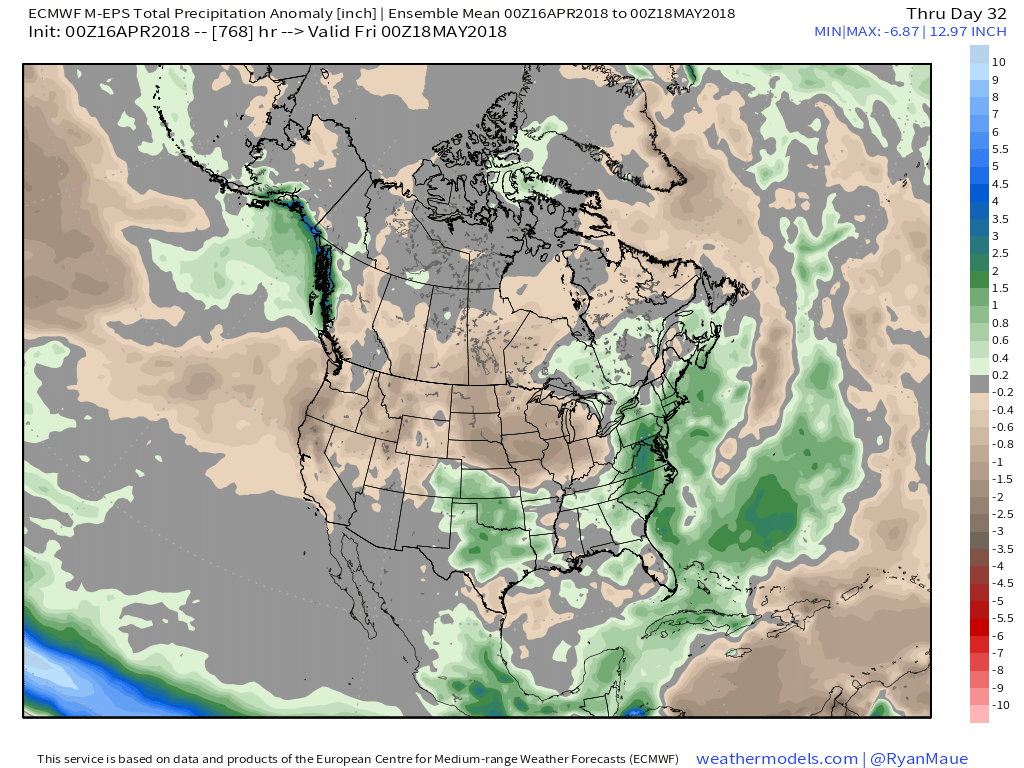
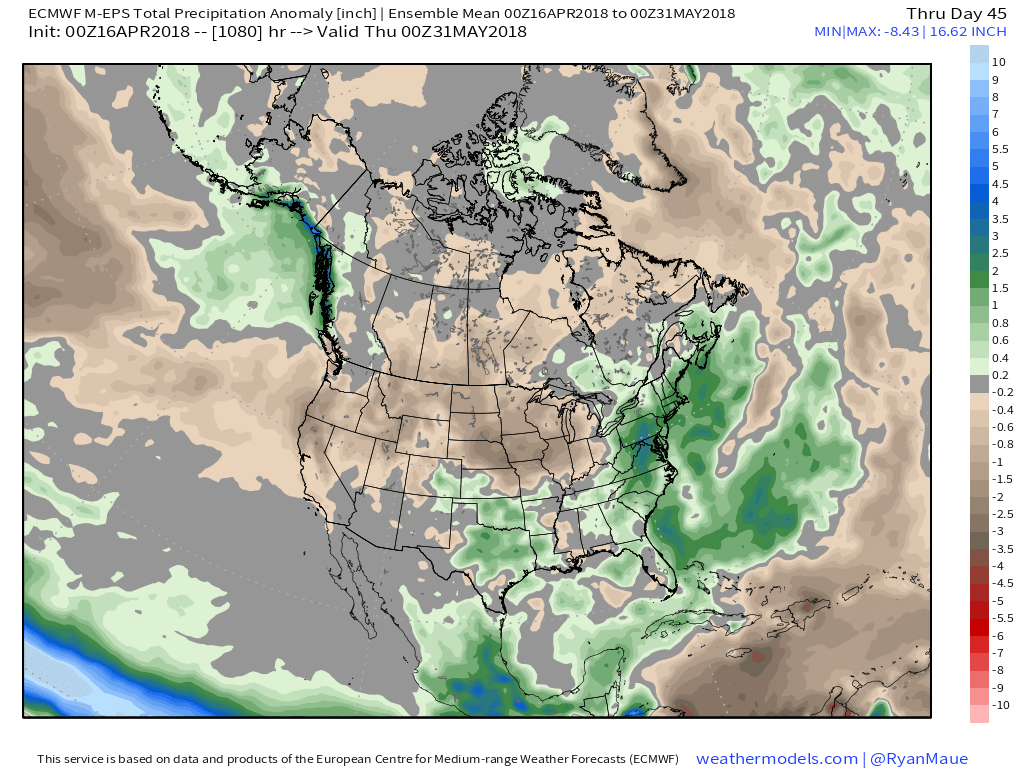 At the end of the day, our call on May’s forecast from mid-April would be for an early cooler than average start before flipping towards more of a seasonable to slightly warmer than normal regime. Our idea all along this spring has been that when this pattern flips, the potential is present to jump right to a summery feel. In the face of the new European Weeklies, we still feel this warmer idea mid and late May is on the table. We’re in agreement with the data of a drier than average month.
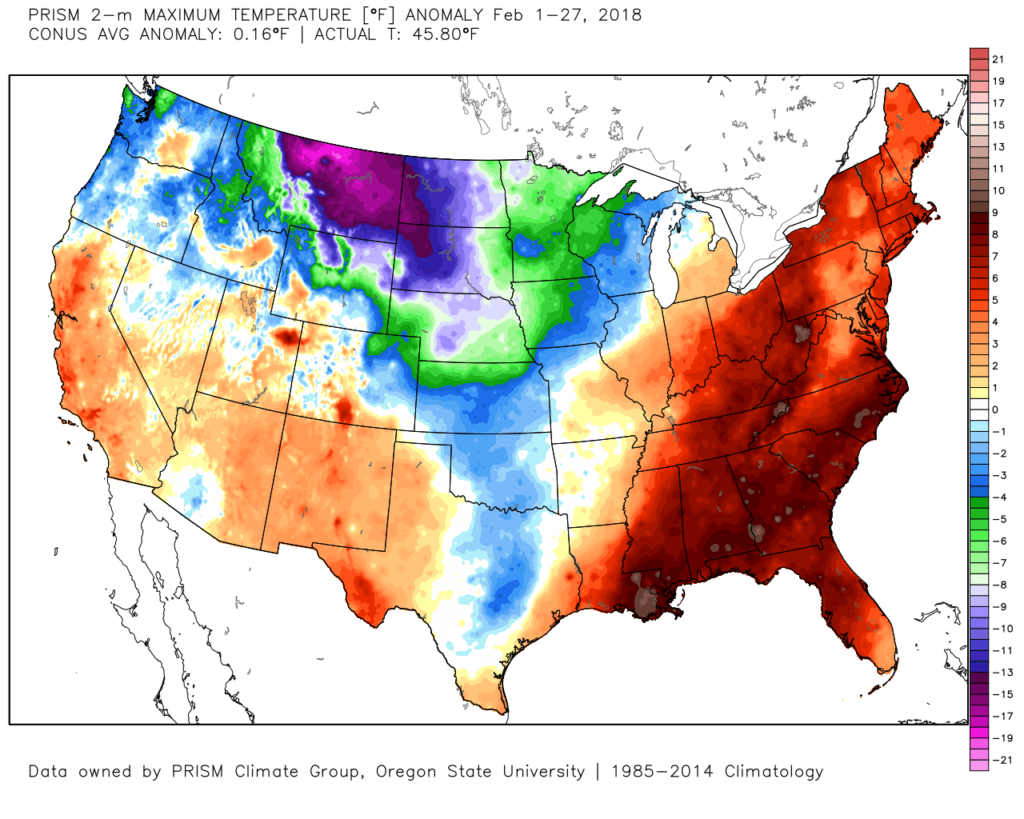 The early spring “fling” has lulled many into believing winter’s finished. While the worst of the winter is certainly behind us, we continue to think a dose of “reality” awaits as we progress through the better part of the first half of March. To be more specific, we feel the period March 6th through the 20th will offer up below average temperatures and an active pattern- capable of producing wintry threats.
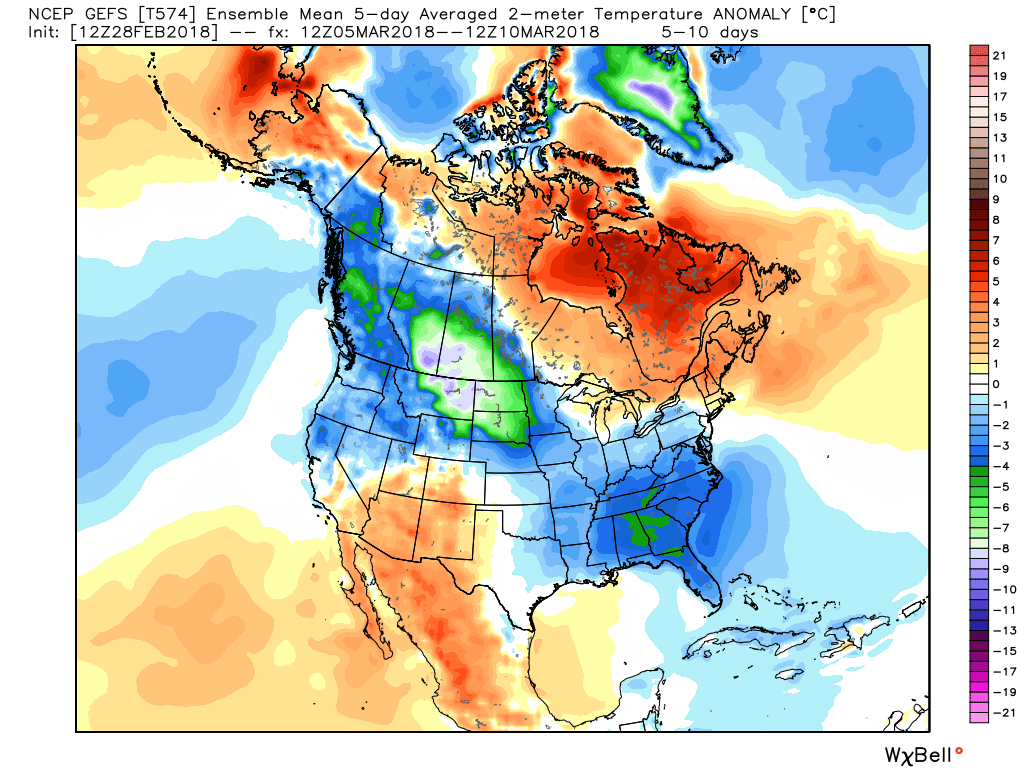
 Sure enough, modeling is going to the pattern that will produce below normal temperatures (doesn’t appear to be anything particularly frigid, but colder than average, nonetheless) through mid-month.
 With blocking in place, an undercutting jet will serve to deliver an active storm track.
 Keeping in mind March winter events need multiple items to come together to create impactful situations, it’s also important not to simply “buy in” to the idea that just because it’s been warm lately that winter is finished. March can be a wild month, as long-time Hoosiers are aware. The pattern we’re heading into over the next 10-14 days is one that’s been void most of the winter (high latitude blocking in place) and can serve as the player needed to flip a “nuisance” variety late-winter event to one that’s much more significant. We’ll need to remain on guard for the potential of one or two “more significant” wintry events as we move through the first couple weeks of the month.
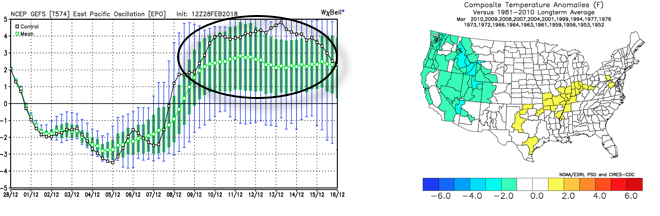 The end result is one that should promote colder than average times over the next couple weeks, overall, along with an active storm track. With blocking in place, the potential of one or two more significant late-winter events are on the table, and we’ll have to fine tune specifics as the individual storms come. While confidence is high that someone within the Ohio Valley region is likely to still deal with a big-hitter event, there’s no way to get specific until the individual players are on the field. Thereafter, the pattern should begin to transition to one more conducive for “stick and hold” spring conditions during the latter portion of the month.