Changes Are Brewing Friends…
You must be logged in to view this content. Click Here to become a member of IndyWX.com for full access. Already a member of IndyWx.com All-Access? Log-in here.
You must be logged in to view this content. Click Here to become a member of IndyWX.com for full access. Already a member of IndyWx.com All-Access? Log-in here.
Summer sure doesn’t appear to be letting go anytime soon as our recent 7-day outlook suggests, but there are indications that our unseasonably hot and humid regime may take a back seat to the refreshing taste of fall in about 10 days. The big “tip of the cap” towards the cooler pattern? The PNA, or Pacific North American pattern, shifting from negative to positive. As shown below, both the European (top) and GFS (bottom) highlight the PNA shift to positive.
 A positive PNA favors eastern troughiness and an associated cooler than normal regime over our neck of the woods.
 Sure enough, models are trending towards a much cooler direction for week 2.


 It’ll be fun to watch things unfold. For now, if you’re a fan of summer weather, be sure to enjoy the next week, or so, as things appear to be changing for the much cooler side of things around the 10th (give or take a day or two).
August has been cooler and drier than normal month-to-date. As we’ll get into below, this cooler, dry trend should continue to wrap up the month.
* Click on any image to enlarge.
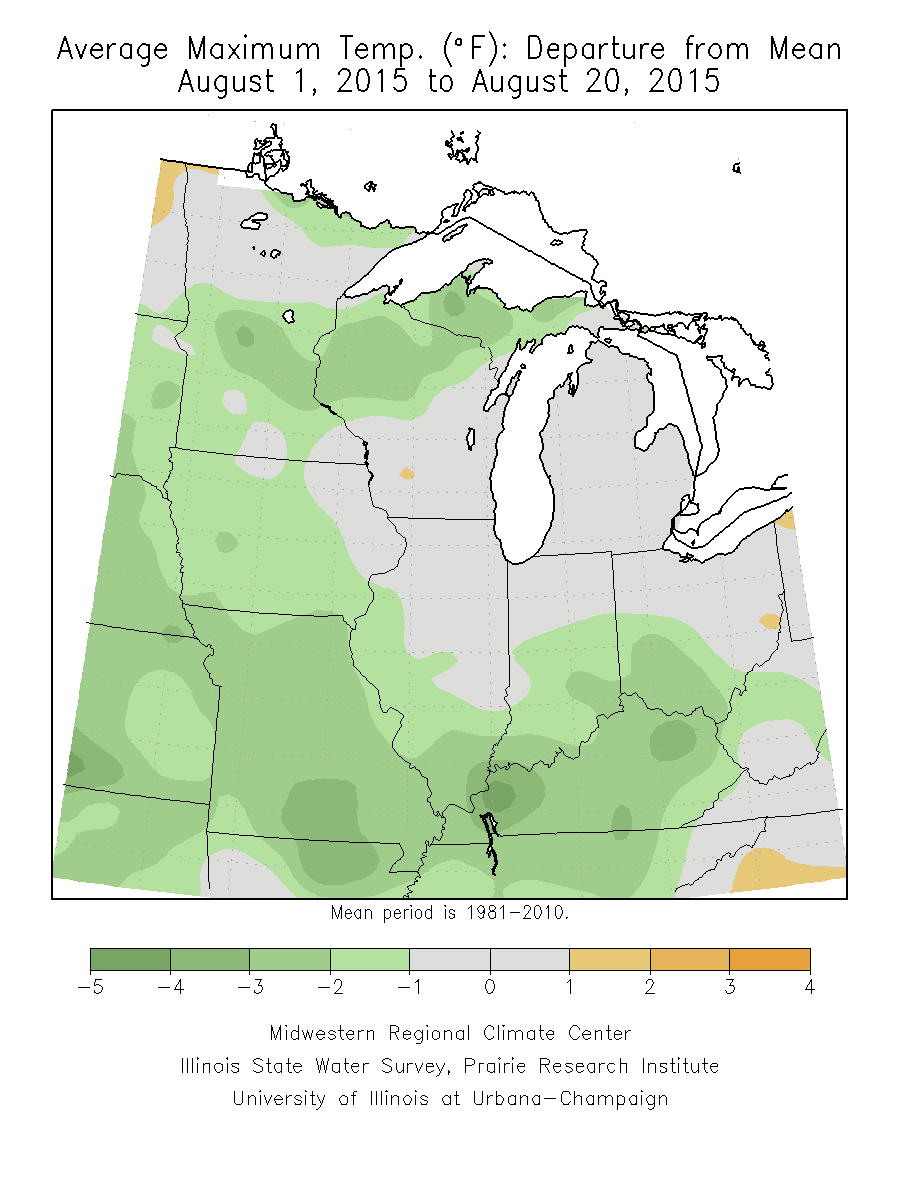

2015 to date has been cool central and east:
 The upcoming winter looks fun and challenging. It’s a volatile look with the strong Nino and warm northern, eastern Pacific (positive PDO). Certainly can’t “broad brush” the upcoming winter forecast solely based off similar strong Ninos of the past…
 Positive PDO temperature anomalies favor western Canada ridging and troughiness east. It’s a pattern that favors a cooler than normal regime across the east and southeast.
 As we go into the weekend, sunshine and comfortable conditions today will give way to increasingly cloudy skies Sunday with a threat of a shower or thunderstorm, especially during the afternoon and evening. A few of these storms could reach strong levels. The culprit? Another strong late August cold front. Most rainfall totals will be around a quarter inch Sunday, but there will be some locally heavier totals with stronger storms.
 Warmer conditions will build in briefly in between the early week cool spell and stronger push of cool inbound Sunday night that will remain with us through the majority of the upcoming work week.
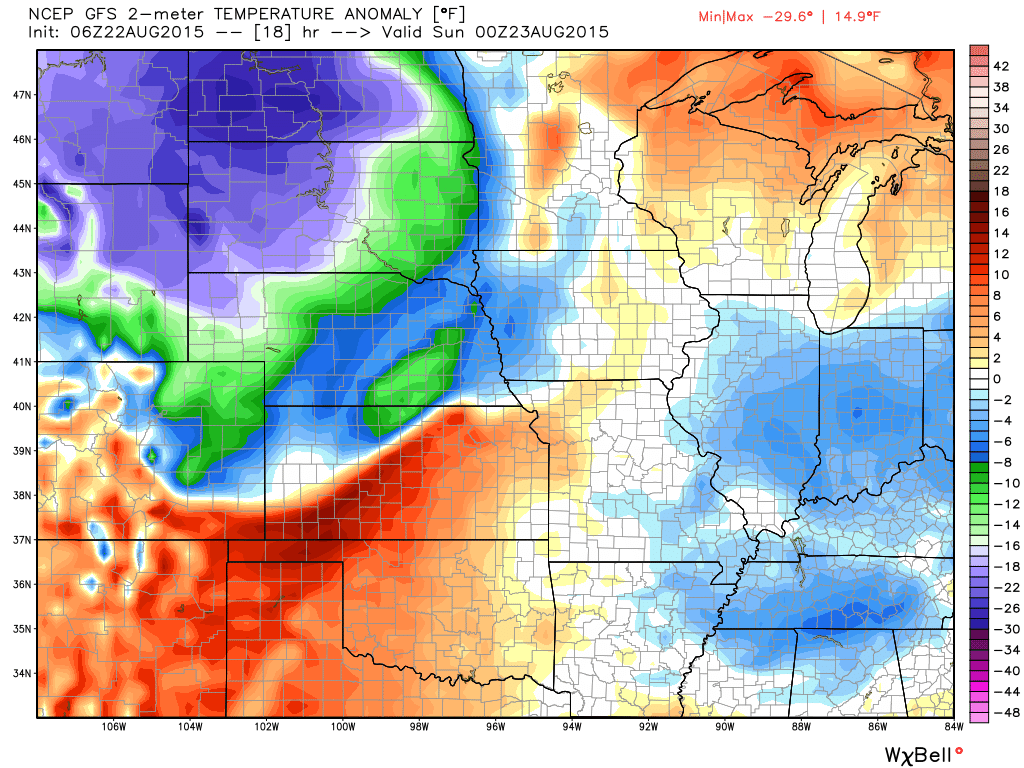
 Longer term, we think conditions warm going into next weekend after a very cool, fall-like week, but don’t necessarily agree with the GFS ensemble plot below into early September.
 We expect ridging to build in to close the last couple days of August.
 However, recurving Typhoon Atsani argues for a return of cooler air (briefly) and an associated trough arriving between September 2nd and 4th…
 Images credited to the following:
Wow, what a difference 24 hours can make! If you haven’t stepped outside yet this morning you’ll certainly notice the cooler, drier, and almost fall feel to the air upon…
You must be logged in to view this content. Click Here to become a member of IndyWX.com for full access. Already a member of IndyWx.com All-Access? Log-in here.
Before we dive into what we expect for the month of August, here’s a look at where we stand so far for July (with 4 days left as of this post).
This was our July forecast upper air pattern, issued 6.29:
 Here’s a look at temperature anomalies through 7.27:
 While overnight lows have been running warm with all of the clouds and moisture, daytime highs have been significantly below average:
 With four days left in the month, it’s already been the wettest month on record at IND. The Corn Belt, as a whole, has been quite wet month-to-date.


 As we progress into August (where does time go) we think we continue in an active pattern, locally, biased cooler than normal and wetter than normal.
 While modeling disagrees with the specifics in regards to the timing, most mid to long range modeling does agree on the overall idea of the hot dome (ridge) backing west and setting up shop over the southwest portion of the country early August which will put our region in (you guessed it) the favorable northwest flow for active weather. Similar to July, disturbances will ride the periphery of the hot dome to our southwest and offer up plenty of chances for showers and thunderstorms. That’s not to say we’re looking at setting another record for greatest amount of rain within a month, but it is saying precipitation should be above average yet again.
From time to time the ridge will attempt to expand northeast, but we don’t think it’s potentially until the last portion of the month before the ridge has much chance to encompass our region for any staying power more than a few days. We suggest getting used to this 500mb look:
 The latest NAEFS and CFSv2 highlights the cooler than normal period we should undergo early August (especially after the 5th).

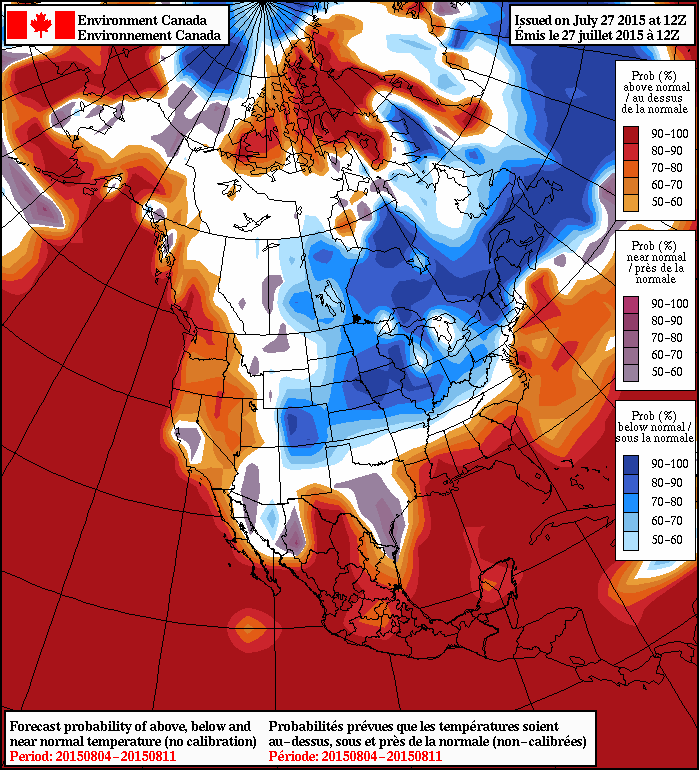 The latest European Weeklies suggest there may be a window for a “calmer” regime after the 25th. That said, it’s a rather volatile pattern.
Yet another tool we’ve been keeping a close eye on the past few months has been the SOI (Southern Oscillation Index) as it’s been a big help in tipping us off for prolonged wet weather. Note the consistent negative SOI:


Not to sound like a broken record, but we continue to think the relentless wet weather pattern “keeps on keepin’ on” as we progress through August. It’s very interesting to note the dynamics at play between the strengthening El Nino and warm northeast PAC waters… More on that, and the implications we feel for fall and winter, in the weeks and months ahead. 🙂
