Wednesday Notebook: Confidence Increases On The First Snowstorm Of The Season…
The first snowstorm of the season (and there will be many more where that came from) looms for the upcoming weekend across central Indiana- and a large portion of the Ohio Valley.
An area of low pressure will develop across the Texas panhandle Friday. This area of low pressure will scoot across the Ozark Mountains Saturday and into the Tennessee Valley Sunday. As this takes place, a shield of snow will grow in coverage and intensity across Missouri Friday afternoon, spreading northeast overnight Friday into Saturday. “Forcing” will eventually weaken late Saturday night into Sunday morning and drier air will eventually filter into the area. Before this though, a solid 12 hours of steady snow is possible for much of central Indiana Saturday.
 Notes:
- While far from set in stone on specific snowfall numbers across central Indiana, it’s safe to say plows, shovels, and snowblowers will be needed across the region. 🙂 Confidence will be high enough to issue our first call later Thursday.
- We anticipate the onset of snow to reach west-central parts of the state around 5a before moving into the city, itself, around 6a to 7a.
- Periods of moderate to even heavy snow will develop Saturday afternoon. If you have travel plans, we recommend getting those out of the way early Saturday morning. If your travels take you west to the big game this weekend, plan on leaving tomorrow of predawn Friday to avoid having to deal with slippery roads.
- Finally, we’re not at all concerned about the high “suppressing” things this go around. The overall pattern is much different from the “suppression depression” event we were jumping all over (and getting ridiculed by some, mind you, for betting against the snow ;-)) earlier this winter. If anything, given the overall support for this storm system, things may trend a tick or two north over the next 24-48 hours. Regardless, this should be an impactful event for central Indiana.
More later. In the meantime, may we recommend your Saturday plans include a pot of chili and roaring fire to go along with Colts football? Sounds like the perfect day to me!


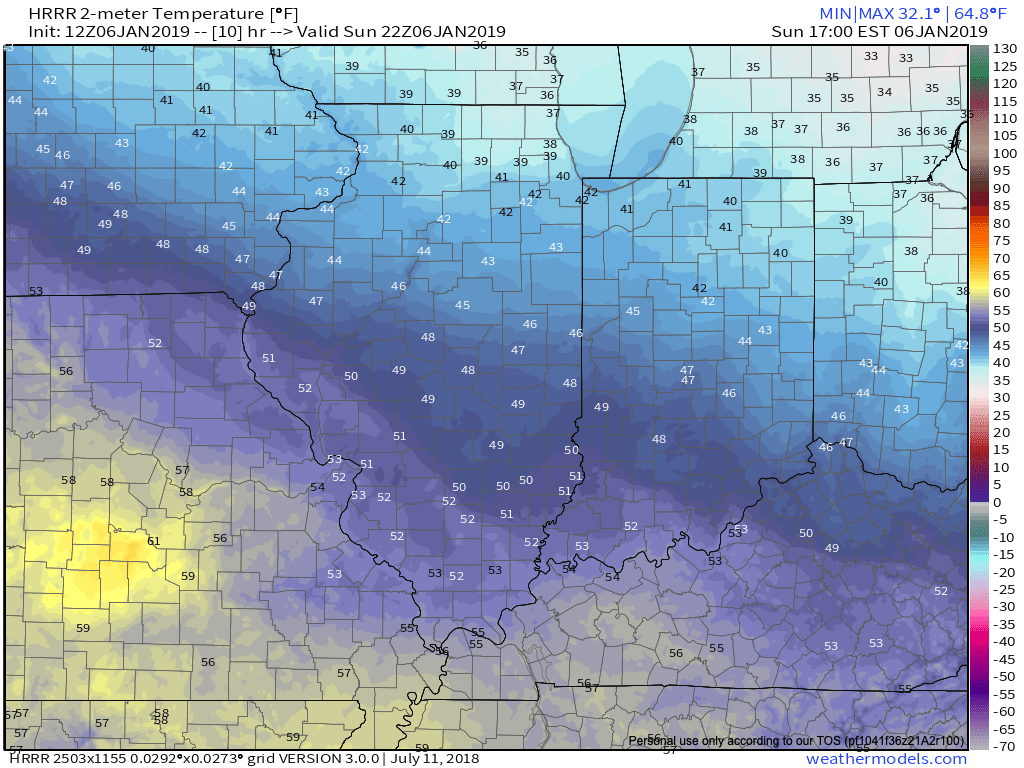
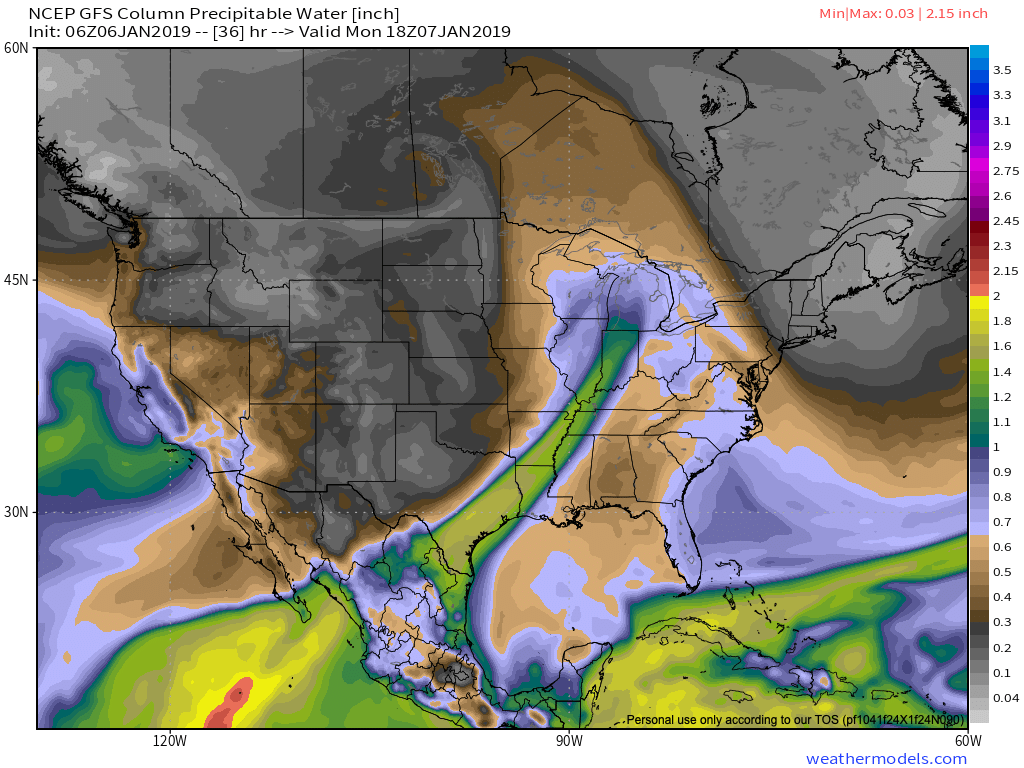
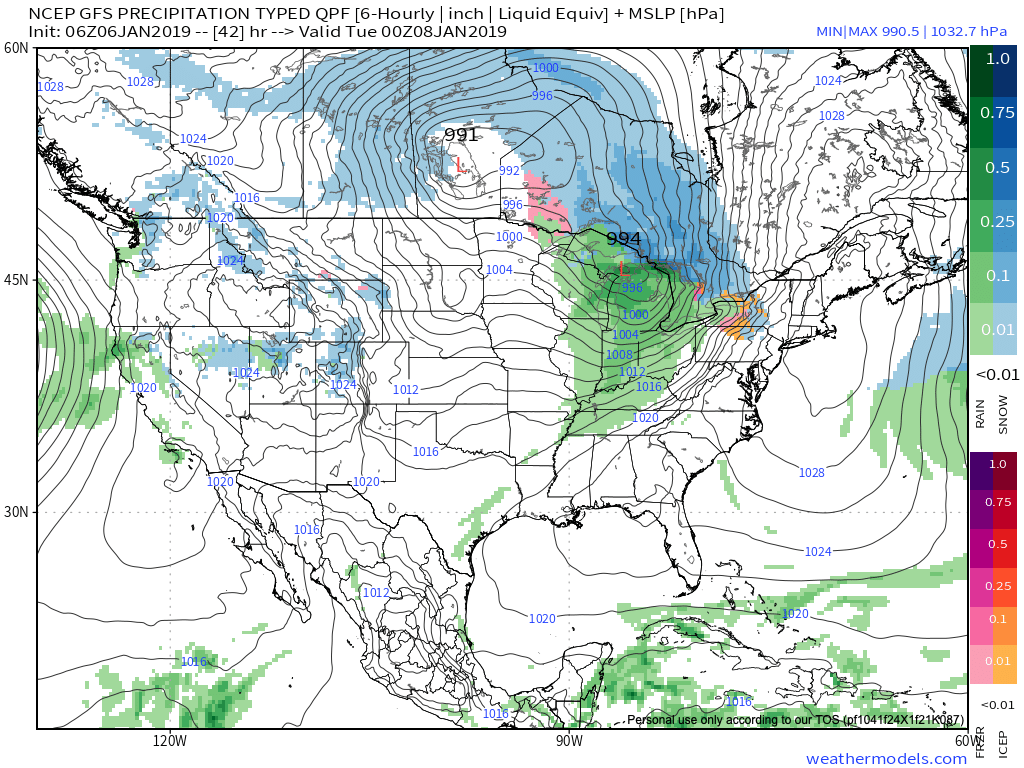 Note this storm system won’t have a Gulf of Mexico (GOM) connection. Thus, the reason behind the lighter rainfall numbers compared to recent events.
 III. Colder air will pour in behind the storm system. Highs will struggle to reach the freezing mark Wednesday and Thursday. Dry times return.
 IV. A weak system may deliver rain or snow next weekend, but modeling differs on how they handle this energy. We’ll keep an eye on things and update accordingly.